

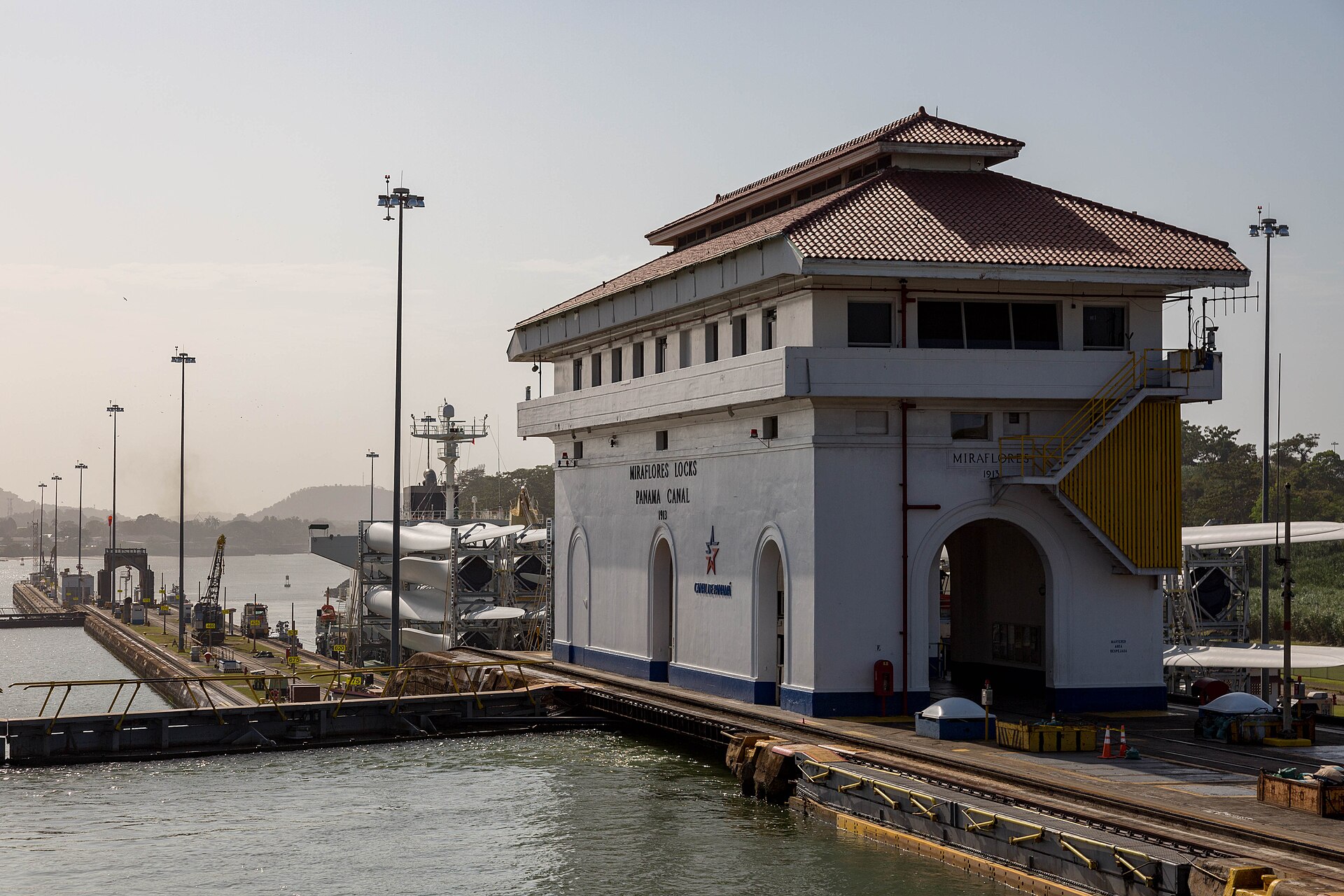
The risks of investing in Panama are known and measurable: a sovereign rating on which the agencies disagree (Moody’s Baa3 and S&P BBB− give investment grade; Fitch, at BB+, leaves it one notch below), a narrow tax base with debt projected at 64.6% of GDP in 2027, the fiscal impact of the closure of the Cobre Panamá mine, the Canal’s dependence on water from Gatun Lake, Panama’s presence on the European Union’s Annex II and on several national lists, and a handful of risks specific to real estate, such as the 45-day rule for short-term rentals in the district of Panama or the derecho posesorio (possession right) without title. None of them is hidden, and almost all of them have a rule, a figure and a source. This guide ranks them by how much they really weigh and separates the ones you can manage from the ones you cannot. Data verified as of November 22, 2026.
A note on method before we start: publishing the risks is not a way of advising against Panama. It is what makes the rest of the data credible, much of which is favorable and is in our guide to the advantages of investing in Panama. The two should be read together. Several of these indicators are reviewed every quarter: check the current figure before using it in a decision.
Sovereign risk: does Panama have investment grade?
Yes at two of the three major agencies, and no at the third. “Panama has investment grade” is a true statement for Moody’s and S&P and a false one for Fitch. The difference matters little to an individual buyer, but a lot to a fund: a mandate that requires investment grade from every agency excludes Panama, and one that requires two of three includes it.
| Agency or entity | Rating | Outlook | Reading |
|---|---|---|---|
| Moody’s | Baa3 | Stable, improved from negative in November 2026 | Lowest notch of investment grade |
| S&P Global | BBB− | Stable | Investment grade |
| Fitch | BB+ | Stable (affirmed in December 2025) | One notch below investment grade |
| Panama Canal Authority | BBB+ | — | Above the country’s own rating |
Sources: Newsroom Panama (Moody’s) · Newsroom Panama (Fitch) · S&P Global Ratings · Panama Canal Authority. Data verified as of November 22, 2026.
Within the same figure there is good news: Moody’s improved the outlook to stable in November 2026, after two years at negative, which moves the country away from the edge of losing investment grade. And there is a deliberate anomaly worth knowing: the Canal has a better rating than the state that owns it, because the Canal Authority has financial autonomy. It is Panama’s best argument for explaining that its main asset is not exposed to the political cycle; we develop it in the Panama Canal in figures. The full macro context is in Panama for investors: dollar, ratings and growth.
Public finances: a narrow tax base and a closed mine
| Indicator | Figure | Source |
|---|---|---|
| Non-financial public sector deficit | Falling to 3.0% of GDP in 2027 (forecast) | Moody’s |
| Consolidated debt | 64.6% of GDP in 2027, gross (forecast); about 55% net general government debt between 2026 and 2029 | Fitch; S&P |
| Tax base | Narrow: it is the risk all three agencies repeat | Agencies |
| Credit growth in 2026 | About 4.4%, up from 2.9% in 2025; the lowest in Central America | Moody’s Local |
Sources: Moody’s Ratings · Fitch Ratings · S&P Global Ratings · Newsroom Panama (Moody’s Local). Data verified as of November 22, 2026.
When reading the debt, always distinguish gross from net: Fitch’s 64.6% is projected gross debt; S&P’s figure of about 55% is net. S&P also warns that public and external debt are at record levels. These are manageable figures for a growing economy, but they leave little room in the face of a shock.
Cobre Panamá: the fiscal risk remains open, the legal risk has been contained
The closure of the Cobre Panamá mine still weighs on public finances. That is why projections that presented mining as “the second sector of the economy after the Canal” are outdated and should not be repeated; press reports about Argentine companies evaluating the sector are also circulating, without further development.
What changes the reading is how the closure came about. The contract was not canceled by the government: it was annulled by the full bench of the Supreme Court, unanimously by its nine justices, on November 28, 2023, at the request of private parties and after examining 126 arguments. The same Court had annulled, also unanimously, the original 1997 contract on December 21, 2017: the same standard, two governments. In addition, under article 257, paragraph 6, of the Constitution, mines “may not be subject to private appropriation”; what was put to the test was the regime of concessions over state assets (arts. 257 and 259), not that of private property (arts. 47, 48 and 51). The state then appeared in the arbitration and, in November 2026, opened formal negotiations with public consultation. The full analysis is in the Cobre Panamá case and legal certainty, and the state of the negotiation in Cobre Panamá in 2026: the negotiation.
The conclusion for this index: the fiscal risk of the closure is real and remains open; the risk of state arbitrariness is not supported by the case, because the process was judicial, unanimous, published and followed by arbitration and negotiation. For anyone buying a property or applying for residency, the case does not carry over to their asset.
Foreign direct investment, the symptom
Sources: preliminary official 2026 foreign direct investment figures and the 2018 historical series. Compare quarters with a full year with caution. Data verified as of November 22, 2026.
A country growing at 4% to 5%, with investment grade at two of three agencies, no exchange controls and no screening of foreign investment, could attract more direct investment than it does. The gap with 2018 is the clearest indicator that perception has not yet fully recovered. How much of that fall corresponds to mining has not been broken down by sector to date.
The Canal’s water: a recognized and budgeted physical risk
The Canal depends on water from Gatun Lake, so the country’s main asset has a direct climate exposure that fiscal policy cannot fix. The Canal Authority’s response is the “Decade of Transformation”, with USD 8.5 billion in tenders: the Corozal and Telfers container terminals (USD 2.6 billion, operations expected in 2029), an energy corridor of USD 4.2 to 8 billion and the Río Indio reservoir, designed to secure water for 50 years.
The fair framing is favorable without ceasing to be precise: a risk with a plan and a figure behind it is different from an ignored risk. What cannot be said is that it is solved, because the reservoir is a project and not a work in service. Its phase, permits and in-service date have not been verified to date.
Tax lists: the 2026 change and what remains pending
| Mechanism | Status as of November 22, 2026 |
|---|---|
| Annex I of the EU list | Panama was removed on October 9, 2026, effective October 16 |
| EU Annex II (gray list) | Added, with an open review by the OECD Global Forum |
| National lists | Still on those of Italy (DM 4 maggio 1999), Portugal (item 56 of Portaria 150/2004), France (ETNC list, art. 238-0 A of the CGI) and Brazil (item XLII of IN RFB 1037/2010) |
| CRS exchange | In force since September 2018; 87 partner jurisdictions in the 2024 cycle |
| Controlling person threshold | Lowered from 25% to 10% by executive decree of June 25, 2026 |
| Crypto-assets | Automatic exchange from 2028 (CARF agreement of December 2025) |
Sources: IFC Review · STEP · national rules cited. Data verified as of November 22, 2026.
Leaving Annex I is not leaving the list: for a bank or a compliance department, Annex II is a jurisdiction under monitoring, not a neutral one. And the lists of Italy, Portugal, France and Brazil are independent of the European one and still apply, with concrete financial consequences in each of those countries. The timetable of the Global Forum review, which will decide whether Panama leaves Annex II or returns to Annex I, has not been published to date. We explain it in Panama as a tax jurisdiction in 2026.
The other side also counts: with CRS, a 10% control threshold and CARF from 2028, Panama is no longer a secrecy jurisdiction. Any structure must be clean, documented and reportable in both countries. For the compliant investor, that is a reputational advantage. See also territorial taxation.
What are the risks of buying property in Panama?
Here are the risks that most affect the foreign buyer. All of them have a rule or a figure, and almost all can be avoided with prior due diligence.
| Risk | The measure |
|---|---|
| Rentals under 45 days in the district of Panama | Prohibited without a Public Tourist Lodging license (art. 21 of Law 80 of November 8, 2012); ATP fines of USD 5,000 to 50,000. The full bench of the Supreme Court declared it not unconstitutional on December 20, 2017 (file 1038-14). It does not apply outside the district |
| The real yield | Gross 7.0% to 8.7% in the capital; net 4.8% self-managed and 3.8% with a management company, before taxes |
| Derecho posesorio (possession right) | No title registered at the Public Registry (Registro Público): it cannot be mortgaged, its titling is not guaranteed and it does not qualify for residency by investment. It is common in Bocas del Toro |
| Mortgage and the residency threshold | Art. 5(a) of Executive Decree 17 of 2026: the lower of price and market value counts, minus every lien |
| Disputes with developers | Acodeco: 280 complaints against real estate companies from January to August 2026, for B/.13,239,348 (includes complaints from prior years closed in 2026) |
| Public beach strip | Law 80 of 2009: 22 meters on the Pacific and 10 on the Caribbean from the high-tide line |
| Constitutional limit | Art. 291: no property within 10 km of the border, not even for Panamanian companies with foreign capital |
Sources: Law 80 of 2012, art. 21 (Official Gazette 27159-A) and Supreme Court ruling of December 20, 2017, file 1038-14 · Law 80 of 2009 (Official Gazette 26438-B) · Executive Decree 17 of 2026 · Constitution, art. 291 · Acodeco · Global Property Guide. Data verified as of November 22, 2026.
For each risk in this table there is a guide: yields, in the real numbers of Panama real estate and the rental yield calculator; title, in how to verify a title at the Public Registry; possession rights, in buying in Bocas del Toro; and developers, in how to vet a developer. The general legal framework is in can a foreigner buy property in Panama?
The risk that sends people home is not financial
| Factor | Figure |
|---|---|
| Climate | Numbeo climate index: Panama 68.2, against 93.0 for Spain and 97.8 for Portugal. Heat and humidity all year round |
| Pollution | 56.0 (higher is worse) |
| Local purchasing power | 44.2 |
| Home price to local income | 14.7, against 8.7 for Spain |
| Healthcare | 61.8. Some private hospitals charge in advance |
| Banking | Account opening in 4 to 8 weeks, balances of up to USD 10,000–50,000 and a stated reason for the relationship required; Americans have a harder time because of FATCA |
| Driver’s license | Cannot be obtained without residency |
| Local tension | Documented discontent over the rise in foreign residents and the lack of planning |
Sources: Numbeo, 2026 indices · Paralelaw (banking). Data verified as of November 22, 2026.
The 14.7 ratio deserves a line of its own: it means buying is expensive relative to what local income can afford, which is consistent with a market whose marginal buyer is a foreigner. The climate, for its part, is a real reason people go back; visit the country in the rainy season before deciding. More detail in living in Panama: cost of living and practical life, healthcare in Panama and the cost of living calculator.
The cost of the great advantage: what the evidence says about dollarization
Dollarization is Panama’s central argument, and it has a documented price. A meta-analysis of 585 estimates from 43 studies (Koráb, Fidrmuc and Dibooğlu, 2023, Journal of International Money and Finance) concludes that dollarized countries show, on average, slower and more volatile growth along with lower inflation, and that they absorb external shocks less well because they have no monetary policy of their own. Fully dollarized countries grow less than partially dollarized ones.
For most readers of this site, that trade-off is exactly what they are looking for: somewhat less growth in exchange for low inflation and no devaluation risk, a deal many home countries do not offer. It is worth knowing it with the citation in front of you.
Summary: the risks ranked by how much they weigh
Sources: our own analysis using the data in this guide. Data verified as of November 22, 2026.
There are risks that, to date, are not measured with verifiable data and that you should assess on your own: social unrest and protests (those of 2023 accompanied precisely the mining case), the risk of earthquakes and flooding and the cost of insuring the property, and property crime in the areas where foreigners buy. For crime in general, see is Panama safe: official crime figures.
| Point | Why |
|---|---|
| Current rating from the three agencies | It is reviewed several times a year and conditions mandates and financing |
| The tax list of your country of residence | Italy, Portugal, France and Brazil keep Panama on their lists, with their own tax effects |
| Public Registry certificate for the property | Rules out possession rights, liens and the beach strip |
| District and building bylaws | They decide whether short-term rental is legal |
| The developer’s record at Acodeco | Complaints are public and measure delivery risk |
Sources: our own analysis using the rules cited in this guide. Data verified as of November 22, 2026.
Frequently asked questions
Does Panama have investment grade?
At two of the three major agencies. Moody’s rates it Baa3, the lowest notch of investment grade, with the outlook improved to stable in November 2026, and S&P rates it BBB− stable. Fitch places it at BB+ stable, one notch below. A mandate that requires investment grade from every agency excludes Panama; one that requires two of three includes it.
What is Panama’s main fiscal risk?
The narrowness of the tax base, which all three agencies repeat, together with gross debt projected at 64.6% of GDP for 2027 according to Fitch and a deficit that Moody’s expects to fall to 3.0% of GDP in 2027. Added to that is the weight of the Cobre Panamá closure on public finances.
Did Panama come off the international lists in 2026?
It came off Annex I of the European Union list on October 9, 2026, effective October 16, but it moved to Annex II, with an open review by the OECD Global Forum. It also remains on the national lists of Italy, Portugal, France and Brazil, which are independent.
Is the Panama Canal at risk from water shortages?
It is a real exposure, because the Canal depends on Gatun Lake. The Canal Authority is responding with the Decade of Transformation, worth USD 8.5 billion, which includes the Río Indio reservoir. It is a recognized and budgeted risk, but the reservoir is still a project.
What are the risks of buying property in Panama?
The main ones: the ban on renting for less than 45 days in the district of Panama (art. 21 of Law 80 of 2012), possession rights without registered title, the deduction of every lien in the residency threshold (art. 5(a) of Executive Decree 17 of 2026), the public beach strip of Law 80 of 2009 and disputes with developers, with 280 complaints at Acodeco from January to August 2026. The net yield is around 4.8% self-managed and 3.8% with a management company.
Does dollarization have a cost?
Yes. A meta-analysis of 585 estimates from 43 studies concludes that dollarized countries grow, on average, more slowly and with more volatility, with lower inflation, and absorb external shocks less well. For anyone seeking an asset in a hard currency with no devaluation risk, that is usually the trade-off they want.
Does the Cobre Panamá case affect home buyers?
Not directly. It was the judicial annulment of a concession over a state asset, not an expropriation of private property, which is governed by other articles of the Constitution. Its real effect is fiscal and remains open.
Sources
- Newsroom Panama: Moody’s improves Panama’s outlook (November 17, 2026)
- Newsroom Panama: Fitch affirms Panama at BB+ (December 11, 2025)
- Newsroom Panama: credit growth according to Moody’s Local
- IFC Review: Panama’s removal from EU Annex I
- STEP: controlling person threshold at 10%
- Shipping Intelligence Hub: the Canal’s Decade of Transformation
- CEOWORLD: the 45-day rule (secondary; rule: art. 21 of Law 80 of 2012)
- Global Property Guide: rental yields in Panama
- Numbeo: 2026 quality of life indices
- Koráb, Fidrmuc and Dibooğlu (2023): meta-analysis on dollarization, Journal of International Money and Finance
Disclaimer: this is general information, not legal, tax or financial advice. It describes risks documented as of the date shown; several indicators are reviewed every quarter. Consult a licensed lawyer and tax advisor in Panama before investing.

Milan Valdés Báez is an independent journalist and researcher based in Panama and the editor of Invest in Panama Real Estate, the real estate investment guide for foreigners. Every figure on the site is checked against official sources (the Official Gazette, the Superintendency of Banks, INEC, the National Migration Service and the Public Registry), with notes on which data have changed and which circulate out of date, and the guides and calculators are kept current. ORCID iD: 0009-0000-0112-3529.