

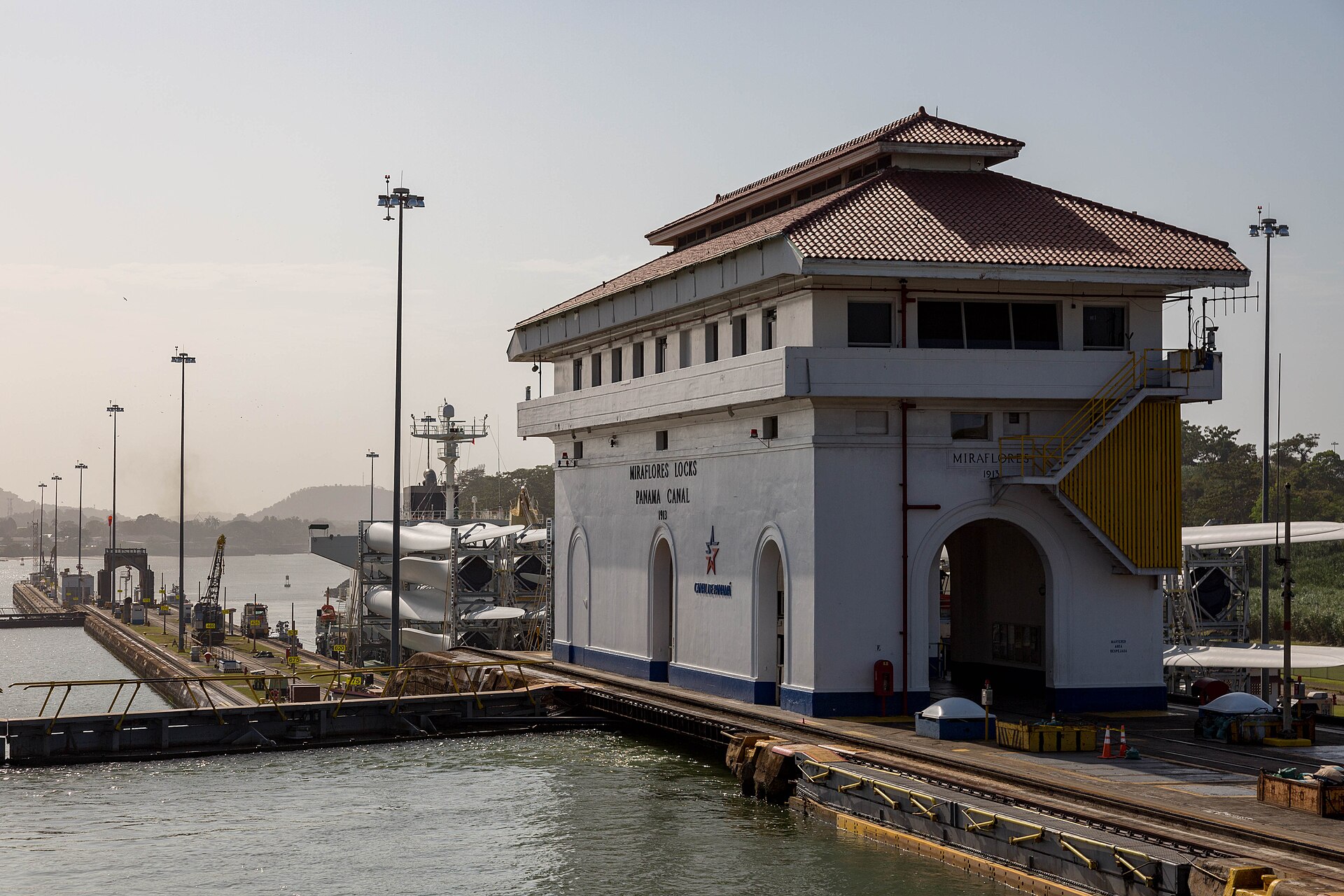
For a foreign investor, Panama comes down to three verifiable facts: your asset and your income stay in US dollars, which are legal tender with no issuing central bank; two of the three major rating agencies (S&P at BBB− and Moody’s at Baa3) rate it investment grade, while Fitch places it one notch below, at BB+; and the economy, which runs on the Canal and on services, grew 4.4% in 2025, with 2026 forecasts ranging from 4.0% to close to 5% depending on the agency. The trade-off matters too: debt exceeds 60% of GDP and credit is growing slowly. Data verified as of November 20, 2026.
The six questions an investor asks before buying in Panama
An experienced investor does not ask whether Panama “is a good country.” They ask what currency their asset is in, what the agencies say, what the economy lives on, what it costs to enter, what the country taxes and how they get out. This guide answers the first three in depth; the other three have their own articles, linked in the table.
| Question | Short answer | Where it is covered |
|---|---|---|
| What currency is my asset in? | US dollars, which are legal tender. There is no devaluation risk on the asset or on the income | In this guide |
| What do the rating agencies say? | Two of three rate it investment grade; the third places it one notch below | In this guide |
| What does the country live on? | The Canal and services, not commodities | In this guide |
| What does it cost to enter, and how soon am I a permanent resident? | From USD 100,000 (reforestation route); the Qualified Investor route grants permanent residency directly, with a statutory window of up to 45 business days | Panama vs other countries |
| What does Panama tax? | Only Panamanian-source income; foreign income is not taxed | Territorial taxation |
| How do I exit? | Capital gains tax at 10% of the gain or, by election, 3% of the price as a final tax | Capital gains calculator |
Sources: Executive Decree 17 of 2026 (National Migration Service) · PwC Worldwide Tax Summaries. Data verified as of November 20, 2026.
A note on method: every figure carries its source, and where sources disagree (on the rating and on growth, they do) we give every reading. An investor who later discovers a discrepancy that was hidden from them stops trusting everything else.
The dollar: which risks it removes and what it costs
The US dollar has been legal tender in Panama since 1904. The balboa circulates at par and, in practice, only as coins. There is no issuing central bank: the country does not print its own currency. Fitch expressly cites dollarization as an anchor of macroeconomic stability, and the US Department of State’s 2026 Investment Climate Statement confirms that there are no exchange controls and that foreign investors receive national treatment.
| Risk | Why it disappears |
|---|---|
| Devaluation of the asset | The property price is in the same currency in which you probably measure your wealth |
| Devaluation of the income | Rent is collected in dollars |
| Exchange controls on exit | There is no local currency to convert in order to repatriate, and there are no exchange controls |
| Inflation from money printing | There is no central bank to issue currency |
Sources: US Department of State, 2026 Investment Climate Statement · Fitch via Newsroom Panama. Data verified as of November 20, 2026.
That is the comparison that frames the decision in Latin America. Someone buying in Buenos Aires, São Paulo, Mexico City, Bogotá or Santiago takes on two risks: the property and the currency. In Panama they take on one. That is why the Panamanian market does not compete on price with the region (in Numbeo’s 2026 cost of living plus rent index it is more expensive than Brazil, Colombia, Argentina, Mexico, Nicaragua, Peru, Ecuador and the Dominican Republic) and still keeps attracting capital: you are not paying only for the square meter, you are paying for the currency it is written in.
The cost of dollarization also needs to be stated: Panama has no monetary policy. It cannot devalue to gain competitiveness or cut rates to stimulate the economy. That is an advantage for someone arriving with capital and a rigidity for the local economy. For a foreign investor, the balance is favorable.
Does Panama have an investment-grade rating? Three agencies, three answers
This is where much of the marketing material oversimplifies, and there is no need to: the full truth is still good. The correct headline is not simply “Panama is investment grade,” nor “Panama lost its investment grade.” It is this: two of three agencies place it at investment grade, and the third is one notch away.
| Agency | Rating | Investment grade? | Outlook and date |
|---|---|---|---|
| S&P | BBB− | Yes | Stable (September 2026). It warns that public and external debt are at record levels |
| Moody’s | Baa3, the lowest investment-grade notch | Yes | Upgraded from negative to stable in November 2026, after two years on negative |
| Fitch | BB+ | No, one notch below | Stable. It withdrew the investment grade in March 2024; it affirmed the rating in December 2025 and confirmed it in July 2026 |
Sources: Newsroom Panama (Moody’s, November 17, 2026) · Newsroom Panama (Fitch, December 11, 2025). Data verified as of November 20, 2026.
What the rating measures and what it does not
- The Moody’s upgrade is the most recent data point and it points in the right direction: it moves Panama away from the edge of losing the grade.
- The S&P warning on debt is the counterweight, and we publish it all the same. It weighs heavily for someone buying sovereign debt and much less for someone buying an apartment. It helps to distinguish gross debt (64.6% of GDP projected for 2027 by Fitch) from general government net debt, which S&P sees stabilizing near 55% of GDP between 2026 and 2029.
- The divergence between agencies is itself a data point. It shows up in the State’s financing cost, not in the risk to your property.
The sovereign rating measures the State’s capacity to pay its debt. It does not measure the security of your property title, the liquidity of your apartment or the performance of your purchase contract: specific rules cover those, and we explain them in property buyer protections in Panama. What the rating does tell you is that you will collect your rent under a sovereign that two of three agencies consider creditworthy, with hard currency and no history of a bank freeze (a corralito).
Sources: Moody’s · Fitch · S&P · La Estrella de Panama (MICI) · Numbeo 2026. Data verified as of November 20, 2026.
How fast is Panama’s economy growing, and where does that growth come from?
The 2026 figure has three different values depending on the agency, and we give all three. Any material that presents “Panama’s growth in 2026” as a single number is picking the one that suits it.
Sources: Moody’s via Newsroom Panama · Fitch Ratings (4.0% for 2026). Data verified as of November 20, 2026.
| Indicator | Figure | Source |
|---|---|---|
| GDP 2025 | +4.4% (rebound) | Moody’s |
| GDP 2026 | 4.0% · 4.2% (revised up from 3.8%) · ~5% | Fitch · Fitch BMI · Moody’s |
| GDP 2027 | ~5% | Moody’s |
| Non-financial public sector deficit | Falling to 3.0% of GDP in 2027 (forecast) | Moody’s |
| Gross consolidated debt | 64.6% of GDP in 2027 (forecast) | Fitch |
| Credit growth | ~4.4% in 2026, up from 2.9% in 2025; the lowest in Central America according to Moody’s Local (November 2026) | Moody’s Local |
Sources: Moody’s · Fitch · Moody’s Local via Newsroom Panama. Data verified as of November 20, 2026.
In favor: growing between 4% and 5% with hard currency and no inflation from money printing is an uncommon combination, and the Fitch BMI upward revision, from 3.8% to 4.2%, signals direction, not just level. Against: debt above 60% of GDP, a narrow tax base and the slowest credit growth in Central America as of the Moody’s Local cutoff. The third point matters concretely to a buyer: a local mortgage market that grows slowly is a market where the next buyer may have less financing available, and that affects resale liquidity. We develop this in the real numbers of Panama real estate.
What does Panama live on? The Canal and services
This section exists because the intuitive answer is usually the wrong one. Part of the recent international coverage of Panama revolves around mining, but mining is not the engine: the projections that placed it as the country’s second sector were overtaken by the closure of Cobre Panamá.
| Engine | Situation |
|---|---|
| Panama Canal | The country’s structural asset: it determines the logistics position, traffic, skilled employment and tax revenue. The Canal Authority is carrying out a USD 8.5 billion investment program |
| Financial services | Regional banking center |
| Colón Free Zone | One of the largest free zones in the world |
| Multinational headquarters (SEM) | 192 headquarters as of May 2026, up from 186 in 2025: technology, logistics, financial services and manufacturing |
| Mining | Not the engine of the economy |
Sources: The Rio Times (MICI) · Shipping Intelligence Hub (Canal). Data verified as of November 20, 2026.
The Canal figures (traffic, contribution to the treasury, effect of water levels) deserve their own analysis with current-year data: we explain them in the Panama Canal in figures for investors.
The SEM regime and why it matters to a home buyer
The Multinational Company Headquarters (SEM) regime was created by Law 41 of 2007. The main source indicates an income tax of 5% on net taxable income and a 2.5% withholding on remittances; one source states, instead, 0% for services rendered outside Panama, and that discrepancy is not resolved, so do not treat either rate as settled without checking. Alongside the SEM are the EMMA regime, for manufacturing and related services of multinationals, with tax, labor and customs incentives, and the Industrial Promotion Certificates. We detail them in investment incentives in Panama.
Why a real estate investor should read this: 192 multinational headquarters mean corporate leases, executive relocations and demand for international schools. That is the segment that supports high-end rents in Costa del Este and the banking district, and it explains why rents in Costa del Este start at USD 2,200 a month while general central rents range from USD 900 to 1,700. The series (186 in 2025, 192 in May 2026) is rising, and it is the variable to watch if you invest at the high end. See the areas in Panama City.
Is Panama a cheap country? The asymmetry worth understanding
This is the only part of the guide that corrects an expectation, and doing it here avoids disappointment later.
| Index | Panama |
|---|---|
| Cost of living excluding rent | 45.5 |
| Rent | 23.2 |
| Cost of living plus rent | 35.6 |
| Groceries | 51.3 (the most expensive category: almost everything is imported) |
| Restaurants | 42.9 |
| Local purchasing power | 44.2 |
| Home price to local income | 14.7 (vs 3.4 in the United States, 8.7 in Spain and 7.8 in Italy) |
Sources: Numbeo, indices by country 2026. Data verified as of November 20, 2026.
With home prices at 14.7 times local income, Panamanian housing is expensive for a Panamanian. Both things are true at once: Panama works very well for someone arriving with foreign income and is hard for someone who intends to earn their salary in Panama. The right message is not “living is cheap,” but “your foreign income goes further here and your asset is in dollars.” That yields a market fact: purchase demand in the upper-middle segment is mostly foreign or corporate, not local. If you buy to resell, you need to know who you will sell to. To run the numbers on your budget, use the Panama cost of living calculator and read living in Panama: cost of living and practical life.
Which investor profiles fit Panama and which do not
| Profile | Fit | Why |
|---|---|---|
| Person living on income in a hard currency | Very high | It is the profile the country is designed for |
| Retiree with a lifetime pension | Very high | The Pensionado (retiree) route requires B/.1,000 a month for life and grants permanent residency directly |
| Remote professional who bills abroad | High | Foreign income is not taxed, and there is a remote worker regime from USD 36,000 a year in foreign income |
| Investor seeking fast permanent residency | High | Qualified Investor from USD 300,000, with permanent residency directly |
| Someone seeking double-digit gross yields | Low | Gross yield in the capital is 7.0% to 8.7%, and net yield is 4.8% self-managed or 3.8% with a management company |
| Someone seeking fast appreciation from supply shortage | Low | The capital has inventory, and a price of 14.7 times local income does not describe a market squeezed by domestic demand |
| Someone expecting to earn a local salary | No fit | Local purchasing power of 44.2 |
Sources: National Migration Service, retiree requirements · Executive Decree 17 of 2026 · Global Property Guide · Numbeo. Data verified as of November 20, 2026.
To choose the residency route that fits you, try the which Panama visa is right for me? tool and read Panama residency options. To stress-test a specific purchase, use the rental yield calculator.
What to confirm with your advisor
| Point | Status |
|---|---|
| Income tax rate under the SEM regime | Disputed: 5% on net taxable income according to the main source; 0% for services rendered outside Panama according to another |
| GDP forecast for 2026 | Three values depending on the agency: 4.0%, 4.2% and ~5%. All three are published |
| S&P rating | BBB− with a stable outlook, in its September 2026 action; check whether there has been a later action |
| Canal figures (traffic, contribution to the treasury, water levels) | Not quantified in this guide; see the dedicated Canal article |
| Tourism data | Out of date in the available material: the figures found are from 2024 |
| The Panamanian stock exchange as a vehicle | Covered in the Panama stock exchange (Latinex) |
Sources: those cited in each section of this guide. Data verified as of November 20, 2026.
Frequently asked questions
What currency is used in Panama, and is there a devaluation risk?
The US dollar is legal tender. The balboa circulates at par and in practice only as coins. Panama has no issuing central bank, so there is no domestic money printing and no possibility of devaluing. Fitch cites dollarization as an anchor of macroeconomic stability. For you, that removes currency risk on the asset and on the income.
Does Panama have an investment-grade rating?
Two of the three major agencies say yes. S&P rates Panama BBB−, within investment grade. Moody’s rates it Baa3, the lowest investment-grade notch, and upgraded the outlook from negative to stable in November 2026. Fitch rates it BB+, one notch below, with a stable outlook. The divergence affects the State’s financing cost more than the security of a private property title.
How fast is Panama’s economy growing?
GDP grew 4.4% in 2025. For 2026 the forecasts differ: 4.0% according to Fitch, 4.2% according to Fitch BMI after an upward revision from 3.8%, and close to 5% according to Moody’s, which also expects around 5% for 2027. The non-financial public sector deficit is forecast at 3.0% of GDP in 2027, and Fitch projects consolidated debt at 64.6% of GDP that year.
What does Panama live on?
The Canal and services. Around it are the regional banking center, the Colón Free Zone and the multinational headquarters regime, with 192 headquarters as of May 2026, up from 186 in 2025. Mining is not the engine of the economy.
Is Panama a cheap country?
It depends on what you compare it with and where your income comes from. In Numbeo’s 2026 cost of living plus rent index, with New York equal to 100, Panama scores 35.6: cheaper than Western Europe, the United States, Canada, Singapore, Hong Kong and the Gulf, and more expensive than Brazil, Colombia, Argentina, Mexico, Nicaragua, Peru, Ecuador and the Dominican Republic. Local purchasing power is 44.2: the country works for someone arriving with foreign income, not for someone who intends to earn their salary in Panama.
What does Panama tax for a non-resident who buys property?
Only Panamanian-source income. Rental income is taxed at 0% up to B/.11,000 and then at 15% and 25% for an individual, and at 25% for a company. Property tax runs from 0% up to B/.30,000 and then in brackets of 0.60%, 0.80% and 1.00%, with a more favorable regime for a primary residence that must be applied for. Foreign-source income is not taxed in Panama. You can estimate the annual tax with the property tax calculator.
Sources
- Newsroom Panama: Moody’s improves Panama’s outlook to stable (November 17, 2026)
- Newsroom Panama: Fitch affirms Panama at BB+ (December 11, 2025)
- Fitch Ratings projects 4.0% economic growth for Panama in 2026
- Newsroom Panama: credit growth according to Moody’s Local (November 5, 2026)
- US Department of State: 2026 Investment Climate Statement, Panama
- La Estrella de Panama: Panama reaches 192 multinationals
- Law 41 of 2007 (multinational company headquarters)
- Numbeo: Cost of Living Index by Country 2026
- Global Property Guide: rental yields in Panama
- Executive Decree 17 of September 8, 2026 (Qualified Investor)
- National Migration Service: retiree residency requirements
Disclaimer: this is general information, not legal, tax or financial advice. The ratings and forecasts cited may change at any time, and yields are estimates that do not guarantee results. Consult a licensed lawyer and tax advisor in Panama before investing.

Milan Valdés Báez is an independent journalist and researcher based in Panama and the editor of Invest in Panama Real Estate, the real estate investment guide for foreigners. Every figure on the site is checked against official sources (the Official Gazette, the Superintendency of Banks, INEC, the National Migration Service and the Public Registry), with notes on which data have changed and which circulate out of date, and the guides and calculators are kept current. ORCID iD: 0009-0000-0112-3529.