

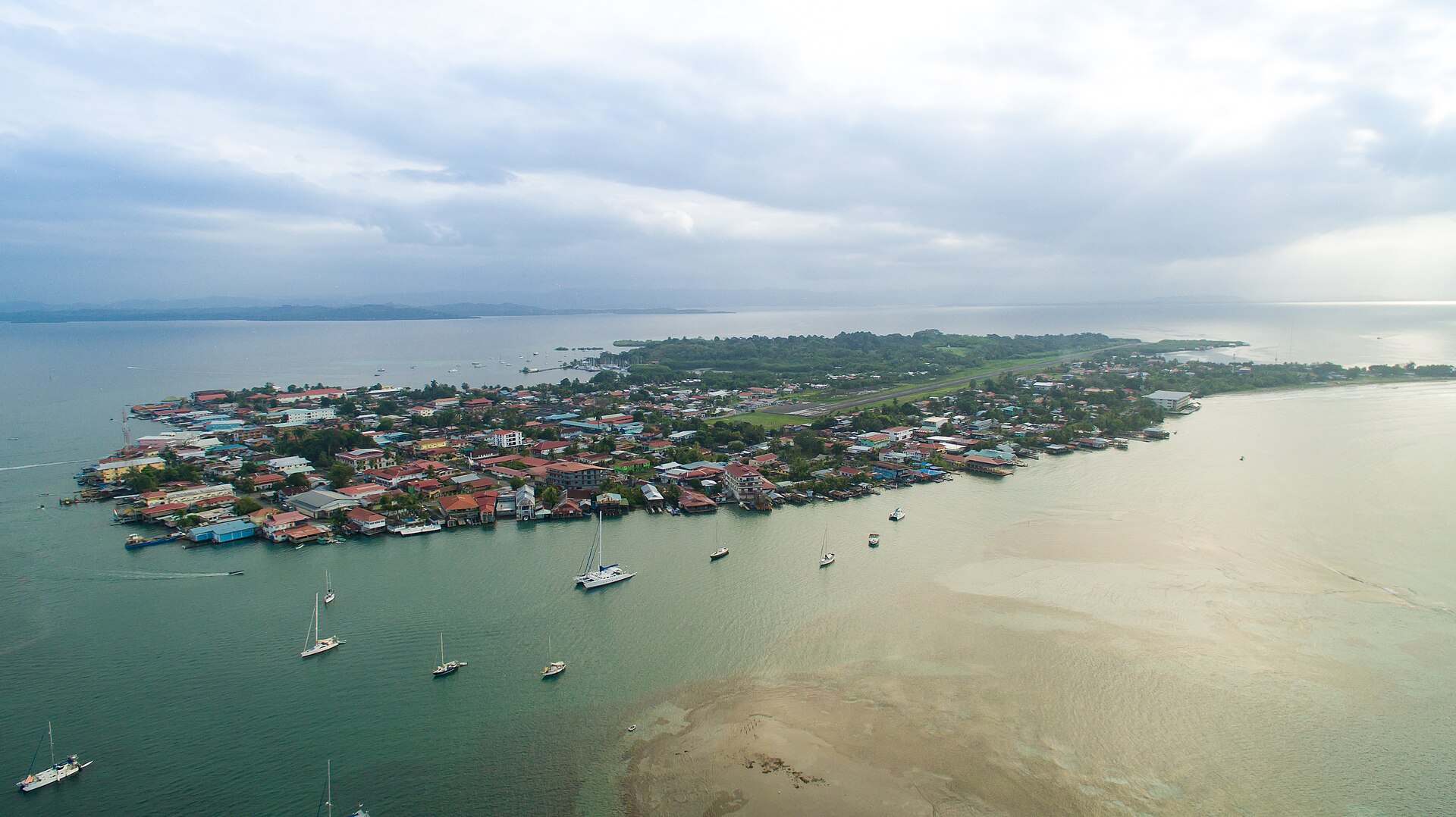
Buying in Bocas del Toro means first answering a question that hardly comes up in the rest of the country: is what you are being sold registered property or a derecho posesorio (possession right)? The market’s own real estate guides agree that much of the waterfront land is held as a possession right, which is possession recognized by ANATI over land that still belongs to the state, with no folio in the Public Registry (Registro Público). That has three consequences: the registry check that protects the buyer cannot be done, because nothing is registered; the property cannot be mortgaged, because the bank needs a registered real right; and it does not qualify for residency as a qualified investor. It is not a reason not to buy, but it is a reason not to pay a titled-property price for a possession right. Data verified as of November 22, 2026.
Our guide to investing in Bocas del Toro explains the island regime of art. 291 of the Constitution, the 20-year use concessions, the border strip and the social and flooding risks. This guide focuses on the actual transaction: what exactly you are buying when you are offered a possession right, how to verify it and what to ask before you pay the first dollar. The market sources cited are commercial real estate guides with an interest in the outcome, and they are flagged as such.
Title or possession right: the starting distinction
| Item | Property title | Possession right |
|---|---|---|
| What it is | Ownership registered in the Public Registry, with a property number, cadastral description and the owner’s name | Recognized possession of land that still belongs to the state |
| Registrable deed | Yes | No: according to market guides, the buyer has use rights, not a deed |
| Mortgage | Possible | Cannot be mortgaged |
| Technical survey | Registered cadastral description | No mandatory technical survey; high risk of overlapping rights |
| Risk flagged | Liens, marginal notes, chain of title | Guides mention that the state could reclaim the land; no documented case has been found |
| Where it is verified | Public Registry: folio real (registry folio) | ANATI |
Sources: Lawzana · Crossing HQ, Bocas del Toro guide (commercial source) · ANATI. Data verified as of November 22, 2026.
The most important consequence is the least obvious one. All the due diligence recommended in Panama works on registered properties: the certificate with the folio real, the marginal warning note of art. 1790 of the Civil Code, which freezes the property in the registry, or the registrable documents of art. 1756. It is explained step by step in how to verify a title at the Public Registry. For a possession right there is nothing to look up in the Registry, because it is not there.
That does not make the purchase illegal or impossible. It means the usual protection tool does not apply and has to be replaced by another: a record at ANATI, a documented chain of possession, boundaries and a survey plan, and a Panamanian lawyer with experience in the province. There is also a tax risk described by a single source: if the information is not updated after the purchase, the tax may be calculated on the full assessed value and build up debt with interest.
How does a possession right become a title?
Titling is done by ANATI, whose powers are set by art. 1 of Law 59 of 2010, following the procedure of Law 80 of 2009. According to a 2026 commercial guide, it requires at least five years of continuous and peaceful possession, a topographic survey, inspections and a public notice period before the formal award. On the islands, moreover, titles are only granted in special development areas and after proving more than five years of possession. The average time a titling takes has not been verified to date.
- 01Proven possessionAt least five years of continuous and peaceful possession; on islands, more than five and in a special development area.
- 02Survey planTopographic survey of the land, with boundaries.
- 03InspectionTechnical visit to the land by the authority.
- 04Public noticePublication period so that third parties can object.
- 05AwardFormal ANATI resolution and registration in the Public Registry.
Sources: Law 80 of 2009 · Crossing HQ (requirements according to a commercial guide, not checked article by article). Data verified as of November 22, 2026.
One specific red flag: the phrase “ANATI has already approved it, the title will be out in 60 days.” Demand ANATI’s written resolution or an official tracking number for the case file. In 2025, the Public Prosecutor’s Office’s Operation Huellas dismantled a ring that sold land with possession rights and forged documents through social media, according to the press.
There are two “Law 80s”: ask which year
| Law | What it covers | Why it affects you |
|---|---|---|
| Law 80 of 2009 (Official Gazette 26438-B) | Land titling in coastal and island areas through ANATI; 10 m public beach strip on the Caribbean | It decides whether a possession right can be titled |
| Law 80 of November 8, 2012 (Official Gazette 27159-A) | Tourism incentives, expired on December 31, 2025, and art. 21 on rentals of less than 45 days | The art. 21 prohibition only applies in the district of Panamá, not in Bocas del Toro |
Sources: Law 80 of 2009 · Supreme Court, file 1038-14 (art. 21 of Law 80 of 2012). Data verified as of November 22, 2026.
They are not the same law and they are unrelated. If someone cites “Law 80” to you in Bocas, ask which year. On the expired incentives and the initiative that would replace them, see the Law 80 tourism incentives. The fact that the 45-day rule does not apply outside the district of Panamá does not mean short-term rentals are free of rules in Bocas: the municipal rules have not been verified to date.
ANATI is titling Bocas del Toro
Sources: press releases from ANATI and the Panamanian press. The press also reported a handover of 80 homes and 125 titles by President Mulino in the province; it has not been verified whether this is the same Changuinola handover. Data verified as of November 22, 2026.
This is the favorable side, and it is real: the state is regularizing the province and publishes its figures. A possession right is, by design, a transitional situation, not a permanent state. The useful reading for the investor is that, if the land is being titled, the price difference between a possession right and a title partly reflects the present value of that process and its risk. Whoever buys a possession right is buying a process. What you cannot do is pay a titled-property price for it.
Two limits of these figures: there is no denominator (it is not known what percentage of Bocas land is titled), so the titles delivered are not a rate; and land conflict in the province has academic backing, for example in Spalding’s work (2013) in the International Review of Social Research.
Islands and coast: a regime that is not the general one
The land regime on islands and coasts is not the general one. Art. 291 of the Constitution places conditions on the transfer of island territory, Law 80 of 2009 makes the beach strip public and sets a 200 m coastal strip, and Executive Decree 45 of 2010 requires award applications to respect the beach setback. On the mainland there is also the 10 km strip along the border with Costa Rica, closed to foreigners.
One figure in circulation is best not used: an article in La Prensa from about fourteen years ago described an ANATI draft that would eliminate free titling on islands and coastal areas and set prices, with USD 700,000 per hectare on Isla Colón. It was a draft, not a rule, and it has not been verified whether it was approved or what applies today. It is mentioned only so that, if someone cites it to you, you know where it comes from. What you should do is ask one question in writing before paying: can this land be titled, and under which regime? For the general framework of buying land, see land and lots and whether a foreigner can buy property in Panama.
What can and cannot be stated
| Statement | Status | Basis |
|---|---|---|
| A large share of waterfront land is held as possession rights | Documented | Market guides, in agreement |
| A possession right is neither registered ownership nor mortgageable | Documented | Legal and market sources |
| ANATI is titling in the province | Documented | ANATI releases and the press |
| Titling requires years of possession, a survey, inspection and notice | Documented by a commercial guide | Law 80 of 2009, not checked article by article |
| Market prices | Not published | The sources are portals with a commercial interest and asking prices |
| Time to complete a titling | Not verified | — |
| Percentage of titled land | Not verified | The denominator is missing |
| Land reclaimed by the state | No case found | Guides cite it as a risk without an example |
| Tourist rental yield | Not verified | — |
Sources: ANATI · Lawzana · Crossing HQ. Data verified as of November 22, 2026.
On prices: the only median in circulation for Bocas del Toro (USD 521,000 in the fourth quarter of 2026) is calculated on fourteen listings, as explained in Panama’s areas compared. It is not a basis for valuing a lot, much less when it is unclear what right is being sold.
Before you pay the first dollar in Bocas del Toro
Sources: Law 80 of 2009 · ANATI. Data verified as of November 22, 2026.
If you are seeking residency, keep in mind that neither the qualified investor route nor the B/.100,000 exception of the Pensionado (retiree) visa accepts a possession right, because both require a Public Registry certification; check it in which Panama visa is right for me?. To budget the purchase of a titled lot, use the closing costs calculator, and review the order of the steps in the property purchase timeline. To compare with other areas with a border or a Caribbean coast, see Chiriquí and Colón.
The honest framing is this: Panama has a serious registry system and a land authority that grants titles and publishes its figures. The problem in Bocas del Toro is not the country’s legal uncertainty, but that part of what is sold there sits outside the system that provides that certainty. The same country that offers you the folio real and the marginal note cannot give them to you on land that is not registered, and price does not fix that.
What to confirm with your adviser
| Point | Why it matters |
|---|---|
| Whether the specific land can be titled under Law 80 of 2009 | It decides whether you are buying a process with an exit or a right without one |
| Current regime for islands and the coastal zone, and whether titling has a cost | It can change the total cost of the transaction |
| Realistic time to complete titling | It defines how long you will be without a mortgage or an ordinary resale |
| Municipal rules on short-term rentals | The national 45-day rule does not apply, but there may be local rules |
| Climate risk: hurricanes, erosion, flood elevation | On the beachfront it is material and it has not been researched |
| Cadastral update after the purchase | It prevents the tax from being calculated on the full value with interest |
Sources: our own compilation from Law 80 of 2009 and the sources cited. Data verified as of November 22, 2026.
Frequently asked questions
What is the main risk of buying in Bocas del Toro?
That what is being sold is not registered property. The market’s own guides point out that much of the waterfront land is held as a possession right, with use rights and no deed. They are commercial sources, but they agree with each other.
What is the difference between a title and a possession right?
A title is ownership registered in the Public Registry, with a folio real, and it can be verified. A possession right is possession recognized by ANATI over state land: it is not registered, it cannot be mortgaged and it cannot be verified in the Registry, because nothing is registered.
Can a possession right be converted into a title?
Yes, under Law 80 of 2009 before ANATI. According to a 2026 commercial guide, it requires at least five years of continuous and peaceful possession, a survey plan, inspections and a public notice period. On islands, moreover, only in special development areas. The time it takes has not been verified.
Is ANATI titling land in Bocas del Toro?
Yes. ANATI reported 137 titles delivered in the province and land legalized for 150 local residents, and the press reported 125 titles in Changuinola in July 2026 for about 500 people.
Are there two Law 80s in Panama?
Yes. Law 80 of 2009 governs the titling of coastal and island land through ANATI. Law 80 of 2012 is the tourism incentives law, whose incentives expired on December 31, 2025, and it contains art. 21, which prohibits renting for less than 45 days in the district of Panamá. If someone cites “Law 80” to you, ask which year.
So is it a bad idea to buy in Bocas del Toro?
That is not the point. A market with possession rights is not a bad market: it is one where due diligence costs more and is worth more. What is a bad idea is paying a titled-property price for a possession right or assuming that registry checks work on land that is not registered.
Sources
- Law 80 of 2009, Official Gazette 26438-B
- Political Constitution of Panama, art. 291 (Constitute Project)
- National Land Administration Authority (ANATI)
- Executive Decree 17 of 2026 (National Migration Service, SNM)
- Supreme Court of Justice: ruling on art. 21 of Law 80 of 2012
- Lawzana: titled land versus possession rights
- Crossing HQ: Bocas del Toro guide (commercial source)
- La Prensa: the ring that sold properties on Facebook
This is general information, not legal, tax or financial advice. Part of the information comes from commercial real estate guides, flagged as such. Before buying, verify the title at the Public Registry or the case file at ANATI and consult a lawyer licensed in Panama with experience in the province.

Milan Valdés Báez is an independent journalist and researcher based in Panama and the editor of Invest in Panama Real Estate, the real estate investment guide for foreigners. Every figure on the site is checked against official sources (the Official Gazette, the Superintendency of Banks, INEC, the National Migration Service and the Public Registry), with notes on which data have changed and which circulate out of date, and the guides and calculators are kept current. ORCID iD: 0009-0000-0112-3529.