

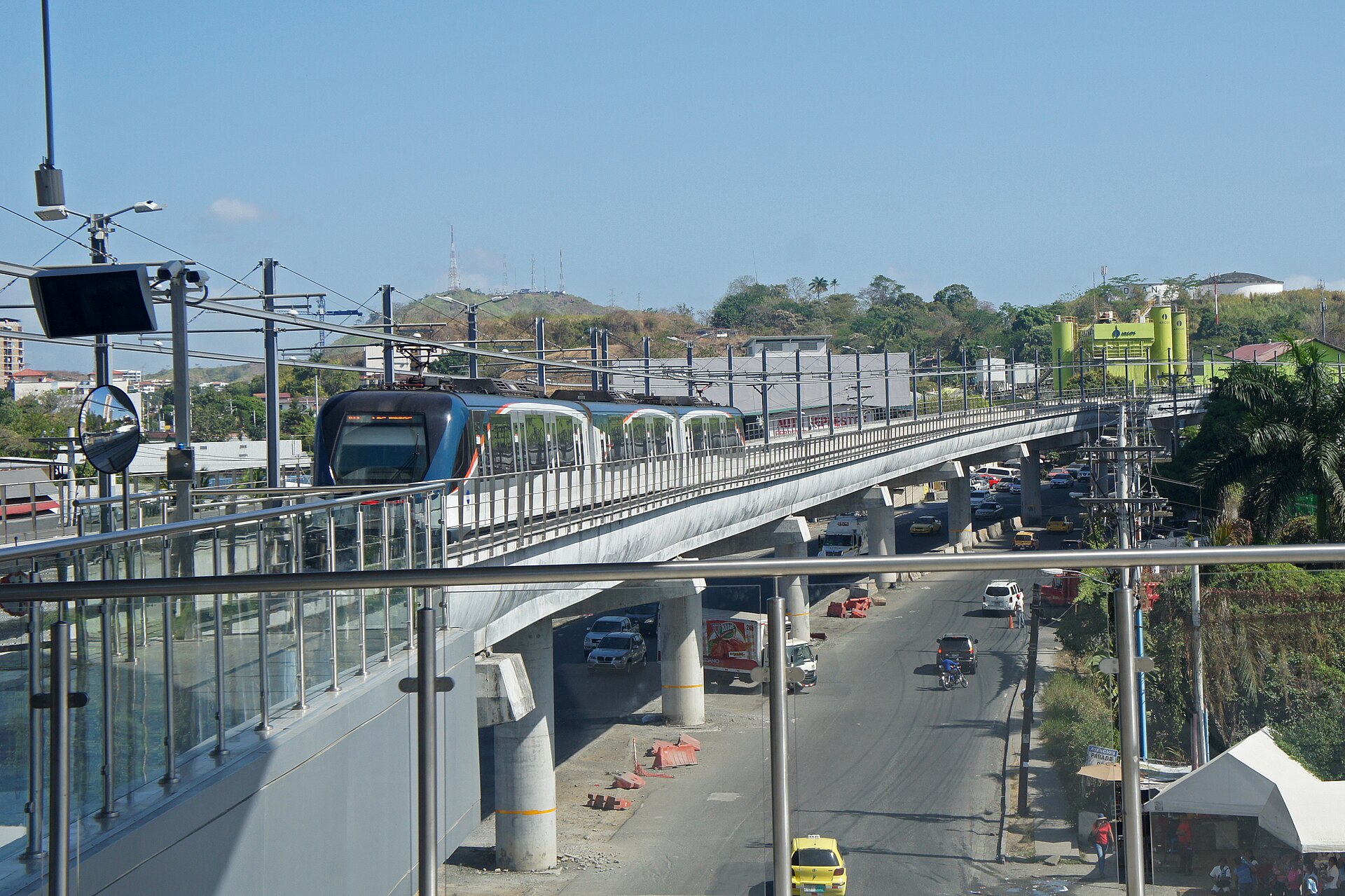
A residential property in Panama yields 7.40% gross a year on the national average (Global Property Guide, fourth quarter of 2026) and between 7.0% and 8.7% in Panama City. The real net yield drops to 4.8% if you manage the rental yourself and to 3.8% if you hire a management company, always before income tax. The median resale price per square meter is around USD 2,200 in the capital, and buying and selling together cost between 5% and 6% of the price, which is more than a year of net rent. That is why a reasonable holding period is five years or more. This article brings those numbers together and puts them in the right frame: a yield in dollars is not comparable with one in a local currency. Data verified as of November 20, 2026.
Sources: Global Property Guide (national gross) · PanamaProp (prices) · Frapan Invest (closing costs). The cost of getting in and out and the holding period are our own calculation. Data verified as of November 20, 2026.
How much does a square meter cost in Panama: resale vs new construction?
The median resale price in Panama City is around USD 2,200 per m², and the range in prime areas runs from USD 2,600 to 4,500. What is useful to an investor is not a single figure, but the gap between resale and new construction in the same area:
| Area | Resale | New construction |
|---|---|---|
| Costa del Este | 2,750 – 2,762 | 3,400 – 3,800 |
| Punta Pacífica | 2,521 – 2,696 | About 4,200 – 4,300 |
| Casco Viejo | About 3,500 – 3,800 (transactions up to 4,500) | No data |
| Panama City median | About 2,200 | No data |
| Prime range | 2,600 – 4,500 | No data |
Sources: PanamaProp · Vaca Group · Panama Properties, October 2026. These are market prices from private sources, not registered closing prices. Data verified as of November 20, 2026.
In Punta Pacífica new construction is offered at about USD 4,200–4,300 per m² while resale moves between 2,521 and 2,696: a gap of around 60%. In Costa del Este the difference is smaller, but it exists. That has two readings:
- Buying new construction to sell as resale within a few years means, in those areas, buying in the expensive market and selling in the cheap one. The new-build premium is absorbed over time, not through turnover.
- Resale is where the arithmetic works, with a trade-off: the buyer protection regime in article 79 of Law 45 of 2007 is designed for new construction. We explain it in buyer protections under Panamanian law.
You can compare areas with the price per square meter in Panama tool and see neighborhood details in Panama City.
Outside the capital: medians with their number of listings
A median calculated on fourteen listings does not describe a market. That is why we publish each figure with its sample:
| Area | Median (USD) | Listings in the sample |
|---|---|---|
| Bocas del Toro | 521,000 | 14 (very small sample) |
| Coronado | 325,000 | 29 |
| Boquete | 249,000 – 280,500 | 44 |
| Pedasí | 218,000 | 27 |
Sources: Panama Properties, Q4 2026 report · Panama Property Experts. Listing medians, not closing medians. Data verified as of November 20, 2026.
Boquete, with 44 listings, is the only one of the four with a sample that starts to be reasonable. It has a long-standing resident foreign community and a temperate mountain climate, and a two-bedroom apartment rents for USD 450 to 700 a month, according to Numbeo. See the area in Chiriquí.
Bocas del Toro deserves a separate warning, and not because of the price. A good part of its inventory is derecho posesorio (possession right): land without a title registered in the Public Registry (Registro Público). It cannot be mortgaged, its titling is not guaranteed and it does not qualify for residency by investment, because Executive Decree 17 of 2026 requires certification from the Public Registry. A median of USD 521,000 on 14 listings, in a market with that title problem, is not a price benchmark: it is a signal to request the certificate before looking at the photos. More context in Bocas del Toro.
Yield: from the 8.7% in the listing to the real 3.8%
Between the 8.7% you may read in a listing in the capital and the 3.8% left to an owner who lives abroad there are almost five points. They are taken, in this order, by:
Sources: Global Property Guide (national gross). Capital range and net figures: estimates from Q4 2026 market sources. Net figures before income tax. Data verified as of November 20, 2026.
| Item | Effect |
|---|---|
| Building maintenance fee | The largest of all in a high-end tower; it is specific to each building |
| Property tax | 0% up to a B/.30,000 base; then 0.60%, 0.80% and 1.00%. If it is your primary residence and you apply for it, Patrimonio Familiar Tributario (tax family homestead) |
| Insurance | Fixed annual expense |
| Vacancy | The most underestimated variable; there is no reliable public data by area |
| Tenant turnover | Refurbishing between one lease and the next |
| Management fee | It is exactly the difference between 4.8% and 3.8% |
Sources: DGI, property tax · Kraemer & Kraemer. Data verified as of November 20, 2026.
A warning about the two net figures: the 4.8% assumes you manage it in person. If you live outside Panama, your number is 3.8%. That point of difference is the price of not being there.
Both net figures are also before Panamanian income tax on rent (for an individual, 0% up to B/.11,000, 15% on the excess up to B/.50,000 and 25% above that; 25% for a company) and before the tax of your country of residence, if any. This is where each investor’s situation varies a lot: someone resident in a country that does not tax that income essentially keeps the Panamanian net; a resident of the Netherlands, for example, subtracts 2.16% of the asset’s value every year under the Box 3 regime. We explain it in Panama taxes for foreigners and in what is taxed in Panama under territorial taxation. To run your own numbers, use the rental yield calculator; the step-by-step worked example is in Panama rental yields.
The right frame: the 3.8% is in dollars
Comparing Panama’s 3.8%–4.8% net with a double-digit real estate yield in an emerging market is comparing two different products. Panama has used the dollar since 1904 and has no issuing central bank, so the principal and the income do not suffer devaluation against the dollar. The comparison that does make sense is this one:
| Alternative | Yield | Currency of the principal | Currency risk | Residency |
|---|---|---|---|---|
| Property in Panama | 3.8% – 4.8% net | USD | No, for someone who measures in dollars | Yes, from USD 200,000–300,000 depending on the route |
| Property in a Latin American market with a weak currency | Often higher in nominal terms | Local currency | Yes, and it is usually the dominant risk | Depending on the country |
| Dollar deposit or bond | Depending on the market | USD | No | No |
| Property in Western Europe | Generally lower | EUR | Depending on your base currency | Only in specific programs |
Sources: US Department of State, 2026 Investment Climate Statement (dollarization, no exchange controls) · Executive Decree 17 of 2026 · Plan B Expat (Friendly Nations). Qualitative comparison. Data verified as of November 20, 2026.
What an investor buys in Panama is not just the yield: it is a yield in dollars, with the possibility of a residency permit and within a system that does not tax foreign-source income. Seen that way, the 3.8%–4.8% is the income component of a package that includes currency, residency and tax perimeter. The residency routes are in Panama residency options.
And it has to be said just as clearly: if yield is all you are after, Panama is not a high-yield market. With a 3.8% net and the entry and exit costs we look at next, the return in the first years can end up close to zero.
What it costs to get in and out, and the minimum holding period it imposes
This is the calculation that is almost never published and the one that decides whether the deal makes sense.
| Item | When | Cost |
|---|---|---|
| Closing costs, cash purchase | Entry | 1.5% – 3% of the price |
| Closing costs, mortgage purchase | Entry | 3% – 7% of the price |
| ITBI | Every transfer | 2% on the higher of cadastral value and price; customarily paid by the seller, that is, by you when you sell |
| Exemption under Law 546 of August 31, 2026 | First sale of a new home | The first B/.120,000 of the base is exempt from ITBI |
| Capital gains tax | Exit | 10% of the gain or 3% of the price, by election |
| Brokerage commission | Exit | Variable, market rate |
Sources: Frapan Invest · Gay Expats Panama (closing costs) · Law 546 of 2026, amending art. 4 of Law 106 of 1974. Data verified as of November 20, 2026.
There is an open point on Law 546: sources do not agree on how long the exemption applies or on the rates on the excess over B/.120,000, so we do not present them as settled. Confirm them with your lawyer before signing. You can estimate the costs of your purchase with the closing costs calculator.
The calculation: how many years of rent the friction takes
With a cash purchase and the right tax election when you sell, getting in and out costs a total of around 5%–6% of the price. If you buy with a mortgage, entry can add 3 or 4 more points. Translated into years of net rent (our own calculation):
Sources: net yields, market estimates for Q4 2026; costs from Frapan Invest. Our own calculation. Data verified as of November 20, 2026.
Practical conclusion: a reasonable holding period in Panama is five years or more. It matches the five years of permanent residency required for naturalization. Anyone buying with a plan to sell in two or three years is buying the wrong product. The order of every step, with its timelines, is in the Panama property purchase timeline.
A tax detail worth thousands of dollars that is decided in the deed of sale: the choice between 10% of the gain and 3% of the price breaks even when the gain is 30% of the sale price. Below that, 10% is better; above it, 3%. Check it with the capital gains calculator.
Financing: what a non-resident should expect
| Item | Non-resident | Resident |
|---|---|---|
| Required down payment | 30% – 40% | 10% – 20% |
| Interest rate | 7% – 9% | 7% – 9% |
| Time to open the account | 3 to 8 weeks | Not applicable |
| Minimum balance required of a foreigner | USD 10,000 – 50,000 | Not applicable |
| Additional requirement | A provable reason for a connection with Panama | Not applicable |
Sources: Plan B Expat, 2026 mortgage guide · Paralelaw · Expat Den. Market ranges; each bank sets its own. Data verified as of November 20, 2026.
- A mortgage makes entry more expensive twice over. It raises closing costs from 1.5%–3% to 3%–7% and, in addition, it reduces what counts toward the residency threshold: article 5(a) of Executive Decree 17 of 2026 calculates the qualifying value as the lower of the price paid and the certified market value, minus the balance of any lien. If you are seeking residency, buying in cash is usually the right decision.
- The bank comes before the deal. Three to eight weeks to open the account, with a minimum balance and proof of a connection, is a timeline worth starting before you sign a promissory purchase agreement.
- Local credit is growing slowly: about 4.4% in 2026, up from 2.9% in 2025, the lowest in Central America according to Moody’s Local. For you as a buyer it is neutral; for you as a future seller it means your buyer will have less financing available.
Compare terms in the mortgage comparison tool and read Panama mortgages for foreigners.
Who will you sell the property to in a few years?
Exit liquidity depends on who can buy from you. These are the data points that decide it:
| Indicator | Figure | Consequence |
|---|---|---|
| Local purchasing power (New York = 100) | 44.2 | Upper-middle segment demand is mainly foreign or corporate |
| Home price to local income | 14.7 times (Spain: 8.7) | Housing is expensive for a Panamanian buyer |
| Multinational headquarters (SEM regime) | 192 as of May 2026, up from 186 in 2025 | Corporate demand for high-end rentals is growing |
| Monthly rent | Costa del Este from USD 2,200; central capital USD 900 – 1,700 | Two markets with two different tenants |
Sources: Numbeo, indices by country 2026 (snapshot of November 20, 2026) · MICI, SEM statistics · The Rio Times. Data verified as of November 20, 2026.
The question worth answering before you buy is who you will sell to. If the answer is “another foreigner or a company,” location matters more than price, because that buyer looks in the banking district, Costa del Este, Punta Pacífica or Casco Viejo, not in just any tower. If the answer is “a Panamanian,” look at the 14.7 again. The SEM headquarters series is the public indicator that most directly measures the high-end corporate tenant. More context in the Panama real estate market in 2026.
What to confirm with your advisor
| Point | Status |
|---|---|
| Duration of the Law 546 ITBI exemption and the scale on the excess over B/.120,000 | Disputed: sources give different timelines and rates. Ask for the Official Gazette text |
| Maintenance fee of the specific tower | It is the largest item between gross and net and is specific to each building. Ask for it in writing before signing |
| Real vacancy in the area and for the unit type | There is no reliable public data; it is the most underestimated variable |
| Fee of the specific management company | It is the difference between 4.8% and 3.8% |
| Whether the sale of shares in a holding company pays ITBI | To be verified under the regime in force; it changes the structuring decision. See buying in your own name, through a company or through a foundation |
| Medians for Bocas del Toro, Coronado and Pedasí | Small samples (14, 29 and 27 listings): use them as an order of magnitude, not as an appraisal |
| Title of any property outside the capital | Require certification from the Public Registry: a derecho posesorio is not registered ownership and does not qualify for residency by investment |
Sources: Law 546 of 2026 · Lawzana, titled land vs possession rights. Data verified as of November 20, 2026.
Frequently asked questions
What is the real return on a property in Panama?
The national gross yield is 7.40% according to Global Property Guide in the fourth quarter of 2026, and 7.0% to 8.7% in Panama City. The net yield is 4.8% if you manage it yourself and 3.8% with a management company, before Panamanian income tax and that of your own country. The difference goes to the maintenance fee, property tax, insurance, vacancy, tenant turnover and the management fee.
How much does a square meter cost in Panama?
The median resale price in the capital is around USD 2,200 per m². In Costa del Este resale runs from 2,750 to 2,762 and new construction from 3,400 to 3,800; in Punta Pacífica, resale from 2,521 to 2,696 and new construction from about 4,200 to 4,300; in Casco Viejo, from about 3,500 to 3,800, with transactions of up to 4,500. The prime range runs from 2,600 to 4,500.
How much are closing costs on a purchase in Panama?
Between 1.5% and 3% of the price if you buy in cash, and between 3% and 7% with a mortgage. The 2% ITBI is calculated on the higher of cadastral value and price and is customarily paid by the seller. Law 546 of August 31, 2026 exempted the first B/.120,000 of the base from ITBI on the first sale of a new home.
What is a reasonable minimum period to hold a property in Panama?
Five years or more. Getting in and out costs around 5%–6% of the price with the right tax election, which equals between 1.0 and 1.6 years of net rent depending on whether your net yield is 4.8% or 3.8%. It matches the five years of permanent residency required for naturalization.
Should you finance the purchase with a mortgage?
If you are seeking residency by investment, generally not. A mortgage raises closing costs from 1.5%–3% to 3%–7% and reduces the qualifying value under article 5(a) of Executive Decree 17 of 2026. A non-resident is asked for a down payment of 30% to 40%, versus 10%–20% for a resident, with rates of 7% to 9%; opening the account takes 3 to 8 weeks, with minimum balances of USD 10,000 to 50,000.
Who buys a resale property in Panama?
Mainly another foreigner or a company. Local purchasing power is 44.2 (New York = 100) and housing costs 14.7 times local income, versus 8.7 in Spain. Corporate rental demand is growing: 192 multinational headquarters as of May 2026, up from 186 in 2025.
Sources
- Global Property Guide: rental yields in Panama
- PanamaProp: price per square meter by area, 2026
- Panama Properties: Q4 2026 market report
- Frapan Invest: closing costs in Panama
- Law 546 of August 31, 2026 (ITBI)
- Executive Decree 17 of September 8, 2026 (Qualified Investor)
- DGI: property tax
- Newsroom Panama: credit growth according to Moody’s Local
- MICI: SEM regime statistics 2026
- Numbeo: indices by country 2026
- Lawzana: titled property vs possession rights
Disclaimer: this is general information, not legal, tax or financial advice. The yields and prices cited come from market sources, are estimates and do not guarantee results. Consult a licensed lawyer and tax advisor in Panama, and in your country of residence, before investing.

Milan Valdés Báez is an independent journalist and researcher based in Panama and the editor of Invest in Panama Real Estate, the real estate investment guide for foreigners. Every figure on the site is checked against official sources (the Official Gazette, the Superintendency of Banks, INEC, the National Migration Service and the Public Registry), with notes on which data have changed and which circulate out of date, and the guides and calculators are kept current. ORCID iD: 0009-0000-0112-3529.