

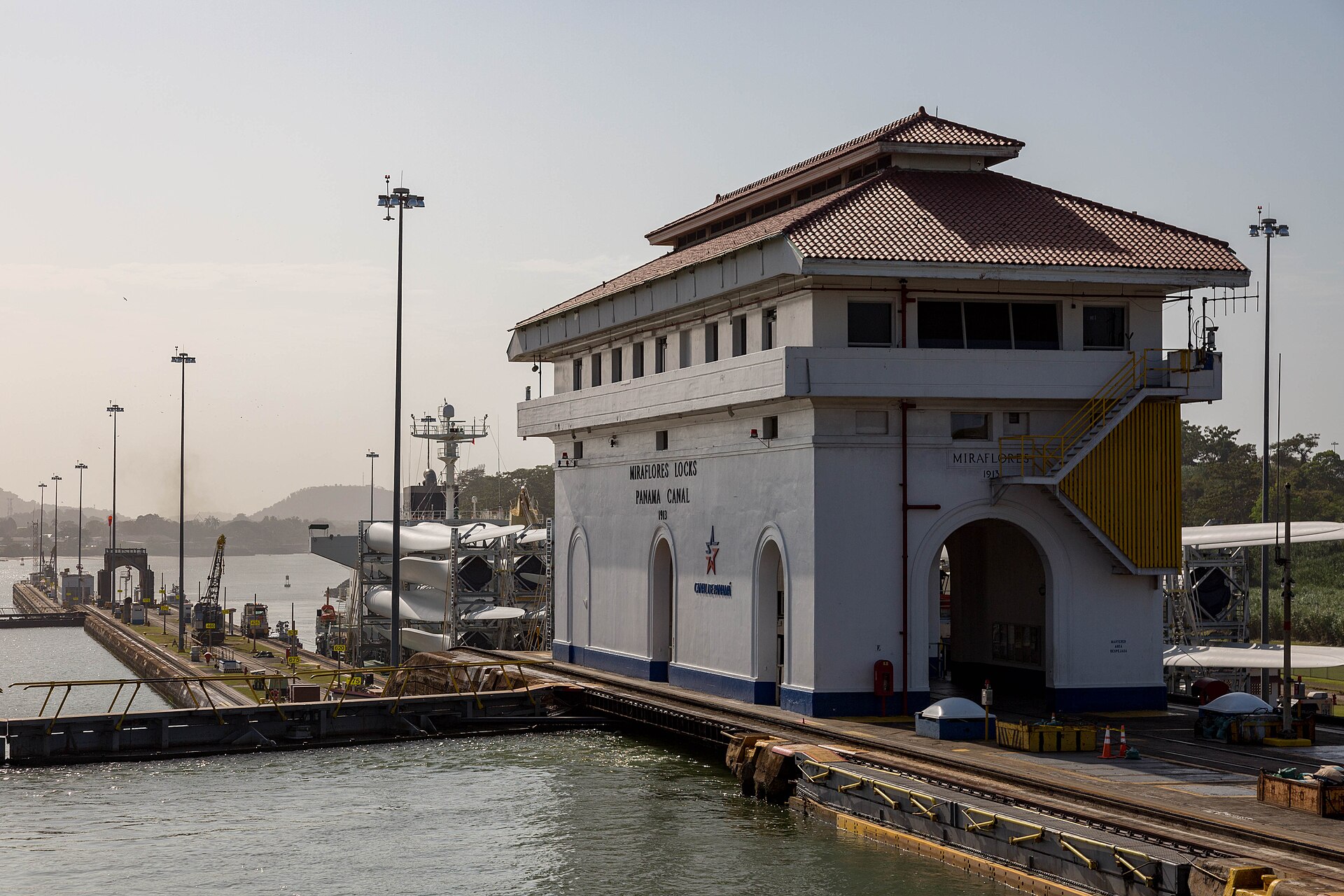
Panama’s great advantages for a foreign investor are the dollar as legal tender since 1904, the absence of a central bank and therefore of any practical possibility of exchange controls, territorial taxation that only taxes Panamanian-source income, the absence of inheritance and wealth taxes, equal treatment for foreign investors written into law, investment grade at two of the three major agencies, a Canal with record revenue, an airport connected to more than 90 destinations and twelve residency routes. But what most distinguishes the country is not what it has, but what it eliminated by design: it has no currency of its own, no central bank and no army. This guide brings those advantages together with their rule, their figure and their caveat. Data verified as of November 22, 2026.
This guide should be read together with the one on the risks of investing in Panama: advantages without the risks alongside are no basis for a decision. If you are looking for the real estate picture in particular, start with the Panama real estate investment guide for foreigners.
What sets Panama apart: three sources of instability it does not have
Almost all content about Panama presents it by what it has: the Canal, the dollar, the beaches. Our reading is different. In Latin America, the three classic channels of instability have been devaluation, discretionary money printing and the military coup. Panama gave up all three instruments, and two of them constitutionally or structurally, not by a government’s decision.
Sources: Political Constitution of the Republic of Panama, art. 310 · 2026 Investment Climate Statement · rating agencies. Reading the three facts together is this guide’s own observation; we have not found another source that presents them together. Data verified as of November 22, 2026.
The structural advantages, the ones that do not depend on a government
| Advantage | The fact and its basis |
|---|---|
| The dollar as legal tender | Since 1904; the balboa is at par |
| No central bank | There is no practical possibility of exchange controls |
| No army | Art. 310 of the Constitution |
| Territorial taxation | Only Panamanian-source income is taxed |
| No inheritance tax or wealth tax | In addition, in its reservations to the multilateral Convention on tax assistance (art. 30.1.a, instrument deposited on March 16, 2017), Panama excluded from all assistance taxes on estates, inheritances or gifts and on immovable property |
| No exchange controls or foreign investment screening | 2026 Investment Climate Statement of the U.S. Department of State |
| Equal treatment for foreign investors | Art. 2 of Law 54 of July 22, 1998, with free repatriation of capital, dividends, interest and profits |
| U.S. East Coast time zone | Allows same-day business with New York and with Latin America |
| Language | Spanish, the language of many of the region’s investors |
| Effective constitutional review | Shown in 2017 and 2023: the Supreme Court unanimously annulled two mining contracts approved by law, from two different governments, at the request of private parties |
| Private property guaranteed regardless of nationality | Art. 47 of the Constitution; expropriation only through special proceedings and with compensation (art. 48), and the state always liable (art. 51) |
Sources: Political Constitution, arts. 47, 48, 51 and 310 · Law 54 of 1998, art. 2 · Convention on Mutual Administrative Assistance in Tax Matters (ETS No. 127), reservation under art. 30.1.a · U.S. Department of State. Data verified as of November 22, 2026.
Two of these rows deserve an explanation. Territorial taxation is detailed in what is taxed in Panama, and the guarantees of Law 54 and the Constitution in legal guarantees for foreign investors. The constitutional review row comes from the Cobre Panamá case, which is often cited as a risk. Read with the facts, it shows the opposite: the Constitution prevailed over a contract with the state, a court enforced it unanimously, and the state then went to arbitration and negotiation. In addition, mines are not private property in Panama (art. 257.6), so that case was not about the regime that protects your property. We explain it in the Cobre Panamá case and legal certainty.
Tocumen: the air hub, read correctly
| Indicator | Figure |
|---|---|
| Passengers from January to October 2026 | 19,817,584, up 15% on the same period of 2025 (19,937,919 including children under two, a category included in the reports since January 2026) |
| October 2026 | 1,999,470 passengers, +10.2% against October 2025 |
| Daily operations | 497 on average in October |
| Airlines | 15 commercial passenger airlines and 16 cargo airlines in October |
| Destinations | More than 90 international and one domestic (the exact number varies between reports) |
| Transit passengers | 76% |
| Main markets in the first half | Bogotá, followed by Miami and Punta Cana |
Sources: Tocumen International Airport, via press reports; some figures differ between outlets. Check them against the official statistics before using them in a formal document. Data verified as of November 22, 2026.
The figure that matters is the 76% in transit: Tocumen is a connecting airport with some destination traffic, not the other way around. On the plus side, the connectivity is real, measured and growing at 15%, and it is what makes a regional headquarters viable in a country of just over four million people. On the minus side, the transit passenger does not sleep in Panama, does not rent and does not buy: using the 19.8 million passengers as an indicator of hotel or residential demand is a misreading.
The Canal and the economy, in numbers you can check
The Canal generated USD 6.6 billion in revenue in fiscal year 2026, a record, and the Canal Authority holds a BBB+ rating, above that of the country itself. Its “Decade of Transformation” program adds up to USD 8.5 billion in tenders: the Corozal and Telfers terminals (USD 2.6 billion, operations expected in 2029), an energy corridor of USD 4.2 to 8 billion and the Río Indio reservoir for water security. The detail is in the Panama Canal in figures, and its counterpart, the water risk, in the risks guide.
| Indicator | Figure | Source |
|---|---|---|
| Growth in 2025 | 4.4% | Moody’s |
| Forecast growth in 2026 | 4.0% (Fitch), 4.2% (Fitch BMI), about 5% (Moody’s) | Agencies |
| Forecast growth in 2027 | About 5% | Moody’s |
| Inflation in 2026 | About 0.1% | A single source |
| Basic food basket in the capital | +0.92% over twelve months, from B/.363.64 to B/.366.98 | MEF, June 2026 report |
| Stock exchange (Latinex) | USD 9,087 million traded through September 2026, with a Euroclear link | Latinex |
| Multinational headquarters (SEM regime) | 192 as of May 2026 (186 in 2025), about 10,000 direct jobs, roughly half held by Panamanians | MICI |
| Colón Free Zone | Trade volume of B/.23,166.0 million from January to October 2026, +20.5% | Colón Free Zone |
Sources: Moody’s · Fitch · MEF · Latinex · The Rio Times (MICI, SEM headquarters). Data verified as of November 22, 2026.
A common headline says Panama combines investment grade and a dollarized economy while growing at 4% to 5%. That is defensible as a combination, with two notes: investment grade comes from two of three agencies (Fitch leaves it at BB+), and Panama is not the only dollarized country on the isthmus, because El Salvador has been dollarized since 2001, although without investment grade from the agencies cited. There are two dollarized countries; only one has both things at once. See more in Panama for investors: dollar, ratings and growth, the Panama stock exchange and the SEM, EMMA and Free Zone incentives.
Twelve residency routes, the most underrated advantage
| Route | Minimum entry | Direct permanent? |
|---|---|---|
| Italy-Panama treaty | No threshold (Italian passport only, Law 15 of February 1, 1966) | Yes |
| Pensionado (retiree) | Lifetime pension of B/.1,000 a month | Yes |
| Agricultural investment | USD 60,000 | No |
| Digital nomad | USD 36,000 a year in foreign income | No |
| Temporary reforestation | USD 80,000 | No |
| Reforestation with permanent residency | USD 100,000 | Yes |
| Países Amigos (Friendly Nations) | USD 200,000 or a genuine job | After 2 provisional years |
| Qualified Investor, new construction | USD 300,000 | Yes |
| Economic Solvency (Solvencia Económica Propia) | USD 300,000 | Yes |
| Express reforestation | USD 350,000 | Yes |
| Qualified Investor: resale, securities or deposit at a state bank | USD 500,000 | Yes |
| Qualified Investor: deposit at a private bank | USD 750,000 | Yes |
Sources: Executive Decrees 16 of 2026 (Friendly Nations), 17 of 2026 (Qualified Investor) and 199 of 2021 (reforestation) · art. 191 of Executive Decree 320 of 2008 (Economic Solvency) · Law 15 of 1966 · Plan B Expat · Kraemer & Kraemer. Data verified as of November 22, 2026.
Three things this table says that are rarely published. First: the cheapest route to permanent residency with investment is reforestation, from USD 100,000, with no nationality restriction; for nationals excluded from Friendly Nations, such as Colombia, Venezuela, Nicaragua, China or the Dominican Republic, it is half of what those included pay. Second: there is a route with no capital, Pensionado, with a lifetime pension of B/.1,000 a month, direct permanent residency and the possibility for spouses to combine pensions. Third: the USD 100,000 difference between Friendly Nations and Qualified Investor buys two fewer provisional years and a statutory decision time frame of 15 business days at MICI plus 30 at Migration, 45 at most. Compare them in Panama residency options or with the which Panama visa is right for me? tool.
Buyer protections, better than people think
Art. 79 of Law 45 of 2007, as worded by art. 13 of Law 29 of 2008, establishes that advertising forms part of the contract and is enforceable by the consumer, that the delivery date must be certain or determinable, that if it is missed the buyer can terminate the contract with a full refund and no penalty, and that if the final features change substantially a proportional price reduction applies. In addition, cost increases on new homes can be challenged at Acodeco within one year of notification, through its procedure for Validation of Cost Increases on New Homes; the Supreme Court confirmed that jurisdiction on March 12, 2019, and Acodeco reports more than USD 4 million saved by consumers this way. Private property, for its part, is guaranteed regardless of nationality (art. 47 of the Constitution).
That advertising is an enforceable contract is a first-rate protection for anyone buying off-plan: keep all the advertising material, with dates. We develop this in property buyer protections in Panama.
Who does Panama work for, and who not?
| Profile | Does it work? | Why |
|---|---|---|
| Retiree with a lifetime pension | Yes, very well | Pensionado with B/.1,000, direct permanent residency, no capital tied up and retiree discounts |
| Investor from a country with inflation or exchange controls | Yes | Asset and cash flow in dollars, with no practical possibility of exchange controls |
| Company seeking a regional position | Yes | SEM, EMMA, Free Zone, Tocumen, time zone and 192 headquarters already operating |
| National excluded from Friendly Nations | Yes, and cheaper | Reforestation route from USD 100,000 |
| Buyer who wanted short-term rentals in the capital | No | Art. 21 of Law 80 of 2012: prohibited below 45 days in the district of Panama without a tourism license; outside the district, allowed |
| Someone from Latin America looking to save on cost of living | No | Panama is more expensive than Mexico, Argentina, the Dominican Republic, Venezuela, Nicaragua, Colombia and Brazil |
| Someone from Portugal, Czechia or Spain moving for cost of living | Barely | Only 7%, 8% and 9% cheaper |
| Family with children in an international school | With the numbers in front of you | USD 12,000 to 26,000 per child per year, and waiting lists of up to two years |
| Someone looking for an opaque structure | No | CRS with 87 jurisdictions, a 10% control threshold since June 2026, CARF from 2028 and Law 526 of 2026 on economic substance |
| Someone who needs locally trained elite technical talent | Not today | The country’s main technical university is in the 151–160 band in Latin America |
Sources: Numbeo, 2026 cost of living · Law 80 of 2012 and Supreme Court ruling of December 20, 2017 (file 1038-14) · STEP · Iurispa (Law 526 of 2026) · iSchoolAdvisor. Data verified as of November 22, 2026.
Cost of living is at the heart of almost every relocation decision. According to the Numbeo matrix, Panama is 58% cheaper than Switzerland, 56% cheaper than Singapore, 49% cheaper than Hong Kong and 37% cheaper than the United States, but only 9% cheaper than Spain, 8% than Czechia and 7% than Portugal; and it is 13% more expensive than Mexico, 26% than Argentina, 30% than the Dominican Republic, 48% than Venezuela, 58% than Nicaragua, 59% than Colombia, 66% than mainland China and 74% than Brazil. Run your own numbers with the cost of living calculator and see international schools in Panama.
Five questions that sum up the country
- 01Does it have investment grade?At two of three agencies: Moody’s Baa3 and S&P BBB−, both stable. Fitch, BB+, one notch below.
- 02Can the state change the tax rules?Law 54 of 1998 grants ten years of stability from B/.2,000,000 invested, but it excludes indirect taxes and allows an exception for public utility or social interest.
- 03Are there exchange controls or investment screening?Neither, according to the 2026 Investment Climate Statement.
- 04Can you buy land anywhere?No. Art. 291 prohibits buying within 10 km of the border; island territory has conditions and the indigenous comarcas cover about 22.2% of the country.
- 05Is Panama cheap?It depends on where you come from: 58% cheaper than Switzerland, 7% cheaper than Portugal and 74% more expensive than Brazil.
Sources: rating agencies · Law 54 of 1998 · Constitution, art. 291 · U.S. Department of State · Numbeo. Data verified as of November 22, 2026.
If you are planning a purchase, the closing costs calculator and the property tax calculator show what it costs beyond the price, and our country guides are in investing from your country.
Frequently asked questions
What are the main advantages of investing in Panama?
The dollar as legal tender since 1904, the absence of a central bank and of exchange controls, territorial taxation, the absence of inheritance and wealth taxes, equal treatment for foreign investors (art. 2 of Law 54 of 1998), the U.S. East Coast time zone, a Canal with record revenue of USD 6.6 billion in fiscal year 2026, the Tocumen hub, twelve residency routes and investment grade at two of three agencies.
What really sets Panama apart from other jurisdictions?
What it does not have: its own currency since 1904, a central bank and an army, the last under art. 310 of the Constitution. These are the three classic channels of instability in Latin America. Reading them together is this guide’s own observation.
How many passengers does Tocumen Airport handle?
19,817,584 from January to October 2026, up 15% on a year earlier, with more than 90 international destinations. 76% are in transit, so the figure is not useful as an indicator of hotel or residential demand. These are press figures citing the airport, and some differ between outlets.
What is the cheapest route to permanent residency?
With investment, reforestation under Executive Decree 199 of 2021, from USD 100,000 and with no nationality restriction. Without tying up capital, the Pensionado visa, with a lifetime pension of B/.1,000 a month and direct permanent residency.
What protections does a home buyer have?
Art. 79 of Law 45 of 2007 makes advertising enforceable, requires a delivery date to be set and allows termination with a full refund if it is missed, or a price reduction if the features change. Cost increases on new homes can be challenged at Acodeco, a jurisdiction confirmed by the Supreme Court in 2019.
Who does Panama not work for?
For anyone counting on rentals of under 45 days in the district of Panama, for anyone from Latin America looking to live more cheaply, for anyone seeking an opaque structure, which no longer exists with CRS, a 10% control threshold and CARF from 2028, and for anyone who needs elite technical talent trained in the country.
Sources
- U.S. Department of State: 2026 Investment Climate Statement, Panama
- Newsroom Panama: Moody’s improves Panama’s outlook (November 17, 2026)
- Newsroom Panama: Fitch affirms Panama at BB+
- Shipping Intelligence Hub: the Canal’s Decade of Transformation
- Plan B Expat: Friendly Nations and routes with no nationality restriction
- Kraemer & Kraemer: Italy-Panama treaty (Law 15 of 1966)
- The Rio Times: 192 SEM regional headquarters in 2026
- Latinex: 2025 results and 2026 roadmap
- Numbeo: Cost of Living Index by Country 2026
- Iurispa: economic substance in Panama (Law 526 of 2026)
Disclaimer: this is general information, not legal, tax or financial advice. It summarizes advantages documented as of the date shown and should be read together with the country’s risks. Consult a licensed lawyer and tax advisor in Panama before investing.

Milan Valdés Báez is an independent journalist and researcher based in Panama and the editor of Invest in Panama Real Estate, the real estate investment guide for foreigners. Every figure on the site is checked against official sources (the Official Gazette, the Superintendency of Banks, INEC, the National Migration Service and the Public Registry), with notes on which data have changed and which circulate out of date, and the guides and calculators are kept current. ORCID iD: 0009-0000-0112-3529.