

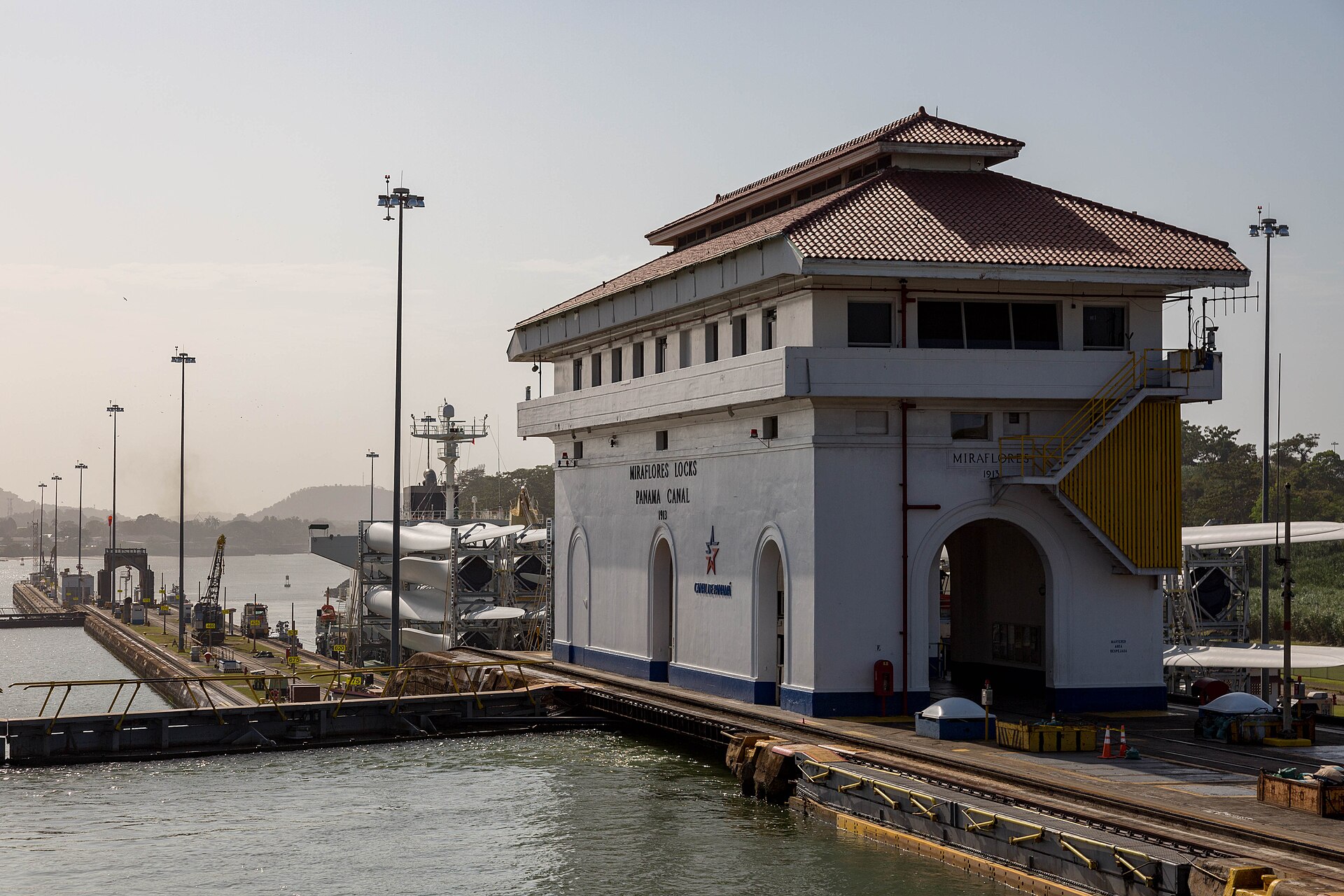
Living in Panama costs between USD 2,500 and USD 3,500 a month for a couple living comfortably, rent included, and between USD 3,500 and USD 5,000 for a premium standard. Excluding rent, Numbeo estimates USD 821 a month for a single person and USD 2,978 for a family of four (August 2026). The country works very well if you arrive with foreign income and much worse if you intend to earn in Panama: the local purchasing power index is 44.2, with New York as the base of 100. Before you move, it pays to know five friction points: progressive electricity rates, advance payment at private hospitals, school waiting lists, the bank account and the driver’s license. Data verified as of November 20, 2026.
Foreign income or a local salary: the distinction that explains everything
Panama ranks first in the InterNations Expat Insider 2026 survey, published in July 2026, for the third year in a row, according to Business Panama. At the same time, Numbeo gives it a local purchasing power of 44.2 and a house price to income ratio of 14.7, versus 8.7 in Spain. It is not a contradiction: it is the same fact seen from two sides. If you are paid from abroad, you live well; if you are paid in Panama, you find housing expensive.
| Index | Value | Reference |
|---|---|---|
| Cost of living, excluding rent | 45.5 | Ranked 72 of 155 countries |
| Rent | 23.2 | — |
| Cost of living plus rent | 35.6 | — |
| Groceries | 51.3 | — |
| Restaurants | 42.9 | — |
| Local purchasing power | 44.2 | The figure that weighs most |
| Quality of life | 119.1 | Ranked 64 |
| Safety | 57.6 | Mid-range value |
| Healthcare | 61.8 | — |
| House price to income | 14.7 | Spain: 8.7 |
| Climate | 68.2 | Spain 93.0; Portugal 97.8 |
Sources: Numbeo, cost of living 2026 · Numbeo, quality of life 2026 (mid-year). Data verified as of November 20, 2026.
The two lowest sub-indices are the ones that least appear in advertising: purchasing power and climate, which scores 25 points below Spain. And the “cheap cost of living” argument depends on your home country. On the cost of living plus rent index, Panama comes out 37% cheaper than the United States and 27% cheaper than Germany, but 59% more expensive than Colombia, 48% more expensive than Venezuela and 74% more expensive than Brazil (differentials calculated from Numbeo’s indices). To see how Panama compares with where you live now, go to investing from your country; to compare with other destinations, see Panama vs. other countries to invest and reside.
How much does it cost to live in Panama per month?
Sources: Numbeo (figures excluding rent) · ranges with rent: consensus of expat guides such as Nomads. Right-hand column: does it include rent? Data verified as of November 20, 2026.
| Area | Monthly rent |
|---|---|
| Central area of the capital, 1–2 bedrooms | USD 900 to USD 1,700 |
| Costa del Este | From USD 2,200 |
| Boquete, 2 bedrooms unfurnished | USD 450 to USD 700 |
Sources: consensus of expat guides, including Nomads; asking prices, not closing prices. Data verified as of November 20, 2026.
A resident sums it up on a forum: two thousand dollars would be a “VERY tight” budget for someone used to a Western lifestyle. Numbeo’s figures exclude rent and do not include private health insurance, an international school, a car or an electricity bill with constant air conditioning. Build your own budget with the cost of living calculator and decide whether buying makes sense for you with rent or buy in Panama?.
Electricity: the expense that throws everyone off
ASEP’s official rate schedule for regulated customers, in force from January 1 to June 30, 2026, is strongly progressive. Under the Simple Rate (BTS):
| Item | EDEMET | ENSA | EDECHI |
|---|---|---|---|
| Fixed charge, first 10 kWh (per month) | 3.16 | 2.36 | 3.04 |
| 11 to 301 kWh (per kWh) | 0.15693 | 0.17581 | 0.16476 |
| 301 to 750 kWh (per kWh) | 0.22549 | 0.20362 | 0.21525 |
| Over 750 kWh (per kWh) | 0.33454 | 0.23088 | 0.31261 |
| Prepaid rate (per kWh) | 0.16370 | 0.17830 | 0.16771 |
Sources: ASEP, regulated customer rate schedule, January 1 to June 30, 2026. Does not include ITBMS or other charges on the bill. Data verified as of November 20, 2026.
Sources: ASEP. Our own calculation; check a real bill for the home before budgeting. Data verified as of November 20, 2026.
EDEMET’s top bracket costs more than twice the bottom one, so air conditioning is paid at the most expensive marginal price. Going from 300 to 1,000 kWh almost quintuples the bill: about USD 185 more a month, more than USD 2,200 a year. Up to 300 kWh you are in the subsidized range, where most residential customers saw no increases in the first half of 2026. The distributor is determined by the area, and in the top bracket EDEMET charges 45% more than ENSA: worth knowing when you compare two homes. We have not confirmed how ITBMS applies to the bill.
A dated change: Law 562 of November 2, 2026 (Official Gazette 30647), which amends Law 6 of 1987 and takes effect on May 2, 2027, gives retirees, pensioners and seniors a 25% discount on electricity up to 600 kWh, with the normal rate on the excess. On a 750 kWh bill with EDEMET, it is worth around USD 30 a month. For a foreigner, on our reading of the text, it requires permanent residency and an age of 57 or over for women or 62 or over for men, two years more than for Panamanians; provisional residency is excluded because eligibility is proven with the permanent resident card issued by the Electoral Tribunal. Confirm it with a Panamanian lawyer: the wording is open to interpretation and the regulations may qualify it. The routes to obtain that residency are in Panama residency options.
Healthcare: good, expensive for older people and paid in advance
| Item | Detail |
|---|---|
| Reference hospital | Pacífica Salud (formerly Hospital Punta Pacífica), affiliated with Johns Hopkins Medicine International and accredited by the JCI since 2011 |
| Local insurance | USD 50 to USD 125 a month |
| Insurance for those over 65 | USD 350 to USD 500 a month |
| Surgery compared with the United States | Between 60% and 75% cheaper |
| Emergency visit | USD 200 to USD 600 |
| Practical condition | Advance payment in non-urgent cases |
Sources: Panama Nest · Expat Den · Panama Home Realty (secondary sources). Data verified as of November 20, 2026.
Advance payment means you need cash on hand as well as coverage: you may have to pay first and claim reimbursement later. Before you sign up, ask the insurer whether it has direct billing agreements with the hospitals you are interested in and whether it accepts new members above a certain age. The jump in insurance after 65, from USD 125 to USD 500 a month, adds up to USD 4,500 a year. Sources disagree on whether Pacífica Salud is the only JCI-accredited hospital in the country or whether the San Fernando hospital is a second one: it is a disputed data point. What residents highlight most on forums is not the price, but how attentive and reasonable medical care is.
| Item | Law 6, in force until May 1, 2027 | Law 562, from May 2, 2027 |
|---|---|---|
| General and specialist medical consultations | 20% | 25% |
| Prescription drugs | 10% | 20% |
| Dentistry | 15% | 15% |
| Optometry | 15% | 15%, ophthalmology too |
| Laboratory tests | — | 20% |
| Radiology services | — | 30% |
| Cancer treatment | — | 30% |
Sources: Law 6 of June 16, 1987, text published by MICI · Law 562 of November 2, 2026, Official Gazette 30647. The discounts do not apply at public Ministry of Health facilities (new art. 1-B) and are enforced by ACODECO, with fines of B/.50 to B/.5,000. Data verified as of November 20, 2026.
International schools: the bottleneck is not the price
Elementary school costs between USD 12,000 and USD 17,000 a year and high school between USD 18,000 and USD 26,000, plus a one-time enrollment fee of USD 5,000 to USD 12,000 per child; the average in the iSchoolAdvisor database is USD 13,692 a year. Schools cited include Metropolitan School of Panama (USD 12,628 to USD 20,836), King’s College (British, in Clayton, since 2012, more than USD 20,000), Balboa Academy (about USD 15,000), International School of Panama, the French lycée (AEFE network) and TRAIL School, from USD 5,813. Add the application fee, development fee, transportation, uniforms and books.
Waiting lists at the most sought-after schools reach 2 years. For a family with school-age children, the place is the real constraint: secure it before choosing the home, not after.
Internet and remote work: two very different measurements
Speedtest gives a median of about 287 Mbps on fixed broadband and 52 Mbps on mobile (August 2026), while M-Lab measures about 62.4 Mbps in the capital and some guides speak of 50 to 100 Mbps. The difference is one of method (contracted speed versus end-to-end performance). Test the connection at the specific address before signing; outside the capital it is less reliable. As a price reference, Más Móvil offered 600 Mbps for USD 39 a month and Tigo 300 Mbps for USD 43, both before the 7% ITBMS; a coworking space costs USD 15 to USD 20 a day at Selina or USD 200 a month at The Hub, according to Nomads and Expat Den. The time zone is US Eastern, an advantage if you work with North America.
Banking: the obstacle almost nobody anticipates
Opening an account takes 3 to 8 weeks. The general minimum balance is USD 500 to USD 1,000, but foreigners are asked for USD 10,000 to USD 50,000 depending on the institution, and the bank requires a reason for your link to Panama: residency, property or business activity. US citizens face more friction because of FATCA obligations. It is not arbitrary: banks protect their correspondent relationships after years of international lists; the context is in Panama as a tax jurisdiction in 2026.
- 01InvestmentExecutive Decree 17 of 2026 does not require a Panamanian account: funds from abroad can come in through the lawyer’s client account, a trust or directly to the seller or developer.
- 02Residency or titleThe residency card or the registered deed gives you the link the bank asks for.
- 03Bank accountStart the process in parallel with the immigration one and ask each bank, in writing, for the list of requirements and the minimum balance for your nationality.
Sources: Paralelaw · Expat Den (secondary sources; we have not verified any bank’s official list) · Executive Decree 17 of 2026. Data verified as of November 20, 2026.
If you plan to operate through a company, review its recurring costs in buying in your own name, through a company or through a foundation.
Climate and areas to live in
The dry season runs from December to April and the rainy season from May to November, with rain mostly in the afternoon. The Caribbean side is the rainiest. Boquete and Cerro Punta are cool and windy from December to March, the best time for hiking according to Lonely Planet. Humidity is high all year round.
| Area | Profile | Caveat |
|---|---|---|
| Panama City (Costa del Este, Punta Pacífica, Casco Viejo) | Financial center, best healthcare and schools | Rentals of less than 45 days banned in the district of Panama without a Public Tourist Accommodation license (art. 21 of Law 80 of 2012; the Supreme Court ruled in 2017 that it is not unconstitutional) |
| Coronado | Beach close to the capital, active community | Mature market |
| Boquete and Cerro Punta | Mountains, cool climate, English-speaking community | — |
| Bocas del Toro | Caribbean, islands, laid-back atmosphere | A lot of inventory held as possession rights (derecho posesorio), not titled |
| Pedasí and Azuero | Beach, less developed | Few properties on the market |
| David (Chiriquí) | Second city | One resident describes it as “extremely hot” |
Sources: Rough Guides · Lawzana (possession rights) · testimonials from resident forums. Data verified as of November 20, 2026.
Outside the capital, Boquete and Coronado, not speaking Spanish is a real problem. To invest in each area, see Panama City, Chiriquí, Bocas del Toro, Azuero and Panamá Oeste. On short-term rentals, see Panama rental yields.
Is Panama safe? The numbers by province
Sources: SIEC, Ministry of Public Security, executive homicide bulletins (cut-offs of June 30, 2026 and November 8, 2026; year 2025) · InSight Crime, 2025 homicide round-up · IGoPanama · The Rio Times. The annualized rates are our own calculation from SIEC homicide counts and the population base implied by its rates, not an official figure. Data verified as of November 22, 2026.
Why different figures circulate: the Integrated Criminal Statistics System (SIEC) publishes year-to-date rates for the current year, not annualized ones. With 299 homicides as of June 30, 2026 the published rate was 6.3 per 100,000; with 504 as of November 8, it was 10.8. They are the same country in the same year, measured at different cut-offs, and neither figure is useful for comparing it with another country. Annualized, the 2026 rate stands at around 12.6 per 100,000, versus about 12.7 in 2025: practically flat, not falling as comparing 10.8 with the previous full year would suggest.
Using the comparable figure, Panama is about 28% below the Latin America and Caribbean median, and below Costa Rica, Guatemala, Belize and Honduras; at the same time, its rate is roughly three times that of the United States. Violence is concentrated in specific neighborhoods of Panama City, San Miguelito and Colón, linked to gangs: Colón recorded 16.1 per 100,000 year to date in June and 26.5, with 84 homicides and 17% fewer, at the November cut-off; Panama province, 11.1 in June; Chiriquí, 5.6 in November. The answer depends on the province and the neighborhood. Numbeo’s perceived safety index, 57.6, is only mid-range, which usually points to non-lethal crimes such as robbery and theft, for which we found no reliable statistics by area. Sales material circulates homicide rates of 0.8 to 1.2 per 100,000 for specific neighborhoods of the capital: they have no traceable source and we do not reproduce them. The full analysis is in is Panama safe? The official crime figures.
The local tension that also needs telling
There is a lively debate in Panama about rising prices associated with the arrival of foreigners, and the academic literature supports it. A study of lifestyle migration in Latin America concludes that it rests on inherited inequalities and deepens them, with socio-spatial fragmentation (Rainer, 2019). A paper on Cotacachi, in Ecuador, measures how investment linked to foreign retirees raises land and housing prices (Crespo et al., 2023). And a study specifically on Bocas del Toro documents the gap between the idealized image of the place and the local reality, with land conflicts (Spalding, 2013). Another author describes many of these migrants as economic migrants practicing “geoarbitrage” (Hayes, 2014). If Panama is attractive to people bringing income from abroad, it is worth knowing what effects that has on those who live there.
The move: household goods, car, driver’s license and pets
- Household goods: a single duty-free import of B/.10,000 under Law 9 of 1987 or of B/.25,000 under art. 216 of Cabinet Decree 41 of 2002. These are contradictory figures from different rules: confirm with the National Customs Authority.
- The pensioner’s car: one every 2 years for personal or family use, with 5% ISC plus 7% ITBMS instead of 15%–25%, according to WCS.
- Driver’s license: it cannot be obtained without residency; Sertracen asks for the resident card or the E cédula. A foreign license can only be converted once, when you apply for your first Panamanian license. We have not confirmed how long a visitor can drive with a foreign license.
- Pets: MIDA requires an animal health certificate from the country of origin valid for no more than 30 days, apostilled or legalized by the consulate; vaccinations (for dogs, rabies, distemper, hepatitis, leptospirosis and parvovirus); parasite treatment; notice 3 to 5 business days before arrival; and processing at Tocumen with MIDA and the Ministry of Health. Still pending: current fees, whether a prior import permit is needed and whether there is home quarantine; contact MIDA at tramitezoo@mida.gob.pa.
Immigration residency does not by itself change your tax residency; we explain it in territorial taxation: what is taxed in Panama.
What to confirm with your adviser
| Data point | Status | Where to confirm it |
|---|---|---|
| Law 562 age and residency requirements for foreigners | Our own reading of the text | A Panamanian lawyer, before counting on the discounts |
| One or two JCI-accredited hospitals | Disputed | Joint Commission International public directory |
| Health insurance enrollment after age 65 | Pending | In writing, with two or three insurers |
| Requirements and minimum balances by bank | Pending | In writing, at each bank, according to your nationality |
| ITBMS on the electricity bill | Pending | A real bill for the home and ASEP |
| Household goods allowance: B/.10,000 or B/.25,000 | Disputed | National Customs Authority |
| Prior permit, quarantine and fees for pets | Pending | MIDA |
| Homicides by district and township, and property crime | Pending: homicides by province are on record at SIEC; the annualized rate is our own calculation | Current SIEC bulletin, Ministry of Public Security |
Sources: Law 562 of 2026, Official Gazette 30647 · ASEP · Kery Cruz (household goods and pets). Data verified as of November 20, 2026.
Frequently asked questions
How much does it cost to live in Panama per month?
A couple living comfortably needs between USD 2,500 and USD 3,500 a month with rent included, and between USD 3,500 and USD 5,000 for a premium standard. Numbeo estimates USD 821 for a single person and USD 2,978 for a family of four, both excluding rent, in August 2026. Rent ranges from USD 900 to USD 1,700 in the central area of the capital, from USD 2,200 in Costa del Este and from USD 450 to USD 700 for two bedrooms in Boquete.
Is it easy to open a bank account in Panama as a foreigner?
No. It takes 3 to 8 weeks, minimum balances for foreigners reach USD 10,000 or USD 50,000 depending on the institution, and the bank asks for a reason for your link to Panama, such as residency, property or business activity. US citizens face more friction because of FATCA.
What is private healthcare like in Panama and how much does it cost?
Pacífica Salud is affiliated with Johns Hopkins Medicine International and accredited by the Joint Commission International since 2011. Local insurance costs USD 50 to USD 125 a month and USD 350 to USD 500 after age 65. Surgery costs between 60% and 75% less than in the United States, and an emergency visit USD 200 to USD 600. Private hospitals usually ask for advance payment in non-urgent cases.
How much does an international school cost in Panama?
Between USD 12,000 and USD 17,000 a year for elementary school and between USD 18,000 and USD 26,000 for high school, plus an initial enrollment fee of USD 5,000 to USD 12,000. The real limit is the waiting lists, of up to 2 years: secure the place before choosing the home.
Is Panama safe?
Between January 1 and November 8, 2026 there were 504 homicides, according to the SIEC of the Ministry of Public Security, versus 593 in all of 2025. The 10.8 per 100,000 that SIEC publishes for that period is a year-to-date rate, not an annual one: annualized, the 2026 rate is around 12.6 and the 2025 rate 12.7 (our own calculation), a practically flat rate. That is about three times the US rate, but around 28% below the Latin America and Caribbean median (17.6 in 2025, according to InSight Crime) and lower than in Costa Rica, Guatemala, Belize and Honduras. Colón records 26.5 per 100,000 and Chiriquí 5.6 at the November cut-off.
Can you get a Panamanian driver’s license without being a resident?
No. The Panamanian license requires a resident card or an E cédula. It is one of the friction points that most surprises people after the move, along with the bank account and school waiting lists.
What is the weather like in Panama throughout the year?
The dry season runs from December to April and the rainy season from May to November, with rain mostly in the afternoon. The Caribbean side is the rainiest, and Boquete and Cerro Punta are cool from December to March. Numbeo gives Panama 68.2 points for climate comfort, versus 93.0 for Spain and 97.8 for Portugal.
Sources
- Numbeo: cost of living by country, 2026
- Numbeo: quality of life by country, 2026 (mid-year)
- ASEP: electricity rate schedule, January to June 2026
- Business Panama: InterNations Expat Insider 2026
- iSchoolAdvisor: international school fees, 2026
- Expat Den: Panama’s healthcare system
- Paralelaw: opening a bank account as a foreigner
- IGoPanama: homicides in 2026
- Kery Cruz: importing household goods, pets and vehicles
- Rainer (2019), Third World Quarterly, DOI 10.1080/01436597.2019.1587291
- Crespo et al. (2023), Journal of Latin American Geography, DOI 10.1353/lag.2023.a909087
- Spalding (2013), International Review of Social Research, DOI 10.1515/irsr-2013-0005
- Hayes (2014), Mobilities, DOI 10.1080/17450101.2013.858940
This is general information, not legal, tax, medical or financial advice. Costs are references from secondary sources and asking prices that change frequently; electricity rates are reviewed every six months. Verify each figure with the official source or with a professional licensed in Panama before moving or investing.

Milan Valdés Báez is an independent journalist and researcher based in Panama and the editor of Invest in Panama Real Estate, the real estate investment guide for foreigners. Every figure on the site is checked against official sources (the Official Gazette, the Superintendency of Banks, INEC, the National Migration Service and the Public Registry), with notes on which data have changed and which circulate out of date, and the guides and calculators are kept current. ORCID iD: 0009-0000-0112-3529.