

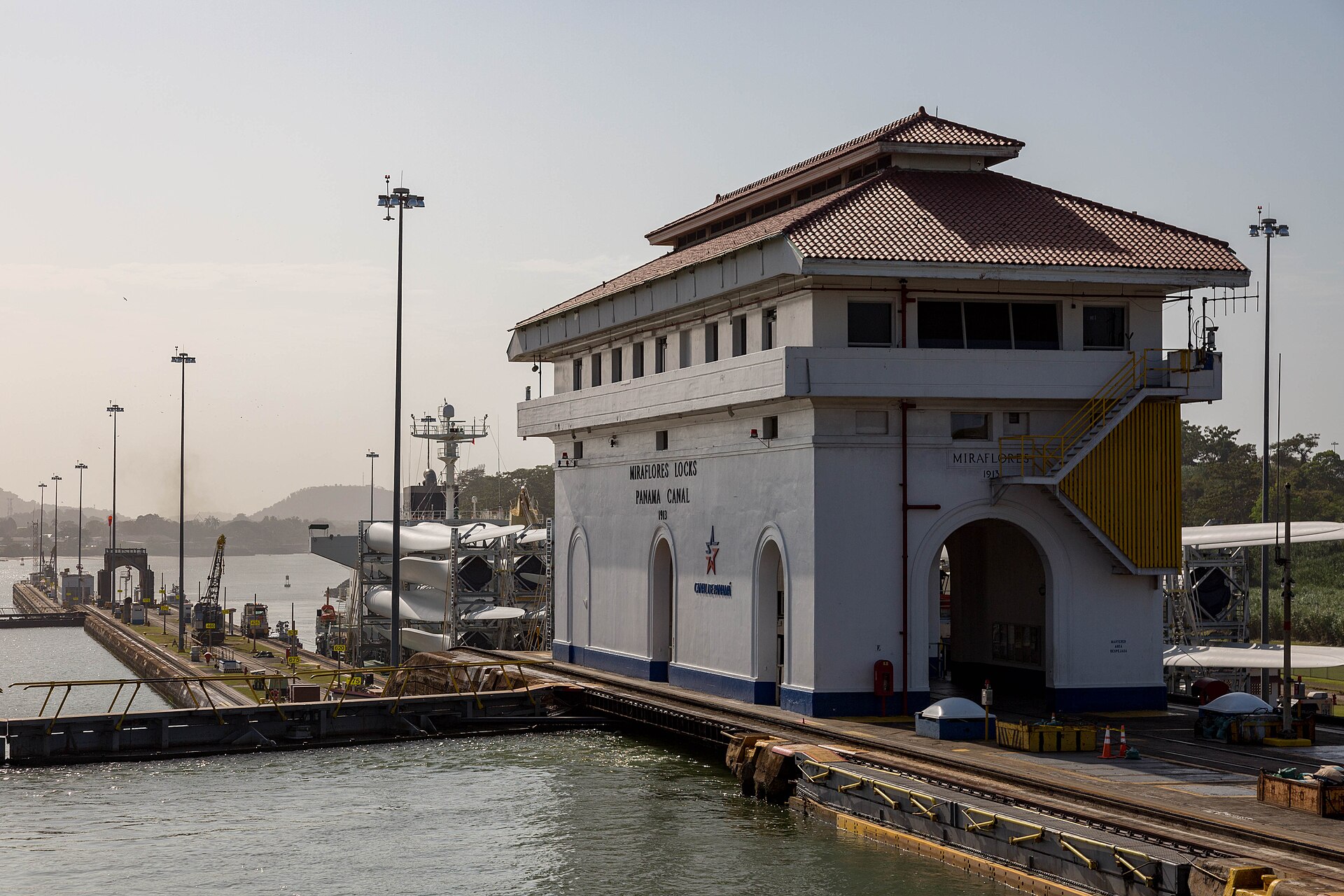
Panama has no exchange controls, no formal foreign investment screening mechanism and gives equal treatment to foreign companies, with no sector restrictions: that is what the 2026 Investment Climate Statement of the US Department of State certifies. The incentive regimes operate on top of that base: SEM (Law 41 of 2007, 192 headquarters as of May 2026), EMMA (Law 159 of 2020), the Colón Free Zone and the Industrial Development Certificates. If you are buying an apartment to live in or to rent out, you need none of them. And since 2026 the company without substance is no longer a viable product: Law 526 taxes it from 2027, and banks already ask for substance before opening an account. Data verified as of November 20, 2026.
Three facts that weigh more than any tax incentive
They are certified by a third-country source, not by the Panamanian government: the 2026 Investment Climate Statement of the US Department of State.
Sources: US Department of State, 2026 Investment Climate Statement (PDF). Data verified as of November 20, 2026.
Taken together, they mean something concrete: the decision to invest in Panama is yours, not a Panamanian authority’s. You do not need permission to come in or to take your money out, and no activities are off limits to foreign capital. Several of the programs that compete with Panama’s operate in countries with exchange controls, lists of reserved sectors or approval committees; the comparison is in Panama vs. other countries to invest and reside. For an investor, the absence of those three hurdles can be worth more than a percentage point on the tax rate.
SEM: Multinational Enterprise Headquarters
The SEM regime was created by Law 41 of August 24, 2007, is regulated by Executive Decree 28 of March 27, 2009, and was amended by Law 45 of 2012, which added incentives for the company and also for its executives. Under article 6 of the law, the role of the headquarters is to provide services to the business group it belongs to.
| Element | Detail |
|---|---|
| Legislation | Law 41 of August 24, 2007; regulations: Executive Decree 28 of March 27, 2009; amendment: Law 45 of 2012 |
| Role | Providing services to the business group (art. 6 of Law 41) |
| Legal form | Foreign company registered in Panama, or Panamanian company owned by the multinational, its subsidiaries or affiliates |
| Income tax | 5%; one source states 0% for services provided outside Panama. Unresolved discrepancy |
| Withholding on remittances | 2.5% |
| ITBMS | Exempt, except for services to related parties in Panama |
| Who sets the requirements | The Multinational Headquarters Licensing Commission, based on the group’s assets, offices and activities, with a sworn statement of compliance |
| Substance | For licenses granted before October 17, 2017, the 5% rate became subject to substance requirements from July 1, 2021 (art. 57 of the regulations) |
Sources: Law 41 of 2007, Executive Decree 28 of 2009 and Law 45 of 2012 · MICI and the SEM Technical Secretariat · The Rio Times. Data verified as of November 20, 2026.
What separates a real regime from a brochure regime is traction, and SEM’s traction is measured:
Sources: MICI and the SEM Technical Secretariat · The Rio Times. The employment figure is a round number from institutional communications. Data verified as of November 20, 2026.
The sectors are technology, logistics, financial services, advanced manufacturing and the digital economy, with emerging profiles in artificial intelligence, cybersecurity and data analytics. For a real estate investor, this is high-end rental demand, measured: about 10,000 direct jobs, close to half of them held by foreigners, at regional headquarters with skilled profiles. This is the tenant who pays from USD 2,200 a month in Costa del Este, according to Numbeo, and the 186 → 192 series shows which way it is moving. The link with the Canal is explained in the Panama Canal in figures.
EMMA: multinational manufacturing services
Law 159 of 2020 created the EMMA regime for manufacturing, assembly, logistics and refurbishment serving multinationals. It offers tax and labor incentives, plus reduced tariffs and import taxes on equipment and inputs, and it requires physical operations in Panama. Every company with an SEM license qualifies for EMMA. Note: the information available on Law 159 of 2020 is scarce, and we have not verified its rates or its detailed requirements; it is the most poorly documented of the regimes in this guide.
Colón Free Zone, free zones and other instruments
- Colón Free Zone. The sources consulted in November 2026 describe it as the largest free zone in the Western Hemisphere. It offers preferential rates in exchange for user fees, plus 5% on dividends, or 2% of net profit if no dividends are distributed. See also investing in Colón.
- Free zones in general. Exemptions of 10 to 20 years depending on the zone and the investment are often cited, a figure not confirmed by an official source.
- Industrial Development Certificates. An incentive tool for high-value industries, cited by the 2026 Investment Climate Statement alongside EMMA.
- Tourism incentives. The regime exists, but the available sector data are from 2024 and we have not verified the law currently in force or its incentives, so we do not cite it by number. It is the clearest gap in this guide.
How much does it cost to set up and maintain the structure?
| Vehicle | First year | Annual maintenance |
|---|---|---|
| Corporation (S.A.) | 1,080 to 3,000 depending on the provider (ranges cited: 1,080–1,800, 1,500–2,500 and 2,000–3,000) | 1,000 to 1,500, plus the annual flat fee of 300 |
| Private Interest Foundation | 5,000 to 8,000, plus an endowment of about 10,000 | No data |
| Nominee directors (optional) | 1,500 to 3,000 per nominee | 1,500 to 3,000 per nominee per year |
| Limited liability company (S.R.L.) | Little information available | No data |
Sources: costs collected from the Panamanian provider market (commercial references, not official fees), except the annual flat fee, which is public. Data verified as of November 20, 2026.
Three observations that save money. First: the range for an S.A. runs from USD 1,080 to 3,000 for the same product, almost three times as much; ask for at least three itemized quotes and check what each one includes (resident agent, annual flat fee, directors, books, seals). Second: the USD 300 annual flat fee is public and the same for everyone; anything above it is the provider’s fee. Third: nominee directors cost USD 1,500–3,000 per nominee per year, indefinitely, and in 2026 their usefulness changed, as explained below. If your question is whether to buy in your own name or through a company, read buying in your own name, through a company or through a foundation.
Where the market changed: economic substance
Law 526 of May 28, 2026 (Official Gazette 30534-B), regulated by Executive Decree 32 of September 2, 2026, taxes at 15%, as a single and final tax, the foreign-source passive income of Panamanian entities that belong to a multinational group and lack proven substance. It applies to tax years beginning on or after January 1, 2027. It covers dividends, interest, royalties and fees, capital gains and real estate income, and the elements of substance are qualified staff, adequate premises, strategic decision-making in Panama and real operating expenses. The law sets no numerical threshold. The broader tax context is in Panama as a tax jurisdiction in 2026.
A nuance that commercial summaries tend to leave out: under art. 707-E, introduced by the law, entities whose main activity is the non-habitual holding of shareholdings, or exclusively the holding of real estate, only have to meet the human resources and premises requirement, not the strategic decision-making and operating expense requirements. And there is a fact that already applies, law or no law: banks require documentation of substance to open an account.
The conclusion, plainly: the “paper company” model is dead in practice, not so much because of the law, which takes effect in 2027, but because a company without a bank account can do nothing, and the account already requires proof of substance. The investor’s reading is the opposite of what usually gets published: this improves the jurisdiction for anyone with real activity, because a Panamanian structure with substance, operations and an account can be defended before the tax authority of your home country. As for nominee directors: if the bank and the law ask for substance, paying USD 1,500–3,000 a year for a nominee to appear otherwise is spending in the wrong direction. How each type of income is taxed in Panama is explained in territorial taxation: what is taxed in Panama.
The honest context: foreign investment is far below its peak
Sources: preliminary 2026 foreign direct investment data; the comparison mixes quarters with a full year and only serves as an order of magnitude. Data verified as of November 20, 2026.
This section exists because an investor who discovers these figures later stops believing the rest. Foreign direct investment was about USD 213 million in the March 2026 quarter and about 579 million in the June quarter (preliminary), far below the peak of about 2,050 million in 2018. The identifiable cause is the closure of Cobre Panamá, which still weighs on the public accounts. Older projections that placed mining as the “second sector of the economy after the Canal” predate the closure, are outdated and should not be relied on.
The balanced reading: foreign direct investment is volatile and far from its peak, but what holds the picture up is the Canal (USD 6,600 million in revenue in fiscal year 2026), the SEM regime (192 headquarters, about 10,000 jobs) and the securities market (more than USD 9,000 million traded as of September 2026; see the Panama stock exchange). Those three are growing; aggregate foreign investment is not. Inflation in 2026, at around 0.1% according to a single source, is the flip side of dollarization: if you collect rent in dollars in a country with near-zero inflation, you keep your purchasing power.
Which regime fits which investor?
| Profile | Regime to look at |
|---|---|
| Investor living off income, or retiree, buying an apartment | None of these. Buy in your own name |
| Remote professional who invoices abroad | None of these. The remote work immigration route and territoriality are enough |
| Group with real regional operations that centralizes services | SEM (Law 41 of 2007), which also qualifies for EMMA |
| Manufacturing, assembly, logistics or refurbishment for a group | EMMA (Law 159 of 2020) |
| Trade in goods with regional redistribution | Colón Free Zone |
| High-value industry | Industrial Development Certificates |
| Company with no activity for passive holding | No longer a viable product: Law 526 from 2027, and banks already asking for substance |
Sources: 2026 Investment Climate Statement · Laws 41 of 2007, 159 of 2020 and 526 of 2026 · Iuris Panama. Data verified as of November 20, 2026.
If what you are after is residency, the route depends on your situation, not on these regimes: compare the options in Panama residency options or with the which Panama visa is right for me? tool. To estimate the costs of a direct purchase, use the closing costs calculator.
What to confirm with your adviser
| Point | Status |
|---|---|
| SEM regime rate | Unresolved discrepancy: 5% according to the main source, 0% for services provided outside Panama according to another. This is the figure that decides the case; pin it down before applying for a license |
| EMMA rates and requirements | Not verified; Law 159 of 2020 is the most poorly documented regime |
| Tourism incentive regime | Law not verified; sector data are from 2024 |
| Exemptions of 10 to 20 years in free zones | Not confirmed by an official source |
| Substance requirements under art. 57 of Executive Decree 28 of 2009 | Cited, not broken down; they condition the reduced rate for licenses granted before October 2017 |
| Inflation of around 0.1% in 2026 | A single source |
| SEM employment | About 10,000 direct jobs in early 2026, with “approximately half” held by Panamanians: a round institutional figure |
Sources: MICI · Official Gazette 30534-B (Law 526 of 2026) · The Rio Times. Data verified as of November 20, 2026.
Frequently asked questions
Does Panama have exchange controls or foreign investment screening?
No. According to the 2026 Investment Climate Statement of the US Department of State, Panama has no exchange controls and no formal investment screening mechanism, gives equal treatment to foreign companies and imposes no sector restrictions on foreign investors.
What is Panama’s SEM regime?
The Multinational Enterprise Headquarters regime of Law 41 of August 24, 2007, regulated by Executive Decree 28 of 2009 and amended by Law 45 of 2012. The headquarters provides services to its group. Income tax is 5% (one source states 0% for services provided outside Panama, a disputed figure), with 2.5% withholding on remittances and an ITBMS exemption except for services to related parties in Panama.
How many multinational headquarters are there in Panama?
192 as of May 2026, up from 186 in 2025. In early 2026 they generated about 10,000 direct jobs, approximately half of them held by Panamanians, in technology, logistics, financial services, advanced manufacturing and the digital economy.
What is the EMMA regime?
The regime of Law 159 of 2020 for manufacturing, assembly, logistics and refurbishment serving multinationals, with tax and labor incentives and reduced tariffs on equipment and inputs. It requires physical operations in Panama, and every company with an SEM license qualifies. We have not verified its rates or detailed requirements.
How much does it cost to set up a Panamanian company?
Between USD 1,080 and 3,000 in the first year depending on the provider, with annual maintenance of 1,000 to 1,500 plus the public annual flat fee of 300. A Private Interest Foundation costs between 5,000 and 8,000 plus an endowment of about 10,000, and nominee directors cost between 1,500 and 3,000 per nominee per year.
Is a Panamanian company with no activity still useful?
In practice, no. Law 526 of May 28, 2026 (Official Gazette 30534-B) taxes at 15% the foreign-source passive income of entities in multinational groups that lack substance, for tax years beginning on or after January 1, 2027, and regardless of the law, banks already require documentation of substance to open an account.
Is foreign direct investment in Panama growing?
Not in aggregate terms. Preliminary data show about USD 213 million in the March 2026 quarter and about 579 million in the June quarter, far from the peak of about 2,050 million in 2018, because of the closure of Cobre Panamá. The Canal, the SEM regime and the securities market are growing. Older projections that placed mining as the second sector after the Canal are outdated.
Sources
- US Department of State: 2026 Investment Climate Statement, Panama
- The Rio Times: 192 multinational headquarters in 2026
- Iuris Panama: economic substance in Panama
- Law 41 of August 24, 2007, Executive Decree 28 of March 27, 2009 and Law 45 of 2012 (SEM regime).
- Law 159 of 2020 (EMMA regime).
- Law 526 of May 28, 2026, Official Gazette 30534-B, and Executive Decree 32 of September 2, 2026 (economic substance).
This is general information, not legal, tax or financial advice. Incorporation costs are provider references, and the rates of some regimes are disputed or unverified, as indicated. Consult a lawyer and a tax adviser licensed in Panama before setting up a structure.

Milan Valdés Báez is an independent journalist and researcher based in Panama and the editor of Invest in Panama Real Estate, the real estate investment guide for foreigners. Every figure on the site is checked against official sources (the Official Gazette, the Superintendency of Banks, INEC, the National Migration Service and the Public Registry), with notes on which data have changed and which circulate out of date, and the guides and calculators are kept current. ORCID iD: 0009-0000-0112-3529.