

Yes: a foreigner who does not live in Panama can buy almost any titled property registered with the Public Registry (Registro Público), in their own name and with the same guarantees as a Panamanian. The only exceptions are the 10 km strip along the borders and island territory, which can only be transferred under special conditions. For Panama real estate investment, the country offers a dollarized economy that grew 4.4% in 2025, low inflation and an average gross rental yield of 7.4%, which comes to around 4.8% net if you manage the property yourself. On the other hand, the housing market is slow, a mortgage for non-residents costs more than 9% with the FECI surcharge, and several key rules changed in 2026. This guide brings together the fundamentals, what changed and a strategy explained with numbers, not promises.
Data verified as of November 22, 2026.
What economic fundamentals support an investment in Panama?
Panama grew 4.4% in 2025, according to preliminary figures from the Comptroller General, with a nominal GDP of USD 90,462.6 million driven by the Canal. In its October 2026 Article IV review, the IMF projects growth of close to 5% for 2026. Inflation closed 2025 at −0.1% and stood at 2.8% year on year in September 2026, according to La Estrella de Panamá. Unemployment fell to 8.5% in August 2026.
The economy runs on dollars: the balboa circulates at par with the USD. If you bring in dollars, that removes currency risk when you buy, when you collect rent and when you sell. The weak spot is fiscal. Public debt reached USD 62,777.7 million in September 2026, between 61% and 66% of GDP depending on the source, and the IMF recommends using the Canal’s extraordinary revenue to reduce it. You will find more indicators and how they have evolved in Market and data.
Sources: Comptroller General · IMF · La Estrella de Panamá · Comptroller General (employment) · Global Property Guide (gross yield, Q4 2026) · Superintendency of Banks · Telemetro (preliminary Canal figure). Data verified as of November 22, 2026.
Ratings, FATF and the EU list: how reliable is the country?
Two of the three major rating agencies keep Panama at investment grade. S&P affirmed BBB− stable in September 2026, and Moody’s keeps it at Baa3 and improved its outlook to stable in November 2026, according to Newsroom Panama. Fitch rates it BB+, below investment grade since the March 2024 downgrade. These three references come from the specialized press, not from the agencies’ own releases. For an investor, the sovereign rating matters mainly because it affects the banks’ funding costs and, with them, mortgage rates.
On transparency, the picture has improved. Panama left the FATF gray list in October 2023, according to the Superintendency of the Securities Market. Outdated information: guides are still circulating, including a KPMG guide from February 2026, that place Panama on the European Union’s tax blacklist. On October 9, 2026, the ECOFIN Council removed it from Annex I and moved it to Annex II, following the 2026 economic substance law, according to the EU Delegation to Panama. It is Law 526 of May 28, 2026 (Official Gazette 30534-B); some indexed headlines mistakenly cite it as «926». The EU’s next review is scheduled for February 2027.
The Canal and tourism sustain demand
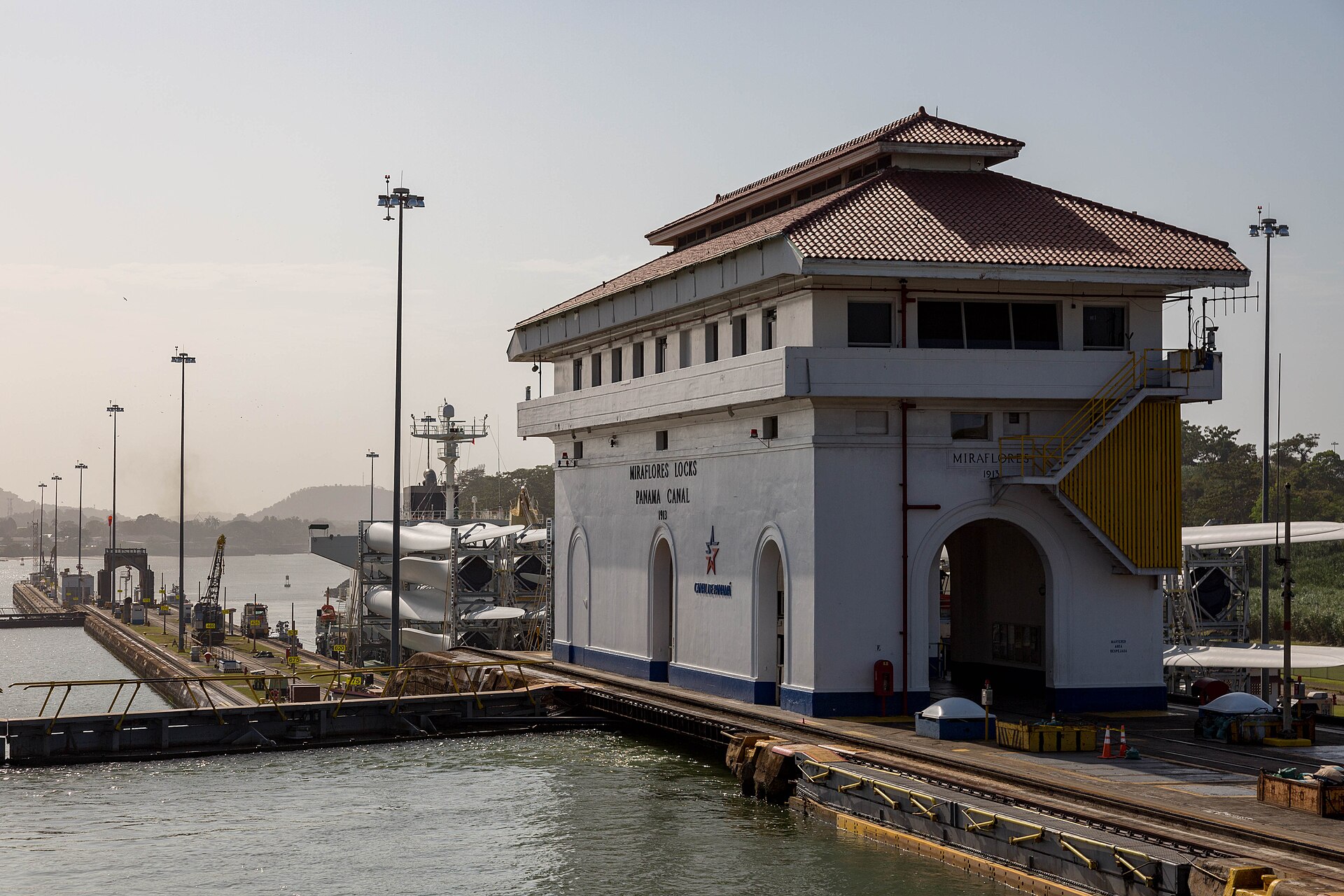
The Canal closed fiscal year 2026 with 13,951 transits and USD 6,600 million in revenue, preliminary figures reported by the press. Tocumen airport handled a record 20.98 million passengers in 2025, and the Tourism Authority (ATP) recorded a 17.4% increase in international visitors in the first half of 2026. That external demand feeds executive rentals, logistics and tourism. The risk is water: in the final weeks of the fiscal year the daily vessel quota was reduced because of El Niño, and the Río Indio reservoir would not be operational before 2031 in an optimistic scenario.
What changed in 2026, and why is so much online information no longer useful?
Three regulations from August and September 2026 and the November bank rate sheet changed the transfer tax, residency by investment and the cost of credit. Many guides, law firms and even international tax summaries still quote the old figures. This table summarizes what you should discard.
| Topic | What is still circulating | What is in force |
|---|---|---|
| ITBI on new homes | Full exemption, or «everything pays 2%» | Law 546 of 2026 (since September 1, 2026): the first B/.120,000 exempt on the first sale, a scale from 0.5% to 1.8% up to B/.200,000 and 2% on the excess above that. The seller pays it. |
| Investor visa | US$300,000 in any property (Decree 722 of 2020) | Executive Decree 17 of 2026 (since September 16, 2026): B/.300,000 in a first-sale property and B/.500,000 in a resale, net of mortgage. |
| Mortgage rates | From 4.88% to 10.50% (July rate sheet) | SBP rate sheet for November 2026: from 5.48% to 10.00%, median 6.97%, for residents. |
| EU tax list | Panama on the blacklist (Annex I) | Removed from Annex I on October 9, 2026; now on Annex II. |
| Constitutional limit | «Article 290 prohibits buying near the border» | It is article 291 of the current text; article 290 deals with foreign governments. |
| Países Amigos (Friendly Nations) | Residency with a US$5,000 deposit | Executive Decree 16 of August 31, 2026 (Official Gazette 30601-B): 51 countries, with Ecuador added; it does not include Colombia, Venezuela, Nicaragua, the Dominican Republic, China or Italy. It requires a property or a 3-year time deposit of US$200,000, or a real job, and grants 2 years of provisional residency. |
Sources: Official Gazette 30601-B (Law 546) · National Migration Service (Executive Decree 17) · Superintendency of Banks · EU Delegation · Constitute Project · Lincoln Global Partners · Plan B Expat (list under Executive Decree 16 of 2026). Data verified as of November 22, 2026.
The details of each change are in our guides on taxes and costs, residency by investment, mortgages and banks and the legal framework.
Should you buy with your own capital or with a Panamanian mortgage?
The rates on the Superintendency of Banks rate sheet are list rates for residents. Non-residents pay more and, on top of that, the FECI surcharge of 1% a year, which is not charged on a primary residence but, according to Banco General, is charged to foreigners without permanent residency. Banistmo publishes 8.25% + FECI for a second home or investment property and 8.50% + FECI for a vacation home. Credicorp charges between 7.50% and 9.50% + 1% FECI on investment property, over 15 years. Davibank finances up to 75% below USD 500,000, over 25 years. On the income side, the national average gross yield is 7.40% (Global Property Guide, fourth quarter of 2026), and estimated net yields in Panama City neighborhoods range from 3.6% to 4.7% (Vaca Group), based on private asking-price data. Another industry estimate, after costs and 15% income tax (ISR), puts the net yield at about 4.8% self-managed and 3.8% with a property manager.
Example (our own calculation): a B/.300,000 property financed at 75% (B/.225,000) at 9.25% (8.25% + 1% FECI) over 25 years has a payment of about B/.1,927 a month, or about B/.23,124 a year before insurance and fees. With a gross yield of 7.40%, that property would generate about B/.22,200 a year in rent; with a net yield of 3.6% to 4.8%, depending on the estimate, between B/.10,800 and B/.14,400. Because the borrowed money costs more than the property yields, each financed dollar lowers the return on your capital instead of raising it. You can rerun the numbers with your own figures in the mortgage comparison tool and the rental yield calculator.
Sources: Superintendency of Banks · Banistmo · Global Property Guide · Vaca Group (asking prices) · 4.8% and 3.8% net: industry estimate after costs and 15% income tax, compiled as of November 20, 2026. Yields come from private sources. Data verified as of November 22, 2026.
A first-sale purchase with your own capital: residency and a partial ITBI
With current data, the combination with the best cost-benefit ratio is a new, first-sale home of B/.300,000 or more, paid for with your own capital. Executive Decree 17 of 2026 grants direct permanent residency as a Qualified Investor with a first-sale property of B/.300,000; for a resale the minimum is B/.500,000. The qualifying value is net of liens, the funds must be of foreign origin and traceable, and the investment must be held for 5 years. You pay the State B/.5,000 to the Treasury and a B/.5,000 repatriation deposit. That is why a mortgage can only finance the excess: on a new B/.400,000 home, the loan could not exceed B/.100,000 if you want to keep the B/.300,000 net (our own calculation).
That same purchase pays a partial ITBI, which by law the seller bears: on B/.300,000 it is B/.3,600, compared with B/.6,000 on a resale (our own calculation under Law 546). There are cheaper routes, such as the Países Amigos (Friendly Nations) visa with a US$200,000 property, only for nationals of the 51 countries in Executive Decree 16 of 2026; the reforestation route from US$100,000, which leads to permanent residency with no nationality restriction; or the Pensionado (retiree) route. Compare them in Which Panama visa is right for me? The preferential interest subsidy is not available to investors: it only covers new homes of up to B/.120,000 that are a primary residence.
Which property type and which area make the most sense?
There is no official price index. Private asking-price data put resale apartments in Panama City between 1,800 and 3,700 USD/m², with medians of 3,664 USD/m² in Santa María and 2,530 in Costa del Este. Offices had 23.73% availability in the first quarter of 2026, while logistics is the tightest segment: industrial availability fell to 6.01% and Panamá Pacífico reports warehouses at 100%. In retail space, vacancy is around 8% in class A and 14% in class B. National hotel occupancy was 57% to 58% in 2025. With land, title, access and zoning matter more than any average. All of these market figures come from private sources or the press.
By area, Panama City concentrates liquidity. Panamá Oeste, with 653,665 inhabitants in the 2023 Census, depends on Metro Line 3, whose opening has slipped to 2027–2028, and loses close to 50% of the water it produces. The beaches of Coclé, the islands of Bocas del Toro and Chiriquí call for especially careful title checks. Compare options in Where to invest and Property types.
What are the main risks for a foreign investor?
Sources: La Prensa · Superintendency of Banks · CEOWORLD (45-day rule, secondary source) · Newsroom Panama (Fitch) · Public Prosecutor’s Office · Panamá América · Al Jazeera. Data verified as of November 16, 2026.
Long-term rentals are governed by Law 93 of 1973 and registered with MIVIOT. Short-term rentals have no general law of their own, but in the district of Panama, art. 21 of Law 80 of 2012 prohibits renting for less than 45 days without a Public Tourist Lodging license, and the Supreme Court declared it constitutional in 2017. You will find the details in Rental income and yields and in our guide to the Panamanian lease agreement.
How to move forward: guides and tools on this site
- How to buy: due diligence, pre-construction, the deed and buying remotely.
- Legal: foreign ownership, titles, coastal land, condominium law and companies.
- Taxes and costs: ITBI, property tax, rental income and capital gains.
- Mortgages and banks and Residency by investment.
- Property types, Areas, Rental income and yields and Market and data.
- Tools: mortgage comparison, closing costs and ITBI, property tax, rental yield, which visa is right for me? and cost of living.
Frequently asked questions
Do I need to be a resident to buy property in Panama?
No. A non-resident foreigner can buy titled property registered with the Public Registry in their own name, with the same guarantees as a Panamanian. The exceptions are the 10 km strip along the borders and the special regime for islands (article 291 of the Constitution).
What return can I expect from a rental apartment?
Private sources put the national average gross yield at 7.40% (fourth quarter of 2026) and estimated net yields in Panama City neighborhoods between 3.6% and 4.7%, based on asking prices; another industry estimate gives about 4.8% net if you manage it yourself and 3.8% with a property manager. These figures are not guaranteed: they depend on vacancy, the maintenance fee, taxes and the purchase price.
Does it make sense to finance the purchase with a Panamanian bank?
It can be done, but at the published rates for non-residents (from 8.25% + 1% FECI at Banistmo), the cost of credit exceeds the typical net rental yield. In addition, for the Qualified Investor visa the minimum amount must be free of any mortgage.
How much do I need to invest in property to get residency?
Under Executive Decree 17 of 2026, B/.300,000 net of liens in a first-sale property or B/.500,000 in a resale property, as a Qualified Investor. The Países Amigos (Friendly Nations) visa accepts a US$200,000 property, but only for nationals of the 51 countries in Executive Decree 16 of 2026, and it starts with 2 years of provisional residency.
Is Panama still on international blacklists?
It left the FATF gray list in October 2023 and the European Union’s tax blacklist (Annex I) on October 9, 2026. It is now on Annex II, which groups jurisdictions with pending commitments.
Sources
- Comptroller General: GDP grew 4.4% in 2025
- IMF: concluding statement of the 2026 Article IV mission
- EU Delegation: Panama leaves the list of non-cooperative jurisdictions
- Superintendency of the Securities Market: Panama leaves the FATF gray list
- Superintendency of Banks: November 2026 rate sheet
- Executive Decree 17 of 2026 (Qualified Investor)
- Law 546 of 2026, Official Gazette 30601-B
- Banistmo: mortgage loan rate sheet and Davibank: mortgages for non-residents
- Global Property Guide and Vaca Group (private sources)
- Tourism Authority: statistical report, January to August 2026
- Newsroom Panama: Moody’s improves Panama’s outlook to stable (November 17, 2026)
- CEOWORLD: the 45-day rule in the district of Panama (secondary source; the rule is art. 21 of Law 80 of 2012)
- Plan B Expat: Friendly Nations list under Executive Decree 16 of 2026 and routes with no nationality restriction (secondary source)
This is general information, not legal, tax or financial advice, nor an investment recommendation. Data verified as of November 22, 2026. Past or estimated returns do not guarantee future results. Before you buy, consult a qualified Panamanian attorney and confirm the figures with the official sources cited.

Milan Valdés Báez is an independent journalist and researcher based in Panama and the editor of Invest in Panama Real Estate, the real estate investment guide for foreigners. Every figure on the site is checked against official sources (the Official Gazette, the Superintendency of Banks, INEC, the National Migration Service and the Public Registry), with notes on which data have changed and which circulate out of date, and the guides and calculators are kept current. ORCID iD: 0009-0000-0112-3529.