

The Panama real estate market reaches the end of 2026 with a solid economy and a slow market. The country grew 4.4% in 2025, inflation was 2.8% year over year in September 2026 and unemployment fell to 8.5%; the Canal had a record fiscal year and Panama came off the European Union’s tax blacklist. But sales of new homes fell almost 40% in 2025, mortgage disbursements dropped 13% between January and August 2026, and nearly a quarter of office space is available. Logistics, by contrast, has almost no vacant space. This guide brings together the indicators with their date and source, along with the documented risks.
Data verified as of November 22, 2026.
Sources: Comptroller General · La Estrella de Panamá · Comptroller General (employment) · Telemetro · La Prensa · SBP · CIJ.World/Newmark · Revista Summa. The −39.5% drop is our own calculation (2,866 versus 4,737). Data verified as of November 16, 2026.
How is Panama’s economy doing in 2026?
According to the Comptroller General, real GDP grew 4.4% in 2025 (preliminary figure), with nominal GDP of USD 90,462.6 million. The engine was transportation (+14.5%), led by Canal tolls (+22.0%), while agriculture and re-exports declined. For 2026, the IMF projects close to 5% after its October mission; the World Bank, 4.2%, and Fitch, 4.0%.
Inflation closed 2025 at −0.1% and stood at 2.8% year over year in September 2026 (3.0% in the province of Panama), according to the press; it is worth confirming with INEC, the national statistics institute. Unemployment fell to 8.5% in August 2026, versus 10.4% in September 2025, and informality went from 47.1% to 45.8%. One caveat: INEC’s quarterly business survey shows headcounts shrinking in four of five activities. The economy uses the US dollar, with the balboa at par, so anyone investing in dollars faces no currency risk. More context in investing in Panama and in Panama for investors: dollar, ratings and growth.
Debt, ratings and international lists
Public debt reached USD 62,777.7 million in September 2026, 5.8% more than in December 2025, according to Ministry of Economy and Finance (MEF) data published by Infobae. Its weight relative to GDP ranges from 61% to 66% depending on the source. The deficit was 3.7% of GDP in 2025, with a legal ceiling of 3.5% for 2026. The IMF called for using the Canal’s extra revenue to reduce debt and warned about the growth of debt in currencies other than the dollar.
Two of the three rating agencies keep Panama at investment grade. S&P kept BBB− stable in September 2026. Moody’s rates it Baa3, the lowest rung of investment grade, and in November 2026 it improved its outlook to stable, according to Newsroom Panama. Fitch downgraded Panama to BB+ in March 2024 and affirmed that rating with a stable outlook in July 2026. This matters to buyers because banks’ funding costs feed into mortgage rates.
Outdated claim: many guides still say Panama is on the EU tax blacklist. On October 9, 2026, ECOFIN removed it from Annex I and moved it to Annex II, following the economic substance reform (Law 526 of 2026 and Executive Decree 32 of 2026), according to the EU Delegation. The next review is in February 2027. Panama had already left the FATF gray list on October 27, 2023 (Superintendency of the Securities Market). The details are in Panama as a tax jurisdiction in 2026.
The Canal, tourism and other external drivers
The Canal closed fiscal year 2026 (October 2025 to September 2026) with 13,951 transits, 4.1% more than the previous year, and about USD 6,600 million in revenue, preliminary unaudited figures published by Telemetro. At the end of the period the daily quota fell to 32 vessels because of El Niño. The Rio Indio reservoir, meant to secure the water supply, would begin construction in 2028 and be operational around 2031 in an optimistic scenario. See the Panama Canal in figures.
Two other fronts remain open. In February 2026 Panama annulled CK Hutchison’s port concessions in Balboa and Cristobal after a Supreme Court ruling, and the company is claiming about USD 2,000 million in arbitration. The Cobre Panamá mine still has no authorization for new extraction and has only processed stockpiled ore since April 2026 (see the Cobre Panamá case). In tourism, Tocumen handled a record 20.98 million passengers in 2025 and international visitors grew 17.4% in the first half of 2026, according to the ATP, with the United States as the top source market.
Construction and mortgage lending
Building permits rebounded: their value rose 43.5% between January and April 2026, to about USD 417.2 million, led by Arraiján (+351.9%). In the first half they totaled USD 597.6 million, USD 100.5 million more than a year earlier (+20.2%, our own calculation), driven by non-residential projects. The Panamanian Chamber of Construction considers the recovery still insufficient.
Credit is cold. According to the Superintendency of Banks, the residential mortgage portfolio totaled USD 20,016 million in August 2026 (−0.17% year over year), new disbursements fell 13% between January and August, and the past-due portfolio improved from 3.5% to 3.3%. New loans at the preferential rate fell 34% between January and April. APC credit bureau data use a different methodology and are not comparable. The November 2026 rate sheet puts resident home mortgages between 5.48% and 10.00%, with a median of 6.97%; non-residents pay more and add 1% FECI. The Banco Hipotecario Nacional (National Mortgage Bank) is being wound down. Compare in the mortgage comparison tool and in Panama mortgages for foreigners.
Housing: falling sales and an unhurried resale market
New home sales fell from 4,737 units in 2024 to 2,866 in 2025, almost 40% less, with 1,292 units in the first quarter of 2026, according to La Prensa. The same newspaper reports that foreign buyers are keeping part of sales afloat. Another report mentions an inventory of 4,336 unsold homes (3,406 houses and 930 apartments), concentrated between USD 50,000 and 80,000, probably from 2025. The end of MIVIOT’s Housing Bonus (Bono de Vivienda) slowed low-cost houses.
There is no official price index. Private asking-price data put resale apartments in the capital between USD 1,800 and 3,700/m², with gross yields of 6.7% to 9.4%. For investors, the consequence is simple: exiting can take time. See where to invest, Panama rental yields and the price per square meter tool. The Qualified Investor (Inversionista Calificado) program does attract capital into property: between July 2025 and June 2026 it issued 268 certificates for USD 113.6 million, 87.3% of it in real estate, according to MICI (see residency by investment).
Offices, retail, logistics and hotels
Offices. According to Newmark data published by CIJ.World, availability fell from about 30.9% in 2021 to 23.73% in the first quarter of 2026, on an inventory of about 1.83 million m². That leaves about 434,000 m² available (our own calculation) against absorption of 8,788 m² in the quarter. The average asking rent is USD 16.86/m² per month. Santa María and Costa del Este are the healthiest submarkets; Punta Pacífica exceeds 30%. There is no new speculative supply under construction. See offices.
Retail. Vacancy was ~8% in Class A and ~14% in Class B at the end of 2025 (CIJ.World); other consultancies give 12–15% overall availability. The large malls usually have a single owner, so the accessible product is a condominium-titled unit in a strip center or on a ground floor (retail space).
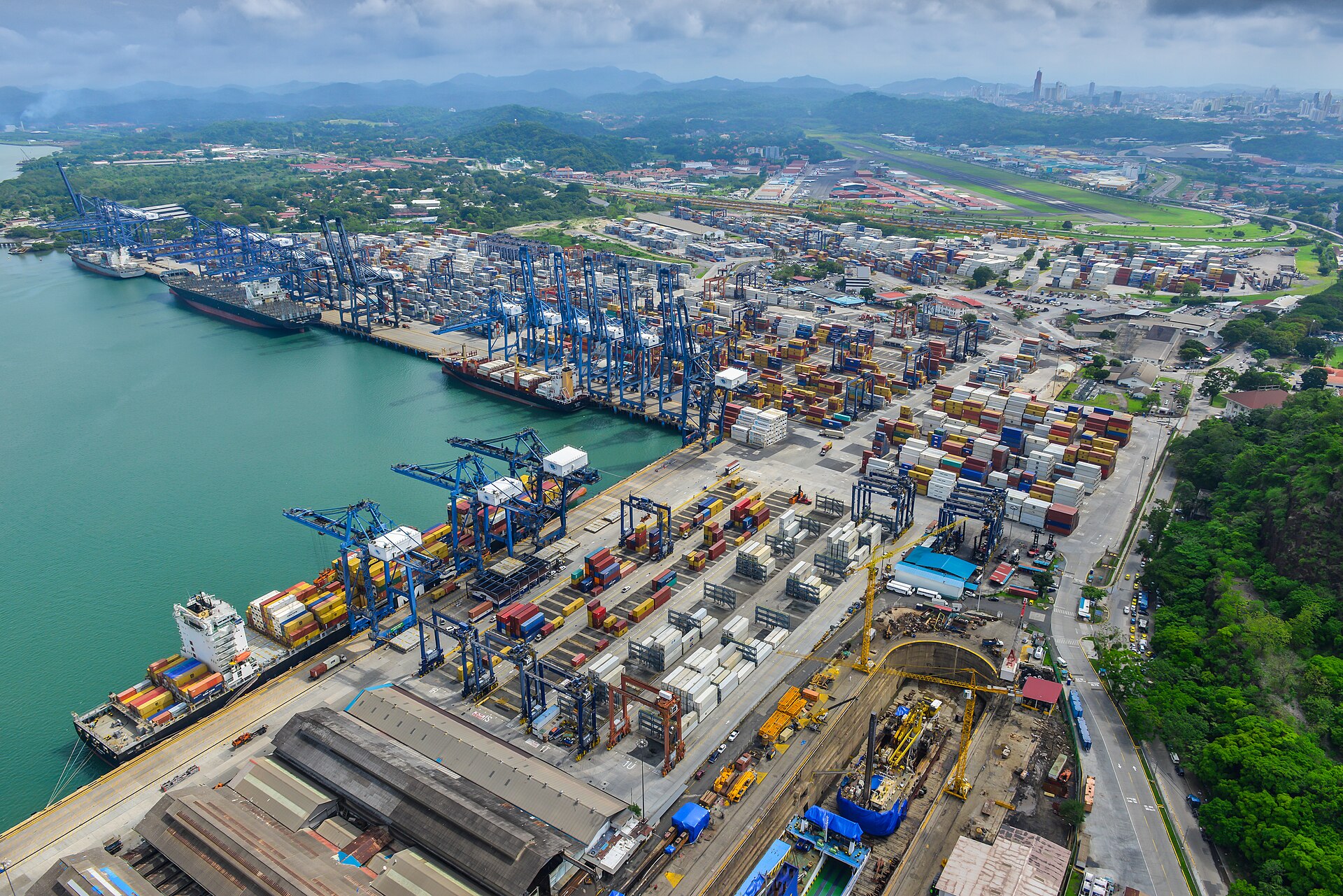
Logistics. It is the tightest segment: industrial availability fell from 8.07% to 6.01% in the second quarter of 2026, with 63,730 m² of absorption, according to Revista Summa, and Panamá Pacífico reports its warehouses at 100%. For the Colon Free Zone there are two 2025 figures that do not measure the same thing: −9.2% according to the Comptroller General and +11.9% according to the Free Zone’s own report (see warehouses).
Hotels. National hotel occupancy in 2025 was 57–58%, according to the ATP’s 2025 Annual Report. The hotel association reports demand growth of about 3%, versus the 10% projected, and criticizes competition from short-term rentals. Figures of 90–95% in Casco Antiguo are seasonal peaks.
Documented risks for investors
Sources: Public Prosecutor’s Office · Panama America (Acodeco data) · La Estrella de Panamá (Acodeco, January–August 2026) · Panama America (Sinaproc) · TVN · Al Jazeera. Data verified as of November 22, 2026.
The defense is the same in almost every case: buy only titled property recorded in the Public Registry (Registro Público), distrust offers on social media and, in pre-construction, require an escrow trust or record the promise of sale. We explain it in how to buy, in the legal section and in how to vet a developer.
Table of indicators with date and source
| Indicator | Value | Date | Source |
|---|---|---|---|
| Real GDP growth | 4.4% (preliminary) | 2025 | Comptroller General (primary) |
| GDP projection | Close to 5% | 2026 | IMF (primary) |
| Year-over-year inflation | 2.8% | September 2026 | La Estrella de Panamá (secondary) |
| Unemployment | 8.5% | August 2026 | Comptroller General / INEC (primary) |
| Public debt | USD 62,777.7 million | September 2026 | MEF via Infobae (secondary) |
| Ratings | S&P BBB− stable / Moody’s Baa3 stable / Fitch BB+ | September / November / July 2026 | Press (secondary) |
| Canal transits | 13,951 (preliminary) | Fiscal year 2026 | Telemetro (secondary) |
| New home sales | 2,866 units | 2025 | La Prensa (secondary) |
| Residential mortgage portfolio | USD 20,016 million (−0.17%) | August 2026 | SBP (primary) |
| Past-due portfolio | 3.3% | August 2026 | SBP (primary) |
| Resident mortgage rate | 5.48%–10.00% (median 6.97%) | November 2026 | SBP (primary) |
| Office availability | 23.73% | Q1 2026 | Newmark via CIJ.World (secondary) |
| Industrial availability | 6.01% | Q2 2026 | Revista Summa (secondary) |
| Hotel occupancy | 57–58% | 2025 | ATP (primary) |
| International visitors | +17.4% | H1 2026 | ATP (primary) |
| Reported fraud cases | 2,154 (+19%) | January to April 2026 | Public Prosecutor’s Office (primary) |
Sources: Comptroller General · IMF · Infobae · Newsroom Panama (Moody’s) · SBP, rate sheet · ATP · Public Prosecutor’s Office. Data verified as of November 22, 2026.
What still cannot be measured
Three gaps limit any analysis. There is no official home price index and no aggregate closing price: everything published is asking prices. We did not find the official foreign direct investment figure for 2025; the USD 3,200 million figure circulating on blogs has no primary source and we do not use it. And there are no hotel occupancy statistics by region. Be wary of anyone who presents those numbers to you as official. For a closer look at what the figures do show, see the real numbers of Panama real estate and the risks of investing in Panama.
Frequently asked questions
Are home prices falling in Panama?
There is no official index that measures it. What is on record is that new home sales fell almost 40% in 2025 and that between 9.6% and 14.4% of listings in the capital had a price cut in October 2026, according to Vaca Group.
Is Panama still on the European Union blacklist?
No. On October 9, 2026, the EU removed it from Annex I and moved it to Annex II. The next review is in February 2027.
Does Panama have an investment grade rating?
Yes, from two of the three agencies: S&P (BBB−, stable) and Moody’s (Baa3, with a stable outlook since November 2026); Fitch (BB+) has not rated it investment grade since March 2024.
Which segment has the strongest fundamentals?
Based on 2026 data, logistics: industrial availability of 6.01% and full warehouses in Panamá Pacífico. Offices are the segment with the most vacant space.
What is the biggest risk for a foreign buyer?
The data point to fraud involving possession rights and abusive clauses in pre-construction sales, plus liquidity on resale. Buy only property recorded in the Public Registry.
Sources
- Comptroller General: GDP grew 4.4% in 2025
- IMF: concluding statement of the 2026 Article IV mission
- Comptroller General: more jobs and lower unemployment in 2026
- EU Delegation: Panama leaves the list of non-cooperative jurisdictions
- SBP: banking activity report, August 2026
- La Prensa: new home sales fell almost 40% in 2025
- CIJ.World: Panama City office market (Newmark data)
- Revista Summa: industrial availability, Q2 2026
- ATP: 2025 Annual Report
- Telemetro: the Canal records 13,951 transits in fiscal year 2026
- Public Prosecutor’s Office: statistical report on fraud, April 2026
- Panama America: complaints against real estate companies before Acodeco
- La Estrella de Panamá: Acodeco claims, January–August 2026
- Newsroom Panama: Moody’s improves Panama’s outlook to stable (November 17, 2026)
Notice: This is general information about the market, not legal, tax or financial advice, nor an investment recommendation. Preliminary figures and figures from private sources may be revised. Consult professionals licensed in Panama before investing.

Milan Valdés Báez is an independent journalist and researcher based in Panama and the editor of Invest in Panama Real Estate, the real estate investment guide for foreigners. Every figure on the site is checked against official sources (the Official Gazette, the Superintendency of Banks, INEC, the National Migration Service and the Public Registry), with notes on which data have changed and which circulate out of date, and the guides and calculators are kept current. ORCID iD: 0009-0000-0112-3529.