

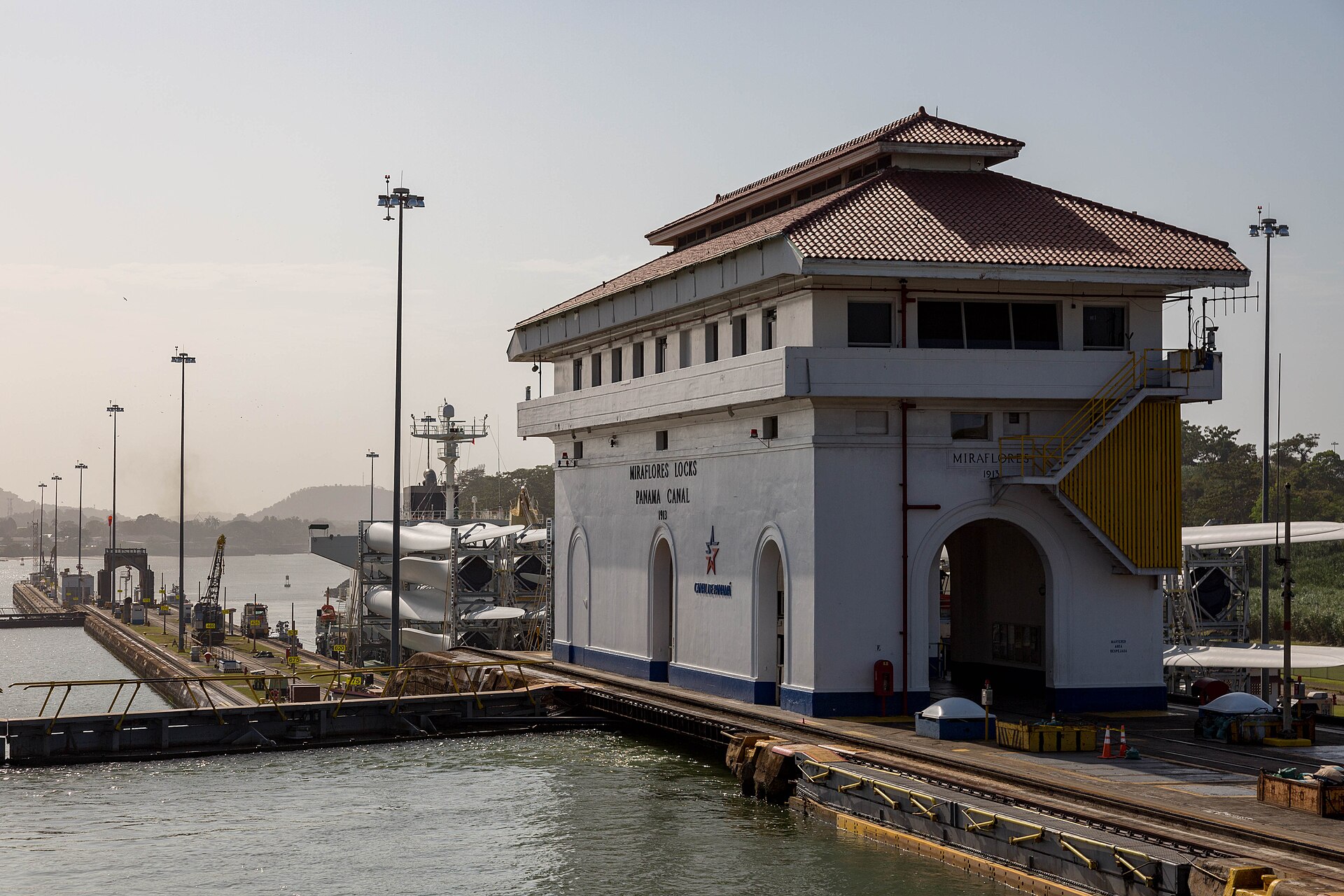
Compared with Costa Rica, Panama has the better sovereign rating, and by a clear margin: it is two notches higher at Moody’s (Baa3 vs Ba2) and at S&P (BBB− vs BB), tied at Fitch (BB+ for both), and it holds investment grade at two of the three agencies, while Costa Rica holds it at none. That is the only thing that can be compared between the two countries today with dated statements from all three agencies. Security, cost of living and the price of Costa Rican residency are not measured by the same yardstick, and this guide does not treat them as settled. Data verified as of November 22, 2026.
A note on method: this guide describes data for both countries as of the cutoff date shown and is not investment advice. The ratings are verified in agency statements and in dated press coverage. Costa Rica’s security, cost of living and residency thresholds are not verified to the same standard, so they are flagged as such rather than filled in.
The sovereign rating: the figure that frames the comparison
A sovereign rating measures a state’s ability to pay. It does not measure the quality of a real estate market, but it does measure the underlying risk of the country where you leave your capital, and it is the only indicator published today for Panama and Costa Rica with the same source, the same scale and verifiable dates.
| Agency | Panama | Costa Rica | Difference |
|---|---|---|---|
| Moody’s | Baa3 stable, outlook improved in November 2026. Investment grade | Ba2 stable: upgraded from Ba3, with the outlook changed from positive to stable (statement of September 24) | Panama, two notches higher |
| S&P Global | BBB− stable. Investment grade | BB stable, affirmed in July 2026 | Panama, two notches higher |
| Fitch | BB+ stable (December 2025) | BB+ stable: upgraded from BB in mid-November 2026 | Tie |
| Investment grade | Two of three agencies | None | The deciding difference |
Sources: Panama: Newsroom Panama (Moody’s, November 2026) · Newsroom Panama (Fitch, December 2025). Costa Rica: El Observador CR (Moody’s) · statement CP-35-2026 from Costa Rica’s Ministry of Finance, July 16, 2026 (S&P) · CRHoy (Fitch). Data verified as of November 22, 2026.
Sources: Newsroom Panama · El Observador CR · CRHoy. Data verified as of November 22, 2026.
Three readings of the same table, and they do not agree
First reading: Panama wins. Two notches at Moody’s, two at S&P and investment grade at two agencies vs none. For an investor looking at sovereign risk, that leaves no room for nuance.
Second reading, the uncomfortable one: at Fitch they are tied and the recent movement is Costa Rica’s. Fitch upgraded Costa Rica from BB to BB+ in mid-November 2026, its best rating at that agency since 2014 according to Costa Rica’s Ministry of Finance, while Fitch’s latest recorded action on Panama dates from December 2025. At the agency where they are tied, Costa Rica’s picture is eleven months more recent and points upward.
Third reading, the trend one: both countries are improving at the same time. Moody’s improved Panama’s outlook in November 2026, and it upgraded Costa Rica from Ba3 to Ba2, as Fitch did from BB to BB+. This is not one country rising while the other falls: they are two countries rising from different levels. The full picture of Panama’s risks is in the risks of investing in Panama, and the macroeconomic context in Panama for investors: dollar, ratings and growth.
What the agencies say about Costa Rica
Behind each rating there are arguments, and Costa Rica’s have two sides.
Sources: statement CP-35-2026 from Costa Rica’s Ministry of Finance (S&P, July 16, 2026) · Diario Extra (Fitch) · CRHoy. Data verified as of November 22, 2026.
S&P’s warning is the most useful data point for an investor, and it is worth reading literally: a downgrade within 12 to 18 months if fiscal policy becomes more expansionary. Costa Rica is not only two notches lower; it also carries an explicit agency condition on its future direction.
A discrepancy worth knowing about: one press report says Costa Rica’s rating went from “BBB−” to “BBB”, without clarifying which scale it refers to. We do not use that figure as a sovereign rating. CRHoy’s coverage of Fitch’s November 2026 action indicates that, in the same decision, the agency raised Costa Rica’s country ceiling from BBB− to BBB, which is a different measure from the rating of the state. If someone quotes you a BBB for Costa Rica, ask which scale they mean.
What this comparison cannot measure yet
A complete comparison between two destinations needs at least three sourced blocks: rating, cost of living and residency. That is the standard we apply in Panama vs Uruguay. With Costa Rica, only the first meets it.
| Block | Status as of November 22, 2026 |
|---|---|
| Sovereign rating | Verified at all three agencies for both countries |
| Costa Rica’s homicide rate | Not verified to date in an official source. For Panama, the annualized rate is around 12.6 per 100,000 (our own calculation from SIEC bulletins), against a regional median of 17.6 |
| Comparative cost of living | Not verified with the same index and the same cutoff for Costa Rica |
| Costa Rican residency thresholds | Disputed between commercial sources; not published as data |
| Comparative foreign direct investment | Not measured at the same cutoff. For Panama, about USD 579 million vs about USD 2,050 million in 2018 |
Sources: SIEC bulletins reported by IGoPanama · InSight Crime, 2025 homicide round-up. The annualization is our own calculation. Data verified as of November 22, 2026.
This is a deliberate decision. It can be stated firmly that Panama has a better sovereign rating than Costa Rica, because there are dated statements from all three agencies. It cannot be stated that it is safer, cheaper or easier to reside in, because those data are not at the same level. And the difference from the Uruguay comparison says something about the material available, not about Costa Rica: the sources that come up on Costa Rica for a real estate investor are, in their great majority, commercial. You have a right to know that. For Panama’s security with the official figures and their statistical trap, see is Panama safe: official crime figures.
Cost of living and residency: what circulates and why we do not accept it
The commercial sources consulted contradict each other on cost of living: several say Costa Rica is more expensive than Panama and one comparison reverses that for everyday expenses. On residency, one source gives retiree from USD 1,000 a month, rentista (passive income) from USD 2,500 a month or a USD 60,000 deposit, and investor from USD 150,000, with a five-year window that would end in July 2026 unless extended by the legislature; another cites USD 200,000 for the investor. We do not choose between them: confirm it with the Costa Rican immigration authority. If you want to estimate your budget on the Panamanian side, use the Panama cost of living calculator.
What can be compared with verified data
| Variable | Panama | Costa Rica |
|---|---|---|
| Currency | The dollar has circulated since 1904. There is no central bank | Colón, with its own exchange rate. According to one source, prices are set in dollars, but taxes, fees and construction costs are paid in colones, and in 2026 the colón reached its strongest level against the dollar in almost two decades |
| Exchange controls | None | Not compared |
| Army | None, under article 310 of the Constitution | No army either |
| Tax system | Territorial | Territorial according to the sources, with recent legislative proposals to tax worldwide income more |
| First income exempt | The first USD 11,000 of local income is not taxed, according to one source | Not compared |
| Países Amigos (Friendly Nations) | — | Costa Rica is the only Central American country on Panama’s Friendly Nations list |
| Investment grade | Two of three agencies | None |
Sources: Political Constitution of Panama, art. 310 · U.S. Department of State · Plan B Expat (Friendly Nations list) · Costa Rica: Panama Properties and Cyril Jarnias, commercial sources. Data verified as of November 22, 2026.
The army argument only half works against Costa Rica
A common argument in Panama’s favor is that it eliminated by design three classic sources of Latin American instability: its own currency, a central bank and an army. We develop it in the advantages of investing in Panama. Against almost the whole continent it works in full; against Costa Rica it does not, because Costa Rica also abolished its army. What remains standing is dollarization and the absence of a central bank, and that is exactly what the rating gap reflects. This overall reading is ours, built from facts verified separately.
Two currencies, a risk that does not exist in Panama
If, as one Costa Rican source states, prices are set in dollars but taxes, fees and construction costs are paid in colones, a colón at its strongest level in almost two decades makes construction and operations more expensive when measured in dollars. That is our inference from the source, not a statement by the source. In Panama that risk does not exist, because there are not two currencies. On how income is taxed in Panama, read Panama’s territorial taxation and what a foreign resident declares in Panama.
If you are a Costa Rican national: the Friendly Nations route
Costa Rica is not only the competitor: it is also an eligible country of origin for Panama’s Friendly Nations route, and the only Central American one on that list. A Costa Rican national can obtain residency with USD 200,000 in real estate, a time deposit or a genuine job, with two provisional years before permanent residency. The detail is in Panama residency options, and the which Panama visa is right for me? tool guides you according to your case. If you are comparing Panama with more than one destination at once, see Panama vs other countries to invest and reside and Panama vs Paraguay.
Five questions before choosing between the two
| Question | Verifiable answer |
|---|---|
| Who has the better sovereign rating? | Panama: two notches higher at Moody’s and S&P, a tie at Fitch and investment grade at two of three vs none |
| Is there anything in Costa Rica’s favor? | The recent movement: Fitch upgraded it from BB to BB+ in November 2026, its best rating since 2014, and Moody’s from Ba3 to Ba2 |
| Where is the risk the agencies point to? | In Costa Rica: debt above 60% of GDP for four years and a warning of a possible downgrade in 12 to 18 months if fiscal policy turns expansionary |
| Is Panama safer or cheaper? | It cannot be stated: there are no Costa Rican homicide figures from an official source and no cost of living measured at the same cutoff |
| How much does it cost to reside in Costa Rica? | Disputed between commercial sources. Ask the Costa Rican immigration authority |
Sources: Newsroom Panama · CRHoy · statement CP-35-2026 from Costa Rica’s Ministry of Finance. Data verified as of November 22, 2026.
The conclusion: against Costa Rica, Panama wins on what can be measured well, the sovereign rating and investment grade, and it wins clearly. It is the mirror image of the comparison with Uruguay, where Uruguay beats Panama by the same margin and at all three agencies. Security, cost of living and residency remain open: we prefer an incomplete comparison stated as such over a complete, embellished one.
What to confirm with your advisor
| Point | Status |
|---|---|
| Costa Rica’s homicide rate from an official source (OIJ), with the same methodology as Panama’s | Not verified to date; without it there is no security comparison |
| Year of Moody’s action on Costa Rica | The statement is dated September 24 and the year does not appear in it; the Costa Rican press coverage reporting it is dated September 2025 |
| Cost of living compared with the same index and cutoff | Not verified to date |
| Costa Rica’s residency thresholds from an official source | Disputed between commercial sources (USD 150,000 or USD 200,000 for the investor) |
| Whether the five-year window for the Costa Rican investor route expired in July 2026 or was extended | Not verified to date |
| Costa Rican real estate taxation: property tax, transfer tax and rental income tax | Not researched; it is what an investor would really compare |
| Costa Rican legislative proposals to tax worldwide income | Status and content not verified; they would change the territorial taxation comparison |
| Rental yield in both countries | Not comparable: commercial sources give 7% to 9% for Panama and between 5% and 6% or 6% and 8% for Costa Rica, measured differently |
Sources: Delfino (Moody’s, Costa Rica) · Panama Properties · Global Property Guide. Data verified as of November 22, 2026.
For the day-to-day life of anyone settling in, see living in Panama: cost of living and practical life.
Frequently asked questions
Does Panama have a better sovereign rating than Costa Rica?
Yes, by a clear margin. Panama is rated Baa3 stable by Moody’s and BBB− stable by S&P, both investment grade, and BB+ stable by Fitch since December 2025. Costa Rica is rated Ba2 stable by Moody’s, BB stable by S&P since July 2026 and BB+ stable by Fitch since mid-November 2026. Panama is two notches higher at Moody’s and S&P, tied at Fitch, and has investment grade at two agencies vs none.
Is there anything in the ratings that favors Costa Rica?
The recent movement. Fitch upgraded Costa Rica from BB to BB+ in mid-November 2026, its best rating at that agency since 2014 according to Costa Rica’s Ministry of Finance, and Moody’s had upgraded it from Ba3 to Ba2. At the agency where they are tied, the action on Costa Rica is eleven months more recent than Panama’s and points upward.
What do the agencies warn about Costa Rica?
S&P notes that public debt will remain above 60% of GDP over the next four years and warns of a possible downgrade in 12 to 18 months if fiscal policy becomes more expansionary. Fitch says the lack of authorization for external borrowing remains a constraint. On the positive side, both cite exports and foreign direct investment, and S&P highlights reserves of almost USD 21 billion in July 2026.
Is Panama safer than Costa Rica?
This guide does not claim so, because Costa Rica’s homicide rate has not been verified to date in an official source. For Panama, the annualized rate is around 12.6 per 100,000, by our own calculation from SIEC bulletins, against a regional median of 17.6. Without the equivalent Costa Rican figure, the comparison cannot be made rigorously.
How much does it cost to get residency in Costa Rica?
The commercial sources disagree. One gives retiree from USD 1,000 a month, rentista from USD 2,500 a month or a USD 60,000 deposit, and investor from USD 150,000; another cites USD 200,000 for the investor. It is advisable to confirm it with the Costa Rican immigration authority.
Does Costa Rica having its own currency affect the investor?
According to one source, in Costa Rica real estate prices are set in dollars, but taxes, fees and construction costs are paid in colones, and in 2026 the colón reached its strongest level in almost two decades. If so, a strong colón makes construction and operations more expensive when measured in dollars. That is our inference, not the source’s. In Panama that risk does not exist because there are not two currencies.
Can Costa Rican nationals use Panama’s Friendly Nations route?
Yes. Costa Rica is the only Central American country on Panama’s Friendly Nations list, so a Costa Rican national has access to Panama’s most widely used residency route, with USD 200,000 in real estate, a time deposit or a genuine job.
Sources
- Newsroom Panama: Moody’s improves Panama’s outlook (November 2026)
- Newsroom Panama: Fitch affirms Panama at BB+ stable (December 2025)
- El Observador CR: Moody’s upgrades Costa Rica to Ba2 with a stable outlook
- Delfino: coverage of the Moody’s upgrade to Ba2
- Costa Rica’s Ministry of Finance: statement CP-35-2026, dated July 16, 2026, on S&P’s affirmation at BB stable
- CRHoy: Fitch upgrades Costa Rica to BB+ (November 2026)
- Diario Extra: Fitch warns of obstacles to external financing
- Political Constitution of Panama, article 310
- Plan B Expat: Panama’s Friendly Nations list
- Panama Properties: Panama vs Costa Rica (commercial source)
- Cyril Jarnias: Panama, Costa Rica and Mexico (commercial source)
Disclaimer: this is general information, not legal, tax, immigration or financial advice. Sovereign ratings change: check the current one in each agency’s statement and consult a licensed professional before deciding.

Milan Valdés Báez is an independent journalist and researcher based in Panama and the editor of Invest in Panama Real Estate, the real estate investment guide for foreigners. Every figure on the site is checked against official sources (the Official Gazette, the Superintendency of Banks, INEC, the National Migration Service and the Public Registry), with notes on which data have changed and which circulate out of date, and the guides and calculators are kept current. ORCID iD: 0009-0000-0112-3529.