

Investing in Panama real estate makes sense for a foreigner because of a combination few countries in the region can match: Panama has used the US dollar since 1904, has the highest growth projected by the IMF for 2026 among eight comparable Latin American countries (5.0%), closed 2025 with inflation of −0.1%, keeps an investment-grade rating from S&P and Moody’s, treats foreign and Panamanian buyers equally, charges buyers low purchase taxes, and offers an average gross rental yield of 7.4% in dollars, which comes to roughly 4.8% net if you manage the property yourself. It is not a risk-free bet: new-home sales fell almost 40% in 2025, one in four offices is available, Fitch rates the country below investment grade, and in the district of Panama renting for less than 45 days without a tourism license is prohibited. Here you will find the 15 reasons, each with its figure and source, plus a full section on risks. Data verified as of November 22, 2026.
This is an information site: we do not sell property or take commissions from developers. The buying procedure is covered in how to buy property in Panama from abroad, and the big picture in the Panama real estate investment guide for foreigners. Here we focus on the why, with regional comparisons.
Panama in 8 figures
Sources: IMF DataMapper · MICI · Global Property Guide (private, Q4 2026). Data verified as of November 22, 2026.
The 15 reasons to invest in Panama real estate
The reasons fall into four groups: macroeconomic stability (1 to 4), demand and connectivity (5 to 7), rules for the investor (8 to 12), and quality of life, infrastructure and legal certainty (13 to 15). The comparisons always use the same eight countries: Panama, Costa Rica, Colombia, Mexico, the Dominican Republic, Chile, Uruguay and Peru.
1. The dollar as currency: no exchange-rate risk since 1904
The dollar has circulated in Panama as legal tender since 1904, under the Monetary Agreement that grew out of an exchange of notes with the United States on June 20 of that year; today it is set out in article 1171 of the Fiscal Code, according to La Estrella de Panamá (secondary source; the number of the 1904 decree differs between publications). Panama has no central bank and issues no paper money: the balboa exists only as coins and is worth one dollar. You buy, collect rent and sell in the same currency, and a 7% yield is not eroded by a devaluation, as can happen in the other seven countries, which use their own currencies. The reference study is “Full Dollarization: The Case of Panama,” by Goldfajn and Olivares (2001, doi:10.1353/eco.2001.0003).
Caveat: without a central bank, Panama has no lender of last resort in a banking crisis. And if your home currency is not the dollar, your exchange-rate risk lies in the initial conversion and in repatriation.
Sources: Goldfajn and Olivares (2001). Data verified as of November 17, 2026.
2. The highest projected growth in the region in 2026
Panama grew 4.4% in 2025 according to the Comptroller General, driven by the Canal, despite the closure of the copper mine. In the October 2026 World Economic Outlook, the IMF projects 5.0% for 2026, the highest of the eight countries and above the 3.1% global figure, in line with the “close to 5%” in the Article IV statement. Its GDP per capita (USD 19,814) is the second highest in the group, after Uruguay. Unemployment fell to 8.5% in August 2026, from 10.4% a year earlier.
| Country | 2024 | 2025 | 2026 (proj.) | 2027 (proj.) | GDP per capita 2025 (USD) |
|---|---|---|---|---|---|
| Panama | 2.7% | 4.4% | 5.0% | 4.2% | 19,814 |
| Costa Rica | 4.1% | 4.6% | 3.3% | 3.5% | 19,162 |
| Colombia | 1.5% | 2.6% | 2.2% | 2.3% | 8,617 |
| Mexico | 1.5% | 0.5% | 1.5% | 1.8% | 13,759 |
| Dominican Rep. | 5.0% | 2.1% | 4.6% | 4.4% | 11,749 |
| Chile | 2.8% | 2.5% | under review | 2.6% | 17,837 |
| Uruguay | 3.3% | 1.8% | 1.3% | 2.4% | 24,549 |
| Peru | 3.5% | 3.4% | 3.0% | 2.9% | 9,938 |
Sources: IMF DataMapper. Chile’s 2026 projection is under review (unconfirmed outlier). Data verified as of November 17, 2026.
Sources: IMF, October 2026 WEO. Data verified as of November 17, 2026.
Sources: IMF DataMapper. Data verified as of November 17, 2026.
Sector indicators are updated in the Panama real estate market in 2026.
3. Low inflation: stable prices in dollars
According to the IMF, Panama’s average inflation was −0.1% in 2025, the lowest in the group alongside Costa Rica. It picked up in 2026: 2.8% year on year in September, according to La Estrella de Panamá, while the IMF projects an annual average of 1.8%. The two figures do not contradict each other: one compares September with September and the other averages the year. The difference with Costa Rica is the currency: there, low inflation is measured in colones; in Panama, in dollars.
Sources: IMF DataMapper. Negative values are shown at the minimum. Data verified as of November 17, 2026.
4. Investment grade from S&P and Moody’s, and removal from the FATF and EU lists
In September 2026 S&P affirmed Panama’s BBB− rating with a stable outlook, according to Investing.com: the lowest notch of investment grade, the same as Peru and above Costa Rica, the Dominican Republic and Colombia. Moody’s keeps it at Baa3, also investment grade, and in November 2026 improved its outlook to stable, according to Newsroom Panama; Fitch has rated it BB+ since March 2024. Two of the three agencies therefore place it at investment grade. To compare with its neighbors we use only S&P, the only agency whose ratings for all eight countries we were able to cross-check.
| Country | S&P | Investment grade? |
|---|---|---|
| Chile | A | Yes |
| Uruguay | BBB+ | Yes |
| Mexico | BBB (negative outlook) | Yes |
| Panama | BBB− (stable) | Yes, lowest notch |
| Peru | BBB− | Yes, lowest notch |
| Costa Rica | BB | No |
| Dominican Rep. | BB | No |
| Colombia | BB− | No |
Sources: Trading Economics (secondary). Data verified as of November 17, 2026.
Its reputation also improved beyond the rating agencies. Panama left the FATF gray list on October 27, 2023, according to the Superintendency of the Securities Market, and on October 9, 2026 the EU removed it from Annex I of its list of non-cooperative jurisdictions and moved it to Annex II, according to the EU Delegation. That followed the economic substance reform, Law 526 of May 28, 2026 (Official Gazette 30534-B). For a European investor, this reduces banking and tax friction.
| Date | Event | Effect |
|---|---|---|
| 2019 | Placed on the FATF gray list | More controls on funds |
| October 27, 2023 | Removed from the FATF gray list | Less friction on transfers |
| March 2024 | Fitch downgrades to BB+ (Cobre Panamá closure, deficit) | Loses investment grade at one agency |
| Late 2024 | Moody’s puts Baa3 on negative outlook | Downgrade risk |
| July 2026 | Fitch reaffirms BB+ stable | No change |
| September 2026 | S&P affirms BBB− stable | Keeps investment grade |
| October 9, 2026 | Removed from EU Annex I | Better standing with Europe |
| October 2026 | Moody’s assigns investment grade to local Treasury Bills and Notes | Does not change the sovereign rating |
| November 2026 | Moody’s keeps Baa3 and improves the outlook to stable | Two of three agencies at investment grade |
| February 2027 | Next review of the EU list | Pending |
Sources: SMV · EU Delegation · Infobae/EFE · La Prensa · Newsroom Panama (Moody’s, November 17, 2026). Rating agency dates as reported by the press. Data verified as of November 22, 2026.
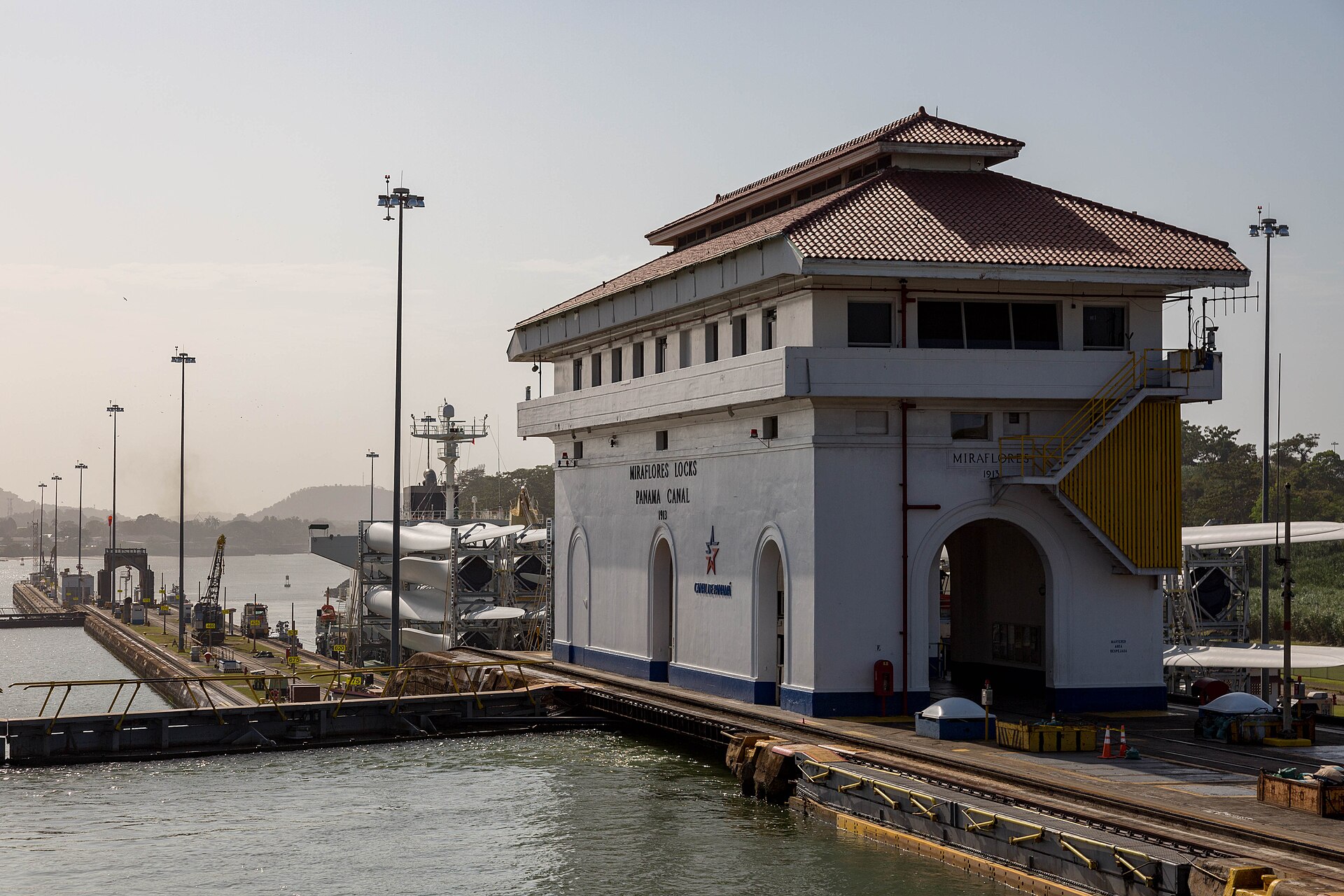
5. The Canal and logistics: a record-revenue fiscal year 2026
About 3% of world maritime trade passes through the Canal, according to the Panama Canal Authority; the 5% or 6% figures repeated by some media have no official backing. In fiscal year 2026 it recorded 13,951 transits (+4.1%) and revenue of USD 6.6 billion (+16.6%), preliminary figures from Forbes Centroamérica, which describes it as a record year. The academic literature treats the Canal as a growth engine: Sierocińska (2017, doi:10.36447/estudios2017.v36-37.art13) and Miller and Clayton (2023), on the effect of the expansion on the region (doi:10.1108/maem-12-2022-0011).
For investors, the Canal underpins demand for warehouses, offices and executive housing. Logistics is the tightest segment: industrial availability fell to 6.01% in the second quarter of 2026, according to Revista Summa; see warehouses and Panamá Pacífico. The weak point is water: at the end of the fiscal year the daily quota fell to 32 ships because of El Niño, and the Río Indio reservoir (about USD 1.6 billion, works from 2028) would come into operation around 2031 in the optimistic scenario. Fuentes and Munim (2025, doi:10.1016/j.tre.2025.104319) study the influence of climate on Canal operations.
Sources: ACP · Telemetro · La Estrella de Panamá. Data verified as of November 17, 2026.
6. The air hub of the Americas: Copa and Tocumen
Tocumen handled a record 20,981,855 passengers in 2025 and 15,855,759 between January and August 2026 (+15%), according to Panamá América. From there Copa Airlines serves 88 destinations in 32 countries according to the airline and the press, with up to 420 daily flights. The Tourism Authority recorded 1,755,998 international visitors in the first half of 2026 (+17.4%). Connectivity makes it easier to manage a property from a distance and feeds rental demand from executives and tourists.
| Indicator | Figure | Period | Source |
|---|---|---|---|
| Copa destinations | 88 in 32 countries (another Copa release says 91) | 2026 | Secondary |
| Copa daily flights | Up to 420 | 2026 projection | Secondary |
| Passengers at Tocumen | 20,981,855 (record) | 2025 | Secondary |
| International visitors | 1,755,998 (+17.4%) | H1 2026 | Official (ATP) |
| Copa Panama Stopover | Up to 15 days | Since 2026 | Secondary |
Sources: TravelDailyNews · Revista SUMMA · ATP. Copa reports results on November 18, 2026; the destination count should be confirmed there. Data verified as of November 17, 2026.
7. Multinational headquarters: demand for executive rentals
Panama had 192 companies under the Multinational Company Headquarters regime (SEM, Law 41 of 2007) in May 2026, up from 188 at the end of 2025, according to MICI. The United States (37), China (18) and Switzerland (14) lead. On top of that comes the EMMA regime (Law 159 of 2020) for manufacturing-related services, with no public license count for 2026. These headquarters bring expatriate staff who tend to rent furnished apartments in Costa del Este, Santa María or Obarrio; that is a reasonable inference, not a statistic. See Panama City and apartments. The economic substance law of May 2026 requires these multinationals to have real operations or pay 15% on foreign passive income (Reuters); it does not affect someone buying an apartment.
Sources: MICI · La Estrella de Panamá. Data verified as of November 17, 2026.
8. Foreigners can own property with the same guarantees as Panamanians
The Constitution establishes equality between Panamanians and foreigners before the law (art. 20) and guarantees private property (art. 47), according to the current text on Constitute Project. You do not need residency, a local partner or prior permission to buy a titled property. On islands such as Bocas del Toro or Contadora, the key question is whether the lot is titled or whether only derechos posesorios (possession rights) are being sold; see can a foreigner buy property in Panama? and Bocas del Toro.
| Article | Content | What it means for you |
|---|---|---|
| Art. 20 | Equality of Panamanians and foreigners before the law | You buy on the same terms |
| Art. 47 | Guarantee of private property | Your title is protected |
| Art. 291 | Prohibits foreigners, and companies with foreign capital, from acquiring land within 10 km of the borders; island territory may only be transferred for development purposes | Avoid border areas; on islands, verify the title |
| Art. 290 | Bars foreign governments from acquiring territory, except for embassies | Does not affect private investors |
Sources: Constitute Project. Many guides cite art. 290 for the 10 km rule: in the current numbering it is art. 291. Data verified as of November 17, 2026.
9. Territorial taxation and low purchase taxes
Article 694 of the Fiscal Code, in the version of Law 8 of 2010 restored by Law 1 of 2014, taxes income produced “within the territory of the Republic of Panama, wherever it is received” (Justia). Your salary or investments outside Panama are not taxed there because you buy a property; rent and capital gains from the Panamanian property are. If you buy through a company, consult an advisor about the 2026 reform.
At purchase, the burden is low. The ITBI (property transfer tax) is 2% and is paid by the seller; Law 546 of 2026, in force since September 1, exempts the first B/.120,000 on the first sale of a new home and voids any clause that shifts the tax to the buyer. The Public Registry (Registro Público) charges about 0.3% of the price. With the ITBI paid by the seller, an indicative range for a cash buyer is 1% to 3% (our own estimate). Calculate it with the closing costs and ITBI calculator.
| Stage | Item | Amount | Who pays / source |
|---|---|---|---|
| Purchase | ITBI | 2%; on new homes sold for the first time, the first B/.120,000 is exempt | Seller; official |
| Purchase | Public Registry | B/.10 per property + B/.3 per B/.1,000 (≈0.3%) | Buyer; official |
| Ownership | Property tax (general schedule) | Exempt up to B/.30,000; 0.6% up to 250,000; 0.8% up to 500,000; 1% above | Owner; secondary, to be verified |
| Ownership | Income tax on rent, individual | 0% up to 11,000; 15% up to 50,000; 25% above | Owner; secondary (PwC) |
| Sale | Capital gains | Advance payment of 3% of the value, or 10% of the gain if recalculated | Seller; secondary |
Sources: Law 546 of 2026 · Public Registry · Kraemer & Kraemer · PwC. Data verified as of November 17, 2026.
The details are in taxes when buying, owning and selling property; estimate the annual burden with the property tax calculator and the exit with the capital gains calculator.
10. Permanent residency through real estate investment
Executive Decree 17 of 2026, in force since September 16, grants direct permanent residency as a Qualified Investor with B/.300,000 in a first-sale property or B/.500,000 in a resale property, net of any mortgage, with foreign funds, held for 5 years. The maximum processing times are 15 business days at MICI and 30 at Migration. Between July 2025 and June 2026, 268 certificates were issued for B/.113.6 million, 87.3% of them in real estate, according to MICI.
| Route | Minimum amount | Key condition | Source |
|---|---|---|---|
| Qualified Investor, first sale | B/.300,000 net of any mortgage | Direct permanent residency; 5 years | Official (ED 17) |
| Qualified Investor, resale | B/.500,000 net | Same | Official |
| Qualified Investor, securities or fixed-term deposit | B/.500,000 (B/.750,000 in private banking) | Same | Official |
| Países Amigos (Friendly Nations) | Property or 3-year fixed-term deposit of USD 200,000 (a mortgage is allowed), or a real job | Only 51 nationalities (not Colombia, Venezuela or China); 2 years provisional | Official (ED 16 of 2026) |
| Reforestation investment | USD 100,000 | Leads to permanent residency, with no nationality restriction | Secondary |
| Pensionado (retiree) | Pension of B/.1,000 a month, or B/.750 with a property worth more than B/.100,000 | Indefinite permit | Official (SNM) |
Sources: ED 17 of 2026 · SNM · Lincoln Global Partners · Executive Decree 16 of August 31, 2026 (Official Gazette 30601-B) · Plan B Expat (list of 51 countries and reforestation route, secondary). The “USD 300,000 in any property” of Decree 722 has been superseded. Data verified as of November 22, 2026.
Compare your profile in which Panama visa is right for me? and read Panama residency through real estate investment.
11. Competitive rental yields, collected in dollars
Using a single source for all countries, Global Property Guide (GPG), Panama’s average gross yield was 7.40% in the fourth quarter of 2026: at the upper end of the region, behind Costa Rica (7.63%) and ahead of Colombia (7.01%), although the figures for those countries come from earlier 2026 readings. GPG is a private source that divides asking rents by asking prices. After costs and the 15% income tax, sector estimates put the net yield at around 4.8% if you manage the property yourself and 3.8% with a management company. Panama’s advantage is that this yield is collected in dollars.
Sources: Global Property Guide · GPG, Panama, Q4 2026. Panama with its fourth-quarter reading; the rest with the 2026 reading collected on November 17. No national figure for the Dominican Republic. Net of 4.8% and 3.8%: sector estimate after costs and the 15% income tax, compiled as of November 20, 2026. Data verified as of November 22, 2026.
| City | USD per m² | Segment and date |
|---|---|---|
| San José | 2,949 | Primary market, June 2026 |
| Mexico City | ~2,947 | New build and prime, July 2026 |
| Panama City | 2,669 | Primary market, no visible date |
| Santo Domingo | 2,313 | Q3 2026, via a local portal |
Sources: GPG, prices per m² · inmobiliario.do. Private listing data; they mix segments and dates, so they are not strictly comparable. No figure for Bogotá, Santiago, Lima or Montevideo. Data verified as of November 17, 2026.
Within the capital, yields vary a lot by neighborhood. An October 2026 sample of 11,148 apartments from Vaca Group (private source, asking prices) shows that the most expensive neighborhoods yield less and that San Francisco, Bella Vista or El Cangrejo offer higher yields with a lower entry price. Estimated net yields range from 3.6% to 4.7%.
Sources: Vaca Group. The bar is the gross yield; the label, the median asking price per m². There is no official price index. Data verified as of November 17, 2026.
Run your own net calculation with the rental yield calculator, check a price with price per m² versus the neighborhood and read Panama rental yields.
12. A broad banking system: 24 mortgage banks
In the November 2026 rate schedule of the Superintendency of Banks (SBP), non-preferential home mortgages range from 5.48% to 10.00% across 24 banks, with a median of 6.97%. These are list rates for residents. Non-residents pay more: Banistmo publishes 8.25% plus the 1% FECI surcharge for investment property, and Credicorp 7.50% to 9.50% plus FECI. Davibank lends to non-residents up to 75% below USD 500,000, over 25 years. Household loan delinquency improved to 3.3% in August 2026, according to the SBP.
Sources: SBP · Banistmo · Vaca Group (private). Data verified as of November 17, 2026.
The honest conclusion: mortgages are available, but at 9.25% they cost more than the net yield of a typical rental, so leverage reduces your return. A loan is useful for preserving liquidity or financing the amount above the visa minimum, not as leverage. Compare payments with the mortgage comparison tool, size your budget with how much can I buy? and read Panama mortgages for non-resident foreigners.
13. Cost of living and retiree benefits
Panama ranks 2nd in International Living’s Annual Global Retirement Index 2026 (89.3 points), behind Greece (90.1) and ahead of Costa Rica (87.6); in 2025 it was 1st, according to 401(k) Specialist. It is a private, commercial ranking, not an official statistic, but it reflects a strength with a legal basis: Law 6 of 1987 gives resident retirees and pensioners, foreigners included, discounts of 20% on medical consultations, 15% on private hospitalization, 20% on medicines and 25% at restaurants, according to La Estrella de Panamá. Law 562 of November 2, 2026, which takes effect on May 2, 2027, expands the health discounts but requires foreigners to be 57 (women) or 62 (men) and hold permanent residency to access them. The MEF basic food basket cost B/.365.88 in March 2026.
Sources: 401(k) Specialist · Law 6 of 1987 · Law 562 of November 2, 2026 (Official Gazette 30647) · SNM. Data verified as of November 22, 2026.
Work out your budget with the cost of living calculator and use rent or buy? to see what suits you if you will live there part of the year. The most frequently cited retirement areas are in Chiriquí and Coclé.
14. Infrastructure under way: Metro Line 3 and the fourth bridge
Metro Line 3, a monorail of about 24.5 km toward Panamá Oeste, was 77% complete in June 2026, according to Infobae, and will open in phases in 2027 and 2028, according to La Prensa. The fourth bridge over the Canal was about 30% complete in early 2026, with completion estimated for 2028. Panamá Oeste (653,665 inhabitants in the 2023 Census) is the fastest-growing province. Construction permits in the first half of 2026 totaled USD 597.6 million, USD 100.5 million more than a year earlier.
| Project | Status | Expected date | Area |
|---|---|---|---|
| Metro Line 3 | 77% in June 2026; more than USD 4.4 billion | 2027 and 2028 | Arraiján, La Chorrera |
| Fourth bridge over the Canal | ~30% in early 2026 (another report said 18%) | 2028 (estimated) | Panamá Oeste |
| Río Indio reservoir | Tender in late 2026 or early 2027 | In operation around 2031 | Canal and drinking water |
Sources: Infobae · La Prensa · Panamá América. Dates subject to delays. Data verified as of November 17, 2026.
Appreciation from infrastructure is an expectation, not a guarantee: Line 3 has already slipped from 2026 to 2027–2028. See Panamá Oeste and the best areas to invest in Panama real estate.
15. Legal certainty: Public Registry, folio real and trusts
Every titled property has a folio real (property record) at the Public Registry (Registro Público), with its history of owners, mortgages and liens, which you can check before signing. Only registered ownership gives title enforceable against third parties and can be mortgaged. In pre-construction sales, the usual protection is a trust with a trust company licensed by the SBP (Law 1 of 1984, amended by Law 21 of 2017), according to the Superintendency of Banks; in addition, a registered promise-to-purchase agreement gives a right enforceable against third parties, according to the Supreme Court. Brokers need a MICI license, and Law 23 of 2015 requires developers and brokers to verify the source of funds. Middle-class housing in the capital is studied by Rogers (2024, doi:10.70658/1940-4131.1136). More in the Panama real estate law section.
What you should know first: the risks
A list of reasons without risks would be advertising. These are the weak points the sources document today.
Sources: La Prensa · CIJ.World/Newmark · Infobae · TVN · First Quantum · Panamá América · La Estrella de Panamá (Acodeco, January–August 2026) · CEOWORLD (45-day rule, secondary) · Newsroom Panama (Moody’s) · Public Prosecutor’s Office. Data verified as of November 22, 2026.
Two risks deserve more attention. Liquidity: with new sales down almost 40%, invest with a long horizon and without relying on reselling soon. And pre-sales: abusive clauses top the complaints to Acodeco (893 cases, B/.120.1 million). Insist on a trust, register the promise-to-purchase agreement and check the title. If you are thinking of nightly rentals, remember that in the district of Panama you cannot rent for less than 45 days without a Public Tourist Lodging license; outside it, read the condominium bylaws first: the Tourism Authority has clarified that paying the tax does not legalize what those bylaws prohibit. See also hotels and condo-hotels and offices.
Panama versus the region: summary
Panama does not win on everything: Uruguay has a higher GDP per capita, Chile a better rating and Costa Rica a slightly higher gross yield. What sets it apart is the combination.
| Criterion | Panama | Best in the group | Assessment |
|---|---|---|---|
| Currency | Dollar, no central bank | Panama (only dollarized country) | Strength |
| Projected growth 2026 | 5.0% | Panama | Strength |
| Average inflation 2025 | −0.1% | Panama and Costa Rica | Strength |
| GDP per capita 2025 | USD 19,814 | Uruguay (24,549) | Relative strength (2nd) |
| S&P rating | BBB− | Chile (A) | Neutral: lowest investment grade |
| Gross yield | 7.40% (Q4 2026) | Costa Rica (7.63%) | Relative strength (2nd), in dollars |
| Foreign ownership | Same as nationals, except borders and islands | — | Strength |
| Market liquidity | New sales −40% in 2025 | — | Weakness |
| Non-resident mortgage | ~9.25% with FECI | — | Weakness |
Sources: IMF · Trading Economics · Global Property Guide (private; Panama, Q4 2026). The assessment is editorial. Data verified as of November 22, 2026.
How to get started: 10 steps with the site’s tools
If the reasons convince you and the risks seem manageable, this is a practical order for moving from the idea to the numbers. The tools are free and use current parameters.
- 01Set your goal and visaIncome, residency or retirement? Which Panama visa is right for me?
- 02Set your budgetHow much can I buy?
- 03Choose the property typeWhat type of property to buy
- 04Compare with the neighborhoodPrice per m²
- 05Calculate the net yieldRental yield calculator
- 06Assess the mortgageMortgage comparison
- 07Add up closing costsClosing costs and ITBI
- 08Project the annual taxProperty tax
- 09Think about the exitCapital gains
- 10If you will live there, run the numbersCost of living and rent or buy?
Sources: parameters from the SBP, Law 546 and ED 17. Data verified as of November 17, 2026.
For the legal process, follow buying property in Panama from abroad. More analysis in investing in Panama and in market and data.
Frequently asked questions
Is it a good idea to invest in Panama real estate in 2026?
The fundamentals are solid: the dollar, projected growth of 5.0% for 2026 according to the IMF, low inflation and an average gross yield of 7.4% (net around 4.8% self-managed). But the housing market is slow: new sales fell almost 40% in 2025. It works better with your own capital and a long horizon than for a quick resale.
Do I need to be a resident to buy property in Panama?
No. The Constitution gives foreigners the same property rights as Panamanians (arts. 20 and 47). The exceptions are the 10 km strip along the borders and island territory (art. 291).
Will I pay tax in Panama on my income from other countries?
As a general rule, no: article 694 of the Fiscal Code taxes only income produced in Panama. Rent and capital gains from the property are taxed there. Your country of residence may tax you on its own terms.
What does a rental apartment in Panama City yield?
According to Vaca Group (private, October 2026 asking prices), gross yields range from 6.72% in Santa María to 9.39% in Coco del Mar, and estimated net yields from 3.6% to 4.7%. Global Property Guide’s national gross average is 7.40% (Q4 2026), and another sector estimate puts the net at around 4.8% self-managed and 3.8% with a management company.
Does buying a property give me residency?
It can. Under Executive Decree 17 of 2026, a first-sale property of B/.300,000 or a resale property of B/.500,000, net of any mortgage and with foreign funds, gives direct permanent residency. Países Amigos (Friendly Nations) accepts a USD 200,000 property, but only for nationals of the 51 countries in Executive Decree 16 of 2026 and with 2 years of provisional residency.
What happens if Panama loses its investment grade?
Today two of three agencies keep it: S&P (BBB− stable) and Moody’s (Baa3, with the outlook improved to stable in November 2026); Fitch has rated it BB+ since March 2024. Both investment-grade ratings are at the lowest notch, so a downgrade would take it out of that category at that agency. For a real estate investor, the main effect would be a possible rise in the cost of credit.
Does it make sense to buy with a mortgage as a non-resident?
At current rates, it usually does not improve your return: about 9.25% with FECI versus a typical net yield of 3.6% to 4.8%, depending on the estimate. It can help preserve liquidity.
Is Panama better than Costa Rica or Mexico for investing?
It depends on the criterion. Costa Rica yields slightly more (7.63% gross), but in colones and with a BB rating from S&P. Mexico is rated BBB, but grew 0.5% in 2025 and uses the peso. Panama combines the dollar, the highest projected growth and an S&P investment grade.
Can I rent on Airbnb in Panama?
In the district of Panama, not for less than 45 days: art. 21 of Law 80 of November 8, 2012 prohibits it except for hotels or properties with a Public Tourist Lodging license, with ATP fines of USD 5,000 to 50,000, and the Supreme Court declared it constitutional on December 20, 2017. Outside the district that prohibition does not apply, but the condominium bylaws decide. The bills on taxing these rentals had not been signed into law as of November 2026.
How do I protect myself when buying pre-construction?
Ask for your payments to go into a trust with a trust company licensed by the SBP, register the promise-to-purchase agreement at the Public Registry, check the folio real and read every clause: abusive clauses are the top reason for complaints to Acodeco.
Academic references
DOIs checked in Crossref on November 16, 2026. We cite titles and topics, not specific results.
- Goldfajn, I. and Olivares, G. (2001). “Full Dollarization: The Case of Panama.” Economía, 1(2), 101-155. https://doi.org/10.1353/eco.2001.0003
- Sierocińska, K. (2017). “The Panama Canal as a Factor of Panama’s Economic Growth.” Estudios Latinoamericanos, 37, 297-310. https://doi.org/10.36447/estudios2017.v36-37.art13
- Miller, K. and Clayton, A. (2023). “Measuring the causal effect of Panama Canal expansion on Latin America and the Caribbean’s economic growth: a Bayesian structural time series approach.” Marine Economics and Management, 6(2), 37-58. https://doi.org/10.1108/maem-12-2022-0011
- Rogers, E. J. D. (2024). “Out with the Old In with the New: Housing Issues for the Middle-Class in Panama City, Panama.” Tennessee Journal of Law and Policy, 4(2). https://doi.org/10.70658/1940-4131.1136
- Fuentes, G. and Munim, Z. H. (2025). “Climate influence on Panama Canal operations: Predicting canal water times with integrated environmental and operational data.” Transportation Research Part E: Logistics and Transportation Review, 203, 104319. https://doi.org/10.1016/j.tre.2025.104319
Sources
- IMF, World Economic Outlook, October 2026 and DataMapper
- Comptroller General, GDP 2025
- Panama Canal Authority, 2025 Sustainability Report
- EU Delegation to Panama, removal from Annex I
- Political Constitution of Panama (Constitute Project)
- Law 546 of 2026 (ITBI)
- Executive Decree 17 of 2026 (National Migration Service)
- Superintendency of Banks, November 2026 rate schedule
- MICI, SEM statistics 2026
- Global Property Guide and Vaca Group (private sources)
- Newsroom Panama: Moody’s improves Panama’s outlook to stable (November 17, 2026)
- CEOWORLD: the 45-day rule in the district of Panama (secondary; rule: art. 21 of Law 80 of 2012)
- La Estrella de Panamá: complaints to Acodeco, January–August 2026
- Plan B Expat: Friendly Nations list under Executive Decree 16 of 2026 (secondary)
Disclaimer: This is general information, not legal, tax or financial advice. This guide is for educational purposes and does not constitute legal, tax, immigration or financial advice. Data are verified as of November 22, 2026 and may change. We do not sell property or recommend projects. Before investing, consult a qualified lawyer in Panama and a tax advisor in your country of residence.

Milan Valdés Báez is an independent journalist and researcher based in Panama and the editor of Invest in Panama Real Estate, the real estate investment guide for foreigners. Every figure on the site is checked against official sources (the Official Gazette, the Superintendency of Banks, INEC, the National Migration Service and the Public Registry), with notes on which data have changed and which circulate out of date, and the guides and calculators are kept current. ORCID iD: 0009-0000-0112-3529.