

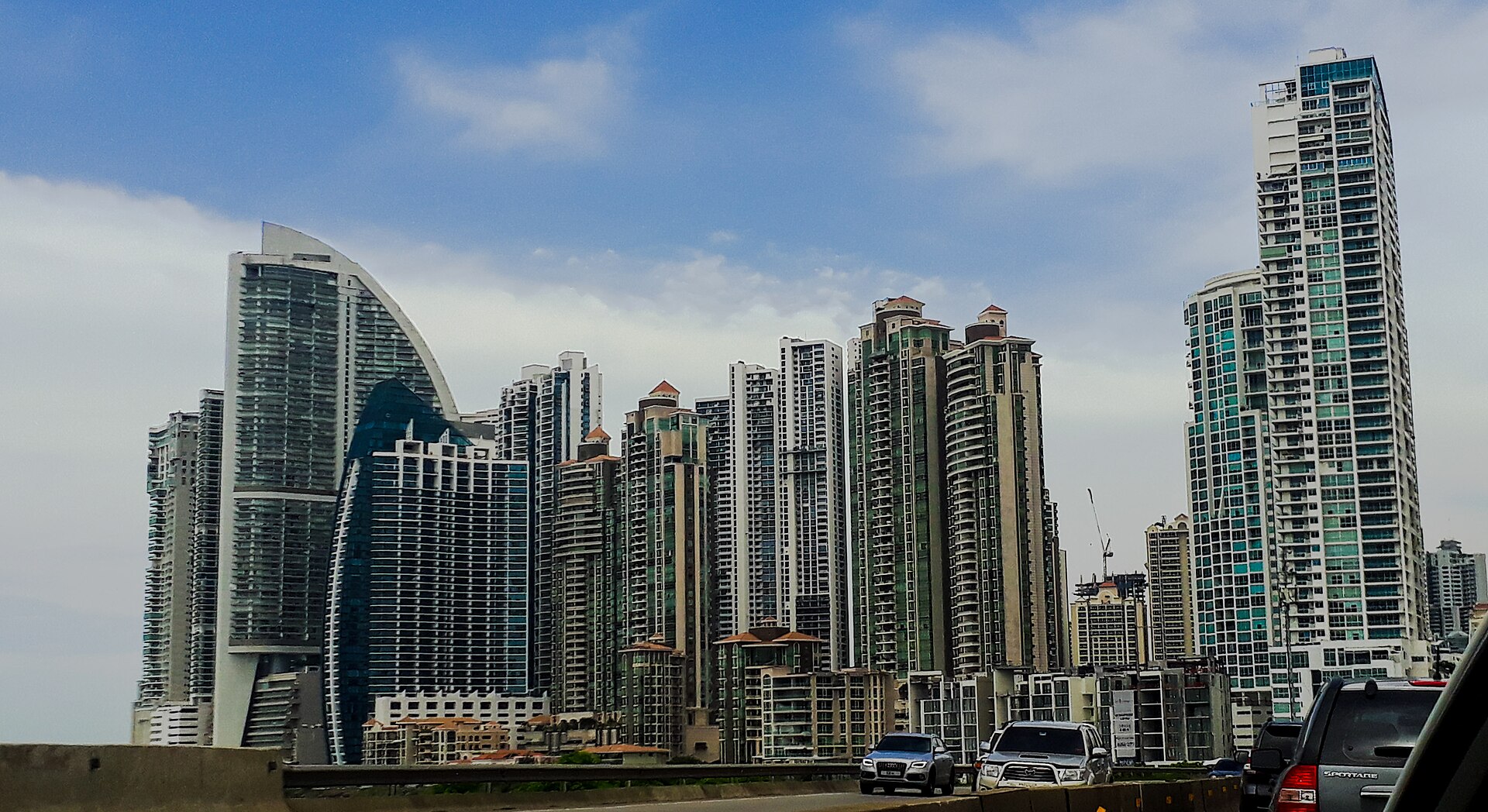
You can buy property in Panama from abroad without living in the country and even without traveling, by granting a power of attorney to a lawyer or agent. In short, the process consists of checking the title and the folio real (property record) at the Public Registry (Registro Público), gathering the paz y salvo (clearance certificates), signing (and ideally registering) the promise of sale agreement, requiring a trust if you buy pre-construction, passing the bank’s due diligence, signing the deed before a notary and registering it with the Public Registry. The seller pays the transfer tax; your closing costs as a cash buyer usually come to around 1%–3% of the price, an indicative range you should confirm with your lawyer. This guide explains each step and which data are verified in an official source.
Data verified as of November 16, 2026.
Can you buy without being a resident and without traveling to Panama?
Yes. The Constitution guarantees private property for individuals and legal entities and declares Panamanians and foreigners equal before the law, subject to legal exceptions. You do not need a local partner or residency. The limitations are the 10 km strip along the borders and the regime for islands, which we explain in Can a foreigner buy property in Panama? The decisive point is to buy titled, registered property, not derechos posesorios (possession rights). If you are still evaluating the country, start with our Panama real estate investment guide for foreigners.
The buying process, step by step
- 01A licensed teamHire a Panamanian lawyer and, if you use a broker, check their license with the Real Estate Technical Board of MICI.
- 02Title and folio realRequest the Public Registry certificate: owner, mortgages, attachments and marginal notes.
- 03Clearance certificatesProperty tax (DGI), IDAAN, waste collection where applicable and condominium (PH) fees.
- 04Promise of saleReview every clause and register it with the Public Registry so that it is enforceable against third parties.
- 05Pre-construction trustMake sure your payments go into a trust with a trust company licensed by the Superintendency of Banks.
- 06Bank and source of fundsPrepare your passport, references and proof of the source of your funds; pay by wire transfer.
- 07Deed before a notarySign in person, through a power of attorney or, for the mortgage, before a Panamanian consul.
- 08RegistrationThe deed is registered with the Public Registry: from then on, you are the owner as against third parties.
Sources: Public Registry · Official Gazette 30440 · Superintendency of Banks · vLex (Supreme Court ruling of October 9, 2015). Data verified as of November 16, 2026.
How do you verify the title at the Public Registry?
Every titled property has a folio real at the Public Registry with its history: owners, mortgages, attachments and marginal warning notes. Only registered property gives you ownership that is enforceable against third parties, allows a bank mortgage and reveals those liens. Before you sign anything, your lawyer should obtain the certificate of ownership and liens and confirm that the seller is the registered owner. The search is available through the Public Registry’s online services; we did not verify its current cost and processing time. Our guide to verifying a property title at the Public Registry goes into more detail.
A derecho posesorio (possession right) is something else: a recognizable possession, not a title. Turning it into ownership requires an adjudication procedure before ANATI, with a possession requirement of more than five years under Law 80 of 2009. The risk is real: in Operation Huellas, the Public Prosecutor’s Office charged eight people with fraud for selling plots with possession rights through social media, using forged ANATI documents according to the press. If the property is land or a farm, this review is even more important.
Which clearance certificates and documents should you request?
A regulation published in Official Gazette 30440 of January 8, 2026 requires, for a transfer, the clearance certificate from the General Revenue Directorate (DGI) and the one from IDAAN, the water utility; only the relevant excerpt of that regulation was read. The Public Registry also requires the certificate from the Waste Authority in the cases set out in Resolution DG-0248-2017. The following table summarizes what you should require and how well each requirement is verified.
| Document | Issued by | Purpose | Status |
|---|---|---|---|
| Certificate of ownership and liens | Public Registry | Confirm the owner, mortgages, attachments and marginal notes | Recommended practice; cost and processing time not verified |
| Property tax clearance certificate | DGI | Requirement for a transfer | Official Gazette 30440 (excerpt read) |
| IDAAN clearance certificate | IDAAN | Requirement for a transfer | Official Gazette 30440 (excerpt read) |
| Waste collection certificate | Waste Authority (AAUD) | Registration in the cases set out in Resolution DG-0248-2017 | Public Registry manual |
| Condominium (PH) fee clearance | Condominium administration | Avoid inheriting maintenance debts | Common practice; article of Law 284 not verified |
| Occupancy permit | Competent authority | Its date determines whether the partial ITBI exemption applies | Law 546 of 2026 (seller’s sworn statement) |
| Trust agreement | Trust company licensed by the SBP | Protect pre-construction payments | Law 1 of 1984, amended by Law 21 of 2017 |
Sources: Official Gazette 30440 · Public Registry · Law 546 of 2026 · Superintendency of Banks. Data verified as of November 16, 2026.
Buying pre-construction: a registered promise and a trust
When you buy off-plan, the promise of sale agreement is signed after the reservation and comes with a down payment. According to a Supreme Court ruling of October 9, 2015, cited via vLex, when the promise is registered with the Public Registry the buyer holds a right that is enforceable against third parties: the developer cannot sell the property to someone else while the registration remains in place, unless you consent. We did not verify the fee for that entry.
The usual protection for your payments is a trust managed by a trust company licensed by the Superintendency of Banks. If it covers real property, it is created by public deed and takes effect against third parties from its registration. Two warnings: we found no law that requires payments to be deposited in a trust, and the trustee’s responsibility is one «of means, not of results», meaning it does not guarantee that the project will be completed. Read the purpose of the agreement: a pre-sale trust that refunds payments is not the same as a security trust in favor of the bank financing the construction. Our guide on how to vet a developer in Panama covers what else to check.
Also ask for clear refund conditions, a delivery date with a penalty and specifications, all in writing. Since Law 546 of 2026, any clause that obliges the buyer to pay or reimburse the ITBI, which corresponds to the seller, is automatically void. If the purchase is meant to obtain residency, Executive Decree 17 of 2026 accepts a B/.300,000 promise of sale with a trust or an irrevocable bank guarantee; see Residency by investment.
Public deed, notary and registration
The closing is formalized in a public deed before a notary and registered with the Public Registry. Before registration, the seller must pay the ITBI and the capital gains tax advance; according to a secondary guide, the receipt is attached to the draft deed. A purchase of titled property with no problems usually takes 4 to 10 weeks from offer to registration, and registering the transfer takes about 10 business days, according to real estate sources that we could not check against an official time frame. If you buy with a mortgage, the sale and the mortgage can go in the same deed, but each act pays its own registration fee. See the full Panama property purchase timeline.
Buying remotely: power of attorney, apostille and consular signature
Buying without being present is possible through a notarized power of attorney, according to real estate guides, which recommend arranging it well in advance and not just before closing. The usual route would be to grant a special power of attorney before a notary in your country, have it apostilled (or legalized through the consulate if your country is not party to the Hague Convention), have it translated into Spanish if needed and have it recorded at a Panamanian notary’s office. That route was not verified in an official source: confirm requirements, time frames and costs with your lawyer and with the Panamanian consulate before you sign. What does appear in an official source is that the mortgage can be granted from abroad before a Panamanian consul acting as a notary (article 423 of the Fiscal Code, cited in the Public Registry’s Qualification Manual).
Bank account, due diligence and source of funds
Banks apply risk-based due diligence under the supervision of the Superintendency of Banks. Its official guide states that if the client does not cooperate, the institution must refrain from starting the relationship. For non-residents, secondary sources describe in-person interviews, reference letters and proof of the source of funds, which is usually the slowest stage; minimum opening deposits vary so much between sources that we do not publish them. If you plan to finance, Caja de Ahorros requires non-residents to hold an account with 5% of the property’s value. Compare terms in Mortgages and banks and in the mortgage comparison tool.
Pay by bank transfer in dollars. Some secondary sources cite article 53 of Law 23 of 2015 to point out that cash transactions of B/.10,000 or more trigger a report; we did not verify this in the official text, nor did we find a general ban on cash in property sales.
Licensed brokers and anti-money laundering controls
To work as a broker in Panama you need a license from the Real Estate Technical Board of MICI, created by Decree Law 6 of 1999 and regulated by Executive Decree 39 of 2001. Ask for the license number and verify it before handing over any money. Developers and brokers are also obligated parties under Law 23 of 2015 against money laundering, supervised by the Superintendency of Non-Financial Obligated Parties (Law 124 of 2020). That is why you will be asked for your passport, a «know your customer» form, a declaration and proof of the source of funds and, if you buy through a company, the identity of the beneficial owner. The broker’s commission is usually paid by the seller, but we found no verifiable source for the usual percentage.
How much does it cost to close the purchase?
The documented registry fee schedule is Resolution 212 of 2013, included in the official Qualification Manual: a B/.10 qualification fee per property plus B/.3 per each B/.1,000 or fraction, for both the sale and the mortgage. We could not confirm that it remains in force without amendments in 2026. No official notary fee schedule was located; the only public rate is one notary’s office’s rate for ACOBIR members. Here is an example for a B/.250,000 resale apartment with a parking space (two registered properties), bought by an individual.
| Item | Who pays | Calculation | Amount |
|---|---|---|---|
| Public Registry, sale | Buyer | 10 × 2 properties + 3 × 250 | B/.770 |
| Notary, deed of sale | Buyer (usual) | Rate of one notary’s office for ACOBIR members | USD 125 + stamps (secondary source) |
| Lawyer | Buyer | No verifiable rate | Ask for a written quote |
| If you finance 75%: Registry, mortgage | Buyer | 10 × 2 + 3 × 188 (B/.187,500) | B/.584 |
| If you finance: Banistmo closing fee | Buyer | 0.25% × 187,500 | B/.468.75 + ITBMS |
| ITBI (resale) | Seller | 2% × 250,000 | B/.5,000 |
| Capital gains tax advance | Seller | 3% × 250,000 | B/.7,500 |
Sources: Public Registry · ACOBIR · Banistmo · Law 106 of 1974 · PwC. A cadastral value lower than the price is assumed. The additional fee under Law 47 of 1975 on registry charges could not be quantified. Data verified as of November 16, 2026.
Market guides speak of total buyer costs of between 1% and 7%, because they mix in items the seller pays. With the ITBI borne by the seller, a defensible range for a cash buyer is 1% to 3%, which is an inference and not an official figure. Calculate your own case in the closing costs and ITBI calculator and see the tax details in Taxes and costs.
Acodeco and scams: what buyers complain about
Between 2020 and September 2026, Acodeco, the consumer protection authority, received 3,496 complaints against real estate companies for B/.212.37 million, according to data published by Panamá América. Unfair clauses top the list. Acodeco recommends reading every clause of the promise of sale, asking for offers and specifications in writing and keeping receipts and brochures. On top of this, fraud complaints rose 19% between January and April 2026: 2,154 cases compared with 1,804 a year earlier. Our guide to property buyer protections in Panama explains your options.
Red flags: offers on social media, «possession rights» presented as a title, ANATI documents you cannot verify, pressure to pay before checking the folio real, and payments that do not go into a trust.
Sources: Panamá América (Acodeco data) · Public Prosecutor’s Office. Data verified as of November 16, 2026.
Frequently asked questions
Do I have to travel to Panama to sign the purchase?
Not necessarily. You can grant a power of attorney to a lawyer or agent. We did not verify the apostille, translation and recording route for the power of attorney in an official source, so confirm it with your lawyer. The mortgage can be signed before a Panamanian consul acting as a notary.
Who pays the transfer tax?
The seller. Law 546 of 2026 declares any clause that shifts the ITBI to the buyer automatically void. The seller also pays the capital gains tax advance.
Must pre-construction payments go into a trust?
We found no law that requires it across the board. It is the usual protection and you should insist on it, together with registering the promise of sale with the Public Registry.
How long does a purchase take?
One real estate source cites 4 to 10 weeks for titled property with no problems, from offer to registration. There is no published official time frame that confirms it; the bank’s due diligence can make it longer.
How do I know whether a broker is legitimate?
Ask for their license number from the Real Estate Technical Board of MICI and verify it before you pay. In 2019 the Board canceled 183 licenses and imposed more than USD 49,000 in fines, according to the press.
Sources
- Public Registry: Qualification Manual (Resolution 212 of 2013)
- Official Gazette 30440 of January 8, 2026
- Law 546 of 2026, Official Gazette 30601-B
- Superintendency of Banks: trusts in housing projects and due diligence guide
- Executive Decree 39 of 2001 (real estate brokers)
- Law 124 of 2020 (Superintendency of Non-Financial Obligated Parties)
- Panamá América: complaints against real estate companies filed with Acodeco
- Public Prosecutor’s Office: statistical report on fraud, April 2026
- Panama Home Realty: buying without visiting (secondary source)
This is general information, not legal, tax or financial advice. Data verified as of November 16, 2026. Every purchase requires review by a qualified Panamanian lawyer; confirm requirements, fees and time frames with the official sources before you sign or pay.

Milan Valdés Báez is an independent journalist and researcher based in Panama and the editor of Invest in Panama Real Estate, the real estate investment guide for foreigners. Every figure on the site is checked against official sources (the Official Gazette, the Superintendency of Banks, INEC, the National Migration Service and the Public Registry), with notes on which data have changed and which circulate out of date, and the guides and calculators are kept current. ORCID iD: 0009-0000-0112-3529.