

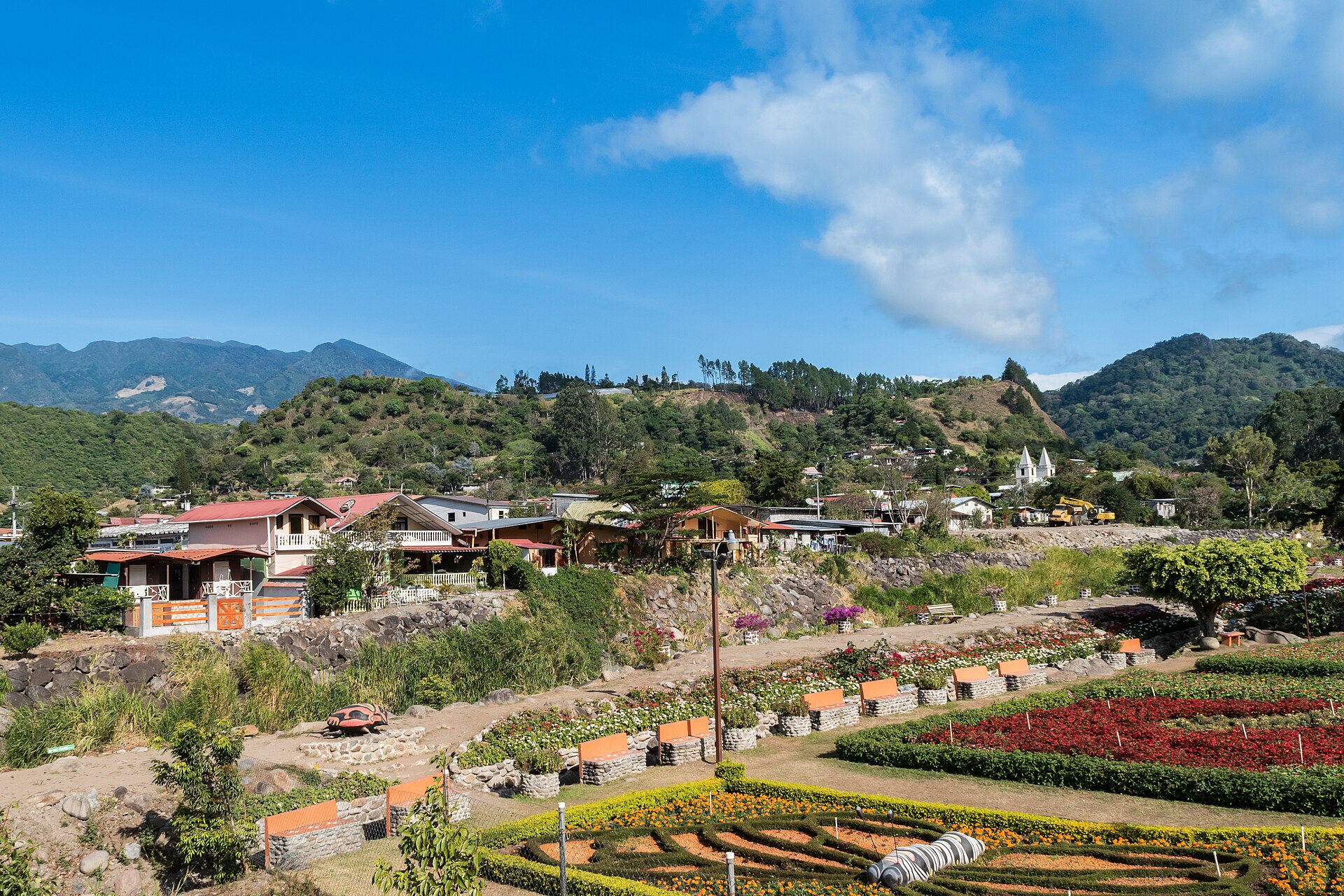
A Dutch resident can buy property in Panama and live there through the Friendly Nations (Países Amigos) route, because the Netherlands is one of the 51 countries of Executive Decree 16 of August 31, 2026, and there is a Netherlands-Panama double taxation convention in force. The decisive number, though, is Dutch: Box 3 charges 36% on a notional return of 6.00% for 2026, which is 2.16% of the property’s value every year, income or no income. On a Panamanian apartment netting 3.8% with a manager, that gross charge would absorb about 57% of the net return before any relief for foreign assets, whose exact effect has to be calculated case by case. Panama is about 38% cheaper to live in than the Netherlands; owning there from the Netherlands is not cheap. Data verified as of November 22, 2026.
What Box 3 changes is not whether the investment is attractive. It changes which investment is attractive, because it taxes the asset and not the income. The Dutch part of this guide rests on professional commentary and on Hoge Raad case law, not on the text of the Wet inkomstenbelasting 2001, and one point that directly affects the calculation is in open dispute among commentators. Check it with a Dutch tax adviser.
How much does Box 3 charge on a Panamanian property?
Sources: Dutch professional commentary (Taxence, RB, Jongbloed Fiscaal Juristen, Taxlive, Schipper Accountants) · Belastingdienst. Share of return: own calculation on the cited yields and the 2026 forfait. Data verified as of November 22, 2026.
The rate applied to the notional return is 36%. The forfait for other assets, a category that includes real estate, is 6.00% for 2026 (provisional), against 5.88% for 2025. The effective annual charge is therefore 6.00% × 36% = 2.16% of the asset’s value. Take a USD 300,000 apartment, the residency-by-investment threshold for new construction:
| Item | Annual amount |
|---|---|
| Gross return at 7.40% | About USD 22,200 |
| Net return with a manager (3.8%) | About USD 11,400 |
| Gross Box 3: 300,000 × 6.00% × 36% | About USD 6,480 |
| Share of the net return it absorbs | About 57% |
Sources: own calculation on the yields cited (Global Property Guide, Q4 2026) and the 2026 Box 3 forfait. The euro amount depends on the exchange rate and on the valuation Dutch rules permit. Data verified as of November 22, 2026.
More than half the net return, whether or not the tenant pays. Compare with the wealth charges on the same property in other European markets:
| Market | Charge | Annual charge on value | Share of a 3.8% net return |
|---|---|---|---|
| Netherlands | Box 3 | 2.16% | About 57% |
| Italy | IVIE | 1.06% | About 28% |
| Portugal | Aggravated IMI and AIMI for listed entities | 7.5% in that case | Depends on the structure |
| Spain | No equivalent of general application | None | None |
| France | IFI | Not verified | Not verified |
Sources: domestic rules of each country as cited · own calculation on a 3.8% net return. Data verified as of November 22, 2026.
Of the verified charges in that table, Box 3 is the heaviest for a Panamanian property, as of November 22, 2026. It is also the least explained, because it requires doing a calculation rather than citing a rule. The Panamanian side of the yield is in the real numbers of Panama real estate and Panama rental yields.
The relief mechanism, stated honestly
The calculation cannot stop there. There is the voorkoming dubbele belasting, the avoidance of double taxation. A foreign dwelling counts as another asset at the forfait, and the reduction for the foreign part is a proportional share of your Box 3 tax: the share attributable to assets situated abroad. The tax is calculated on the whole of Box 3 and then reduced in the proportion corresponding to foreign assets. For anyone whose only Box 3 asset is the Panamanian property, that reduction could be very substantial.
Pending and decisive: the exact net effect of the voorkoming on a Panamanian property, applying the Netherlands-Panama convention, one of Panama’s 17, is not verified as of this date. It is the difference between 57% of the return and something far smaller. Settle that calculation with a Dutch adviser before you decide. Whatever the result, the calculation has to be done before buying.
How is Box 3 changing, and why does it matter now?
The system is in transition, and the direction matters.
| Milestone | Detail |
|---|---|
| Hoge Raad, July 18, 2025 | ECLI:NL:HR:2025:1176. The case concerned a dwelling in France |
| The dispute | Commentators disagree on what it decided about foreign property. Some read it as meaning that the foreign property’s return is not included in calculating the Box 3 actual return. Others, such as Jongbloed and RB, argue the opposite: it does count for comparing whether the actual return is lower than the forfait, and once that is established, it plays no further part in the tax due |
| From 2026 | The benefit of own use or of letting also counts in the actual-return comparison, and so do unrealized value changes |
| Practical consequence | With real estate, including unrealized gains often makes claiming the actual return less attractive |
| Wet werkelijk rendement | The forfait system gives way to taxation of the actual return, probably from 2028. The Government wanted the Eerste Kamer to process the amendment before the end of 2026 |
Sources: Hoge Raad, ECLI:NL:HR:2025:1176 · Dutch professional commentary (Taxence, RB, Jongbloed Fiscaal Juristen, Taxlive). Data verified as of November 22, 2026.
For someone deciding now: until 2027 the forfait governs, and if the actual return is lower than the forfait you may claim the actual return, but with real estate, because unrealized gains are included, that claim usually stops being favorable. From 2028, foreseeably, the actual return is taxed, which for an asset netting 3.8% is structurally better than a 6.00% forfait. In other words, under the forfait regime a Dutch investor buying in Panama is taxed on a notional return higher than the asset actually produces, and the 2028 change would correct that.
The final legislative status of the Wet werkelijk rendement is not confirmed. Sources speak of 2028 and of processing expected before the end of 2026, but no confirmation of the parliamentary passage has been found. Verify it in the Tweede Kamer and Eerste Kamer papers before building an investment calendar on that date.
Which residency routes are open to Dutch nationals?
The Netherlands is among the 51 countries of Executive Decree 16 of August 31, 2026, Official Gazette 30601-B, in force since September 1, 2026.
| Route | Minimum entry | Direct permanent residency? | Rule |
|---|---|---|---|
| Pensionado (retiree) | B/.1,000 a month of lifetime pension | Yes | Art. 200 of the immigration regime |
| Agricultural investment | USD 60,000 | No: two-year blocks, maximum 6 | Agricultural investor regime |
| Digital nomad | USD 36,000 a year of foreign income | No | Remote worker regime |
| Forestry, temporary | USD 80,000 | No | Executive Decree 199 of 2021 |
| Forestry with permanent residency | USD 100,000 | Yes | Executive Decree 199 of 2021 |
| Friendly Nations | USD 200,000 or genuine employment | After 2 provisional years | Executive Decree 16 of 2026 |
| Qualified Investor, new construction | USD 300,000 | Yes | Executive Decree 17 of 2026 |
| Own Economic Solvency | USD 300,000 | Yes | Art. 191, Executive Decree 320 of 2008 |
| Qualified Investor, resale, securities or state bank deposit | USD 500,000 | Yes | Executive Decree 17 of 2026 |
| Qualified Investor, private bank deposit | USD 750,000 | Yes | Executive Decree 17 of 2026 |
Sources: Executive Decree 17 of 2026, Official Gazette 30613 (SNM) · Plan B Expat (Executive Decree 16 of 2026 list) · Executive Decrees 199 of 2021 and 320 of 2008. Data verified as of November 22, 2026.
The trap: being on the list is not enough. You must establish one of three bases: genuine employment with a Panamanian company, USD 200,000 in real estate, or USD 200,000 in a fixed-term deposit of at least three years. Owning your own Panamanian company does not count as employment. All the options are compared in Panama residency options, and the which Panama visa is right for me tool helps you narrow them down.
How Box 3 changes the choice of route
If Box 3 taxes the asset’s value and not its income, the comparison between investment routes changes for a Dutch resident:
| Route | Asset value in Box 3 (USD) | Expected return |
|---|---|---|
| New-build property | 300,000 | 3.8%–4.8% net |
| Panamanian securities | 500,000 | Depends on the instrument |
| Private bank fixed-term deposit | 750,000 | Depends on the rate |
Sources: Executive Decree 17 of 2026 · Box 3 forfait for 2026. Data verified as of November 22, 2026.
All of them enter Box 3 at the same 6.00% forfait, regardless of what they produce. For a Dutch resident, then, the selection criterion should not be the lowest threshold but the asset whose actual return comes closest to the notional 6.00%. A fixed-term deposit at a reasonable rate may perform better against the forfait than a property netting 3.8%. Few advisers make that comparison, and it is exactly the one a Dutch investor needs. The property route is detailed in Panama residency through real estate investment.
Two treaty networks, and the Netherlands has both
Besides the double taxation treaty, the Netherlands appears in the OAS SICE listing of bilateral investment treaties with Panama, and the agreement with the Netherlands mentions the Convention on the Settlement of Investment Disputes (ICSID). That makes it one of the best-covered markets on this site. The two protect different things: a tax treaty stops two countries taxing the same income and gives a residence tie-breaker, reduced withholding and a mutual agreement procedure; an investment treaty protects your investment against the host State, with access to international arbitration, fair and equitable treatment and protection against expropriation without compensation.
Three caveats: the SICE listing shows no update date; the Panamanian investment treaties have not been read, so the protections described are the typical content of this kind of instrument, not of these treaties; and arbitration under Law 54 of 1998 is something else, because its art. 20 refers to the Panama Conciliation and Arbitration Center, a domestic forum, and excludes tax audits. Before invoking a treaty, verify that it is in force and read it. More in Panama’s bilateral investment treaties.
How much cheaper is Panama than the Netherlands?
Sources: Numbeo, cost of living by country 2026. The Netherlands scores 57.9 against Panama’s 35.6, a gap of 38.5%, which rounds to 38% or 39% depending on the source. Data verified as of November 22, 2026.
Among the European countries compared on this site, the Dutch gap is the fourth largest as of November 22, 2026, behind Switzerland (58%), Luxembourg (45%) and Ireland (39%). Dutch purchasing power is 131.9, among the highest in the sample, against Panama’s 44.2. And there lies the tension: one of the strongest cost arguments in Western Europe coexists with the heaviest verified wealth charge in the table above. They are two different things: the cost of living in Panama is low; the cost of owning there from the Netherlands is high.
| Profile | Monthly |
|---|---|
| Couple, comfortable, with rent | USD 2,500–3,500 |
| Couple, premium | USD 3,500–5,000 |
| Single person, excluding rent (Numbeo, August 2026) | USD 821 |
| Rent, central Panama City | USD 900–1,700 |
| Rent, Boquete, 2 bedrooms | USD 450–700 |
Sources: Numbeo · market references for couples and rents, not closing prices. Data verified as of November 22, 2026.
Panama’s two weakest sub-indices are local purchasing power (44.2) and climate (68.2). For a Dutch reader the tropical climate may be an argument in its favor, but sustained heat and humidity are a different experience from a Mediterranean summer. Electricity is the cost to budget for: under the ASEP schedule in force from January 1 to June 30, 2026, EDEMET’s band above 750 kWh costs B/.0.33454 per kWh, more than double the 11-to-301 kWh band (B/.0.15693), roughly B/.234 a month at 1,000 kWh against roughly B/.49 at 300 kWh. Use the Panama cost of living calculator for your own case.
Buying in Panama: the risks, each with its rule
| Risk | The essentials |
|---|---|
| No short-term rentals in the capital | Art. 21 of Law 80 of November 8, 2012 prohibits letting for under 45 days in the district of Panamá without a Tourist Public Lodging permit, with ATP fines of USD 5,000 to 50,000. The Full Bench of the Supreme Court held on December 20, 2017 (file 1038-14) that it is not unconstitutional. Outside the district it is permitted |
| Real yields | Gross 7.0%–8.7% in the capital; net 4.8% self-managed and 3.8% with a manager, before Box 3 |
| Derecho posesorio (possession right) is not ownership | Land with no title registered at the Public Registry (Registro Público), recognized by ANATI but not by the Registry. Not mortgageable, titling not guaranteed and useless for investment residency, because Decree 17 requires a Public Registry certification. Much of the Bocas del Toro inventory is possession rights |
| The beach strip is public | Law 80 of 2009: 22 meters on the Pacific and 10 on the Caribbean from the high-tide line, regulated up to 200 meters |
| A mortgage reduces the residency threshold | Art. 5(a) of Decree 17: computable net value is the lower of price paid and certified market value, less all encumbrances |
| New-build buyers have real remedies | Art. 79 of Law 45 of 2007, as worded by art. 13 of Law 29 of 2008: binding delivery date, rescission with full refund and no penalty, advertising as an enforceable part of the contract and proportional reduction if specifications change. Keep every piece of marketing material, dated |
| The dispute record | ACODECO: 280 complaints against real estate companies from January to August 2026, totaling B/.13,239,348, including files from earlier years |
| Banking | 3 to 8 weeks, minimum balances for foreigners of USD 10,000 to 50,000 and a demonstrable Panamanian connection. Down payment of 30%–40% for non-residents, at 7%–9% |
Sources: Law 80 of 2012, art. 21, Official Gazette 27159-A · Supreme Court, file 1038-14 · Law 80 of 2009, Official Gazette 26438-B · ANATI · ACODECO. Data verified as of November 22, 2026.
Each risk has its own guide: Law 80 and short-term rentals, buying in Bocas del Toro and possession rights, property buyer protections and Panama mortgages for foreigners. Check the purchase costs with the closing costs calculator and the yield with the rental yield calculator; then subtract Box 3.
Five questions before paying anyone
- 01How much Box 3 do I pay on this property, and how much is left after the voorkoming?This is the question for this market. If the adviser does not calculate it, they have not evaluated the investment.
- 02Am I better off with an asset whose actual return comes closer to the 6.00% forfait?It shows whether they understand that Box 3 taxes the asset, not the income.
- 03What changes with the Wet werkelijk rendement, and from when?If they mention neither 2028 nor the state of the parliamentary passage, they are working from old material.
- 04Is the Qualified Investor threshold 300,000 or 500,000?The correct answer: it depends on whether it is new construction or resale, since Decree 17 of 2026.
- 05What is the net yield on this unit, itemized in writing?A gross figure alone is a sales pitch, not advice.
Sources: Belastingdienst · Executive Decree 17 of 2026. Data verified as of November 22, 2026.
Open points
| Point | Status |
|---|---|
| Net effect of the voorkoming dubbele belasting on a Panamanian property, with the convention applied | Pending and decisive: the difference between 57% of the return and something far smaller. Settle it before deciding |
| Interpretation of the Hoge Raad judgment of July 18, 2025 regarding foreign property | In open dispute among professional commentators |
| Legislative status of the Wet werkelijk rendement and its start date | Not confirmed. Verify in the Tweede Kamer and Eerste Kamer |
| Whether the 6.00% forfait for 2026 is final | Provisional in the source |
| Valuation basis of the foreign property for Box 3 | Pending |
| Treatment of a mortgage on the foreign property in Box 3 | Pending. Relevant because in Panama a mortgage also reduces the residency threshold |
| Text of the Wet inkomstenbelasting 2001 | Not consulted |
Sources: Dutch professional commentary · Hoge Raad. Nothing in this table is settled fact. Data verified as of November 22, 2026.
Belgian residents have their own rules: see the guide for investing in Panama from Belgium, or browse all the country guides.
Frequently asked questions
How much does Box 3 charge on a Panamanian property?
The rate applied to the notional return is 36%, and the forfait for other assets, a category that includes real estate, is 6.00% provisionally for 2026, against 5.88% for 2025. Together they give an annual charge of 2.16% of the asset’s value, regardless of the income it produces. On a USD 300,000 apartment netting 3.8% with a manager, gross Box 3 would absorb around 57% of the net return, before the voorkoming dubbele belasting, whose exact effect must be calculated case by case.
What is the voorkoming dubbele belasting and how much does it reduce?
A foreign dwelling counts as another asset at the forfait, and the reduction for the foreign part is a proportional share of the Box 3 tax: the share attributable to assets situated abroad. If the Panamanian property is your only Box 3 asset, that reduction may be very substantial. The exact net effect, applying the Netherlands-Panama convention, must be calculated with a Dutch tax adviser.
Does foreign property count in calculating the Box 3 actual return?
Commentators disagree. The Hoge Raad judgment of July 18, 2025 (ECLI:NL:HR:2025:1176) concerned a dwelling in France. Some read it as meaning that the foreign property’s return is not included in the actual return; others argue that it does count for comparing the actual return with the forfait, and plays no further part once that comparison is made. It is an open point that directly affects the calculation.
Is it worth claiming the actual return instead of the forfait if I own real estate?
With real estate it is usually less attractive. From 2026 the benefit of own use or of letting counts in the actual-return comparison, and so do unrealized value changes, so including unrealized gains often makes the claim less attractive. The answer depends on your case and on how the property’s value develops.
When does the Box 3 system change?
Sources point to the Wet werkelijk rendement, which would replace the forfait with taxation of the actual return, probably from 2028, and the Government wanted the Eerste Kamer to process it before the end of 2026. Its final legislative status is not confirmed, so verify it in the Tweede Kamer and Eerste Kamer papers. For an asset netting 3.8%, taxing the actual return would be structurally better than a 6.00% forfait.
Is the Netherlands on Panama’s Friendly Nations list?
Yes, among the 51 countries of Executive Decree 16 of August 31, 2026, Official Gazette 30601-B, in force since September 1, 2026. You still need genuine employment with a Panamanian company, USD 200,000 in real estate or a USD 200,000 fixed-term deposit of at least three years. Owning your own Panamanian company does not count as employment.
Can an apartment in Panama City be let by the day?
Not without a Tourist Public Lodging permit. Article 21 of Law 80 of November 8, 2012 prohibits letting for less than 45 days in the district of Panamá, with Tourism Authority (ATP) fines of USD 5,000 to 50,000. The Full Bench of the Supreme Court held on December 20, 2017, in file 1038-14, that the rule is not unconstitutional. Outside the district of Panamá the prohibition does not apply.
Sources
- Dutch law: Box 3 (36% rate; 6.00% provisional forfait for 2026 and 5.88% for 2025); voorkoming dubbele belasting; Hoge Raad, July 18, 2025, ECLI:NL:HR:2025:1176; Wet werkelijk rendement; professional commentary from Taxence, RB, Jongbloed Fiscaal Juristen, Taxlive and Schipper Accountants, not the text of the Wet inkomstenbelasting 2001; Belastingdienst
- Treaties: DGI, double taxation agreements; SICE, Organization of American States; Law 54 of 1998, art. 20
- Panamanian law: Executive Decree 16 of 2026, Official Gazette 30601-B (Friendly Nations list); Executive Decree 17 of 2026, Official Gazette 30613; art. 191 of Executive Decree 320 of 2008; Executive Decree 199 of 2021; Law 80 of 2012, art. 21; Law 45 of 2007, art. 79, and Law 29 of 2008; Law 80 of 2009
- Data: Numbeo 2026; Global Property Guide, yields Q4 2026; ASEP, tariff schedule; ACODECO
This is general information, not legal, tax or financial advice. The Dutch side rests on professional commentary, one point is in open dispute and the Box 3 reform is not confirmed as of this date: consult a Dutch tax adviser and a lawyer licensed in Panama before investing.

Milan Valdés Báez is an independent journalist and researcher based in Panama and the editor of Invest in Panama Real Estate, the real estate investment guide for foreigners. Every figure on the site is checked against official sources (the Official Gazette, the Superintendency of Banks, INEC, the National Migration Service and the Public Registry), with notes on which data have changed and which circulate out of date, and the guides and calculators are kept current. ORCID iD: 0009-0000-0112-3529.