

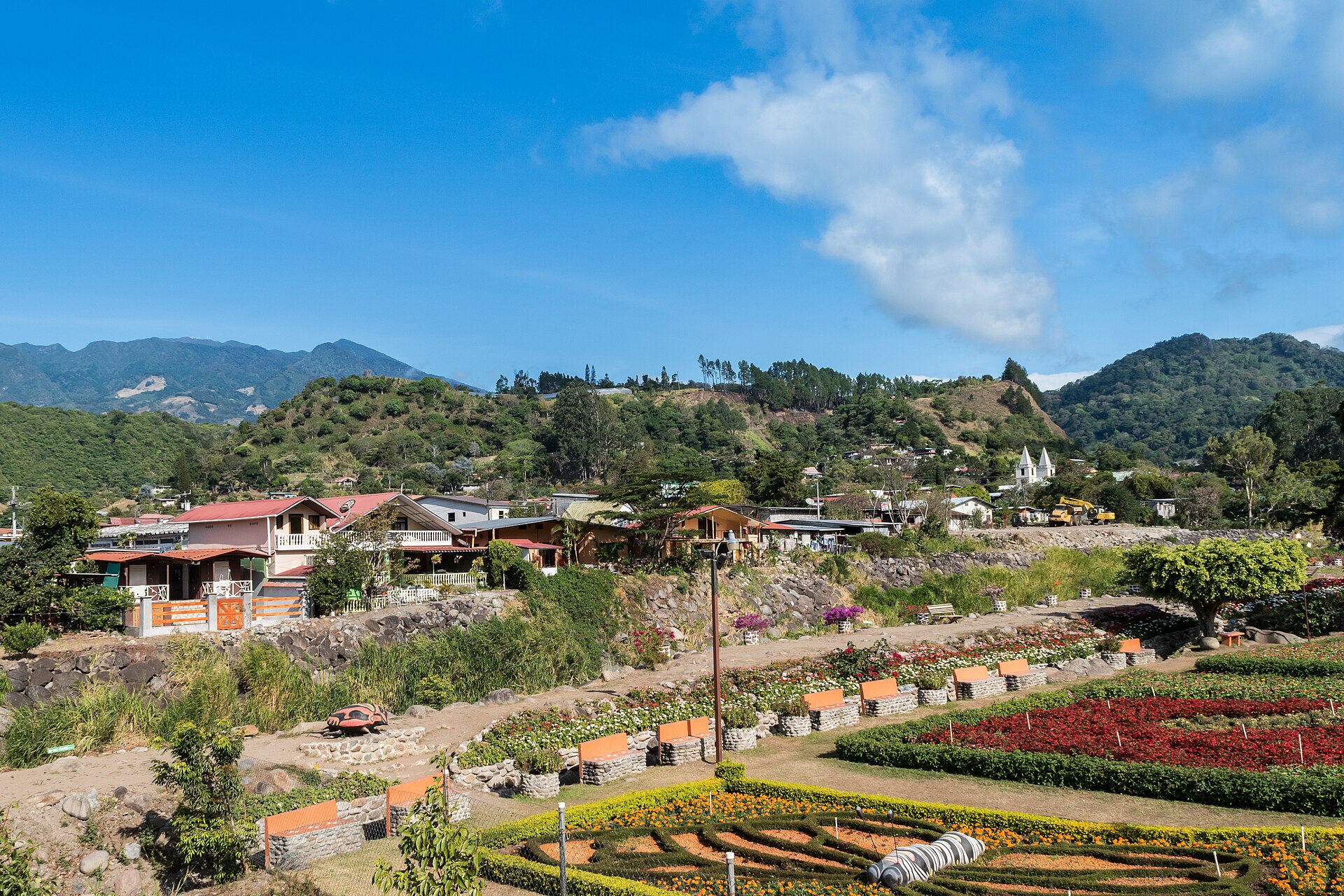
If you live in Switzerland, you can buy property in Panama and use it for residency: Switzerland is on Panama’s Friendly Nations (Países Amigos) list, so every route is open to Swiss nationals. Two facts make this the market with the strongest arithmetic. Panama is about 58% cheaper than Switzerland, the largest cost gap of the 38 origin countries we had analyzed as of November 22, 2026. And Switzerland does not tax foreign real estate directly: it applies exemption with a progression reservation (Progressionsvorbehalt), so the Panamanian property raises the rate on your Swiss income without being taxed itself. There is no double taxation convention between Switzerland and Panama, and here it barely matters; Switzerland does appear on the list of Panama’s bilateral investment treaties. Data verified as of November 22, 2026.
A caveat before the detail: the Swiss part of this guide rests on professional tax guides, not on the Federal Act on Direct Federal Taxation or cantonal legislation, and most of their examples concern Germany or Spain rather than non-treaty states. Swiss taxation is federal, cantonal and communal at once, so any specific figure requires naming the canton.
Does Switzerland tax a property in Panama?
Not directly. Real estate located abroad is not taxed in Switzerland, but it is taken into account to set the rate on the rest of your income and wealth that Switzerland does tax.
| Element | How it works |
|---|---|
| The principle | Real estate located abroad is not taxed directly in Switzerland |
| The reservation | It is taken into account to determine the rate on the rest of your income and wealth subject to Swiss tax |
| The effect | The rate on your Swiss income rises, even though the foreign property pays no Swiss tax |
| The obligation nobody mentions | The property must still be declared in the Swiss return, even though it generates neither income nor wealth tax |
| Debt interest | According to one source, mortgage interest works like the asset value, through the progression reservation, not as a direct deduction from Swiss income |
Sources: Swiss tax guides and advisory firms (WEKA, BDO Switzerland, Zofingen Treuhand, Steuermacher, Moore Zurich) · Swiss Federal Tax Administration. Not the Federal Act on Direct Federal Taxation or cantonal law. Data verified as of November 22, 2026.
Why this is lighter than the European alternatives
| Country | Charge on the Panamanian property | Annual direct charge on value | Share of a 3.8% net return |
|---|---|---|---|
| Netherlands | Box 3 | 2.16% | About 57% |
| Italy | IVIE | 1.06% | About 28% |
| Portugal | Aggravated IMI and AIMI, for listed entities | 7.5% in that case | Depends on the structure |
| France | IFI | Not verified | Not verified |
| Switzerland | None direct | 0% | Indirect effect through the rate |
| Hong Kong | None | Not applicable | Not applicable |
Sources: Dutch, Italian, Portuguese and Swiss rules as described by professional sources · net return of 3.8% with a manager from Global Property Guide data; share of return is our own calculation. Data verified as of November 22, 2026.
Among the regimes in the table, Switzerland is the only European one with no direct charge on the asset. It does not charge you for owning the property; it raises your rate on everything else. Where a Dutch resident pays USD 6,480 a year on a USD 300,000 apartment whatever it produces, a Swiss resident pays nothing on the apartment and a little more on Swiss income. How much more depends on your bracket and canton, so no figure is given here: giving one would mean inventing it. The calculation has to use your canton’s marginal rate.
The point where sources disagree: wealth tax
Several sources say no Swiss wealth tax (Vermögenssteuer) arises on real estate located abroad. Another says the progression reservation also reaches the asset value, not only the rental income. Both readings agree that there is no direct charge; the difference is whether the property’s value also pushes up the wealth tax rate. Since Swiss wealth tax is cantonal, the answer probably depends on the canton. Treat it as a disputed point and put the question to your cantonal tax administration.
Is there a tax treaty between Switzerland and Panama?
No. Panama has 17 double taxation conventions: Barbados, the Czech Republic, South Korea, the United Arab Emirates, Spain, France, Ireland, Israel, Italy, Luxembourg, Mexico, the Netherlands, Portugal, Qatar, the United Kingdom, Singapore and Vietnam. Switzerland is not there, nor are the United States, Canada or Germany. But the effect is entirely different in each case.
| Country without a convention | What it means in practice |
|---|---|
| United States | Serious. It taxes by citizenship and Panamanian rental income is fully taxable; relief depends on the unilateral foreign tax credit, which is small if the Panamanian tax is low |
| Germany | Significant. No residence tie-breaker, and § 2 and § 6 AStG operating on their own |
| Switzerland | Barely relevant. Switzerland already allocates the foreign property unilaterally to the country where it is located, exempting it with a progression reservation |
Sources: Directorate General of Revenue (DGI), listing of conventions; Switzerland does not appear. Data verified as of November 22, 2026.
A convention serves to allocate taxing rights, and Switzerland has already given up taxing the foreign property on its own, so there is little left to allocate. What does happen, as one source states expressly, is that a Swiss resident is regularly taxed where the property is located. In Panama, that means the Panamanian taxes below. Whether the Panamanian tax is creditable in Switzerland in any way, or whether the exemption makes it irrelevant, is not verified: it is the technical question for this market.
| Panamanian tax | Figure |
|---|---|
| Rental income | Panamanian-source income: 0% up to B/.11,000, then 15%, and 25% above B/.50,000 for an individual; 25% flat for a company |
| Property tax, general regime | 0% up to B/.30,000, then 0.60%, 0.80% and 1.00% |
| Patrimonio Familiar Tributario (tax family homestead), principal residence | 0% up to B/.120,000, then 0.50% and 0.70%; you must apply to the DGI, it is not automatic |
| Capital gain on sale | 10% of the gain, or 3% of the price as a final tax |
Sources: Tax Code, art. 700, as worded by Law 8 of 2010 · DGI. Data verified as of November 22, 2026.
Estimate the annual charge with the property tax calculator, the exit cost with the capital gains calculator, and see property tax and the family homestead exemption.
But Switzerland does have an investment treaty with Panama
There is a second treaty network: bilateral investment treaties (BITs). Switzerland has no tax treaty with Panama, but it does appear on the list of Panama BITs kept by SICE, the foreign trade information system of the Organization of American States. So a Swiss investor has no conventional tax protection but does have an international arbitral forum. The signature and entry-into-force dates of the Swiss treaty are not verified as of this date.
| Element | Double taxation treaty | Bilateral investment treaty |
|---|---|---|
| What it protects against | Two countries taxing the same income | The host state harming your investment |
| What it gives you | A residence tie-breaker, reduced withholding, a mutual agreement procedure | Access to international arbitration against the state, fair and equitable treatment, protection against expropriation without compensation |
| Switzerland-Panama | No | On the SICE list; dates not verified |
Sources: SICE, Organization of American States · DGI. Data verified as of November 22, 2026.
Three warnings: the SICE list shows no update date; none of Panama’s BITs has been reviewed for this guide, so the protections above are the typical content of this kind of treaty, not of this one; and arbitration under Law 54 of 1998 is not the same thing, because its art. 20 refers to the Panama Conciliation and Arbitration Center, a domestic forum, and excludes tax audits. Before invoking a treaty, verify that it is in force and read it. See Panama’s bilateral investment treaties.
How much cheaper is Panama than Switzerland?
About 58% on the Numbeo cost of living plus rent index, where Panama scores 35.6 (New York = 100). As of November 22, 2026, it is the largest gap of the 38 origin countries we had analyzed, ahead of Singapore (56%), Hong Kong (49%) and Luxembourg (45%), and Swiss local purchasing power, at 170.6, is the highest of the 65 countries in our Numbeo comparison.
Sources: Numbeo, cost of living by country 2026. Panama scores 35.6. Data verified as of November 22, 2026.
| Profile | Monthly in Panama |
|---|---|
| Couple, comfortable, with rent | 2,500–3,500 |
| Couple, premium | 3,500–5,000 |
| Single person, excluding rent (Numbeo, August 2026) | 821 |
| Rent, central Panama City | 900–1,700 |
| Rent, Costa del Este | From 2,200 |
| Rent, Boquete, 2 bedrooms | 450–700 |
Sources: Numbeo (single-person budget, August 2026). Couple and rent ranges are market references, not closing prices. Data verified as of November 22, 2026.
For a Swiss reader, USD 2,200 a month for an apartment in Costa del Este, one of Panama City’s top neighborhoods, is worth putting next to what a comparable apartment costs in Zurich or Geneva. That contrast, on its own, is this market’s argument.
Two sub-indices still deserve a mention: local purchasing power of 44.2 and a climate comfort index of 68.2, against Spain’s 93.0. Coming from a country with a real winter, the tropical climate is a genuine draw, but the index measures comfort, and Panama’s sustained humid heat is not a Ticino summer. Electricity also needs budgeting: under the National Public Services Authority (ASEP) schedule in force from January 1 to June 30, 2026, EDEMET’s band above 750 kWh costs B/.0.33454 per kWh, more than double the 11-to-301 kWh band (B/.0.15693), roughly B/.234 a month at 1,000 kWh against B/.49 at 300 kWh. Use the Panama cost of living calculator and see living in Panama: cost of living and practical life.
Which residency routes can a Swiss national use?
All of them. Switzerland is among the 51 countries of Executive Decree 16 of August 31, 2026, Official Gazette 30601-B, in force since September 1, 2026.
| Route | Minimum entry | Leads to permanent? | Rule |
|---|---|---|---|
| Pensionado (retiree) | B/.1,000 a month for life | Yes, directly | Art. 200 of the immigration regime |
| Agricultural investment | USD 60,000 | No: two-year blocks, maximum 6 | Agricultural investor regime |
| Digital nomad | USD 36,000 a year of foreign income | No | Remote worker regime |
| Forestry, temporary | USD 80,000 | No | Executive Decree 199 of 2021 |
| Forestry with permanent residency | USD 100,000 | Yes | Executive Decree 199 of 2021 |
| Friendly Nations | USD 200,000 or genuine employment | Yes, after 2 provisional years | Executive Decree 16 of 2026 |
| Qualified Investor, new construction | USD 300,000 | Yes, directly | Executive Decree 17 of 2026 |
| Own Economic Solvency | USD 300,000 | Yes | Art. 191, Executive Decree 320 of 2008 |
| Qualified Investor, resale, securities or state deposit | USD 500,000 | Yes, directly | Executive Decree 17 of 2026 |
| Qualified Investor, private bank deposit | USD 750,000 | Yes, directly | Executive Decree 17 of 2026 |
Sources: Executive Decree 17 of 2026 (SNM) · SNM, retiree form · Plan B Expat · Executive Decree 199 of 2021. Data verified as of November 22, 2026.
The Friendly Nations trap: being on the list is not enough. You must establish genuine employment with a Panamanian company, USD 200,000 in real estate, or USD 200,000 in a fixed-term deposit of at least three years. Owning your own Panamanian company does not count as employment, and it is the most common ground for refusal. If the passport is the goal, Friendly Nations takes about 7 years (2 provisional years that do not count, plus 5 permanent) for USD 200,000, and Qualified Investor about 5 for USD 300,000; the extra USD 100,000 buys two fewer years, no re-accreditation and a decision deadline of 15 business days at the Ministry of Commerce and Industries (MICI) plus 30 at the National Migration Service (SNM), capped at 45. Compare with which Panama visa is right for me? and Panama’s residency options.
A specific warning: naturalizing as a Panamanian requires renouncing your previous nationality, by constitutional mandate. Switzerland permits dual nationality, but that does not settle the question: Panama requires the act of renunciation before the Panamanian authority, and its effect on Swiss nationality depends on Swiss law, which is not verified here. If you only want to reside, the question does not arise: permanent residency requires no renunciation, and for most Swiss profiles it is the right objective (from permanent resident to Panamanian passport).
Buying in Panama: the risks, each with its rule
| Risk | The essentials |
|---|---|
| No short-term rentals in the capital | Article 21 of Law 80 of November 8, 2012 bans rentals under 45 days in the district of Panama without a Tourist Public Lodging permit, with Tourism Authority (ATP) fines of USD 5,000 to 50,000. The Full Bench of the Supreme Court held on December 20, 2017 (file 1038-14) that it is not unconstitutional. Outside the district of Panama, it is permitted |
| Real yields | Gross 7.0%–8.7% in the capital. Net: 4.8% self-managed, 3.8% with a manager, before Panamanian tax on rental income |
| A possession right is not ownership | Derecho posesorio (possession right): land with no registered title at the Public Registry (Registro Público), recognized by ANATI but not by the Registry. Not mortgageable, titling not guaranteed, and useless for investment residency because Decree 17 requires a Public Registry certification. Much of the inventory in Bocas del Toro is possession rights |
| The beach strip is public | Law 80 of 2009: 22 meters on the Pacific and 10 on the Caribbean from the high-tide line, plus an allocable zone of 178 or 190 meters, regulated up to 200 meters |
| A mortgage reduces the residency threshold | Art. 5(a) of Decree 17: the computable value is the lower of the price paid and the certified market value, less all encumbrances. 400,000 with a 150,000 mortgage counts as 250,000 and does not reach 300,000 |
| New-build buyers have real remedies | Article 79 of Law 45 of 2007 (as worded by art. 13 of Law 29 of 2008): a binding delivery date, rescission with a full refund and no penalty, advertising as an enforceable part of the contract, and a proportional price reduction if specifications change. Keep all marketing material, dated |
| The complaint record | Acodeco: 280 complaints against real estate companies from January to August 2026, totaling B/.13,239,348, including older files closed in 2026 |
| Cost overruns can be challenged, with a deadline | Acodeco’s validation of cost increases on new housing, within less than 1 year of notification. The Supreme Court confirmed its jurisdiction on March 12, 2019 |
| Banking | 3 to 8 weeks, minimum balances for foreigners of USD 10,000 to 50,000 and a demonstrable link to Panama. Down payment of 30%–40% for non-residents against 10%–20% for residents, at 7%–9% |
Sources: Law 80 of 2012, art. 21 (Official Gazette 27159-A) · Supreme Court, file 1038-14 · Law 45 of 2007 · Law 80 of 2009 · Acodeco · Global Property Guide. Data verified as of November 22, 2026.
Before signing, read verifying title at the Public Registry, property buyer protections and real rental yields, and check the net figure with the rental yield calculator.
Five questions before you pay anyone
| Question | What it reveals |
|---|---|
| How does the progression reservation affect my marginal rate in my canton? | It is this market’s question, and the answer is cantonal, not federal. An adviser who gives a national figure has not understood the system |
| Does the progression reservation also reach the wealth tax? | Sources disagree. The right answer acknowledges the doubt and refers you to the canton |
| Is the Panamanian tax on rental income creditable in Switzerland, with no convention? | If they do not know there is no Switzerland-Panama convention, they do not know the basics |
| Is the Qualified Investor threshold 300,000 or 500,000? | Correct answer: it depends on whether it is new construction or resale, since Decree 17 of 2026 |
| What is the net yield on this unit, itemized in writing? | Quoting only the gross figure is selling, not advising |
Sources: Swiss Federal Tax Administration · DGI · Executive Decree 17 of 2026. Data verified as of November 22, 2026.
Open points
| Point | Status |
|---|---|
| Whether the progression reservation reaches the wealth tax as well as income tax | Disputed. Probably canton-dependent; a question for the cantonal administration |
| Whether Panamanian tax on rental income is creditable in Switzerland with no convention | Pending. It is the technical question for this market |
| The quantitative effect of the progression reservation on your marginal rate | Not quantifiable here: it depends on the bracket and the canton |
| The federal and cantonal legal basis of the mechanism | Pending. The tax section rests on professional guides |
| Swiss treatment of a renunciation of nationality required by another state | Not verified. Relevant only if the goal is the passport, not residency |
| Whether Switzerland applies CRS with Panama, and since when | Pending |
| Relevant cantonal differences (Zurich, Geneva, Zug, Ticino) | Not examined. This guide describes the general principle |
| Dates and text of the Switzerland-Panama investment treaty | Not verified. SICE shows no update date |
| Liechtenstein’s own rules | Not examined |
Sources: Swiss Federal Tax Administration · SICE. Data verified as of November 22, 2026.
Compare with Germany, Austria and France, or browse investing from your country. In short: for a Swiss resident, Panama combines the largest cost gap we measure with a home tax regime that does not charge the asset directly; what you need to settle is the effect on your cantonal rate.
Frequently asked questions
Does Switzerland tax a property located in Panama?
Not directly. Real estate located abroad is not taxed in Switzerland, but it is taken into account to set the rate on the rest of your income and wealth subject to Swiss tax: the progression reservation. The rate on your Swiss income may rise even though the foreign property pays no Swiss tax. The property must still be declared in the Swiss return, and the specific effect depends on the canton.
Is Swiss wealth tax payable on a Panamanian property?
Sources disagree. Several hold that no Swiss wealth tax arises on real estate located abroad; another holds that the progression reservation also reaches the asset value. Both agree there is no direct charge; the difference is whether the property’s value also pushes up the wealth tax rate. Since that tax is cantonal, ask your cantonal administration.
Is there a double taxation convention between Switzerland and Panama?
No. Panama has 17 conventions and Switzerland is not among them, nor are the United States, Canada or Germany. But the effect is very different from the US or German case: Switzerland already allocates the foreign property unilaterally to the country where it is located, exempting it with a progression reservation, so a convention would largely repeat what the domestic rule already does.
Does Switzerland have an investment treaty with Panama?
It appears on the list of Panama’s bilateral investment treaties kept by the OAS SICE system, so a Swiss investor typically has access to international arbitration against the state despite having no tax treaty. The dates and text are not verified for this guide, and the list shows no update date: confirm the treaty is in force and read it before relying on it.
How much cheaper is Panama than Switzerland?
Around 58% on the Numbeo cost of living plus rent index, where Panama scores 35.6 with New York = 100. As of November 22, 2026, it is the largest gap of the 38 origin countries we had analyzed, ahead of Singapore at 56%, Hong Kong at 49% and Luxembourg at 45%. A couple living comfortably needs USD 2,500 to 3,500 a month including rent, and rent in Costa del Este starts at USD 2,200.
Is Switzerland on Panama’s Friendly Nations list?
Yes. Switzerland is among the 51 countries of Executive Decree 16 of August 31, 2026, published in Official Gazette 30601-B and in force since September 1, 2026. You must also establish genuine employment with a Panamanian company, USD 200,000 in real estate or USD 200,000 in a fixed-term deposit of at least three years. Owning your own Panamanian company does not count as employment.
What Panamanian taxes apply to a rented property?
Rental income is taxed as Panamanian-source income: for an individual, 0% up to B/.11,000, then 15%, and 25% above B/.50,000; for a company, 25% flat. The annual property tax under the general regime is exempt up to B/.30,000, then 0.60%, 0.80% and 1.00% by band. The Patrimonio Familiar Tributario regime for a principal residence is exempt up to B/.120,000, then 0.50% and 0.70%, but you must apply for it at the DGI. On sale, 10% of the gain or 3% of the price as a final tax.
Sources
- Swiss rules: exemption with progression reservation (Progressionsvorbehalt); declaration duty; debt interest through the reservation (one source); wealth tax, a disputed point. From Swiss tax guides and advisory firms (WEKA, BDO Switzerland, Zofingen Treuhand, Steuermacher, Moore Zurich), not from the Federal Act on Direct Federal Taxation or cantonal law; Swiss Federal Tax Administration
- Treaties: DGI, the 17 conventions in force (Switzerland does not appear); SICE, Organization of American States, Panama bilateral investment treaties
- Panamanian law: Executive Decree 16 of August 31, 2026, Official Gazette 30601-B; Executive Decree 17 of 2026, Official Gazette 30613 of September 16, 2026; art. 191 of Executive Decree 320 of 2008; Executive Decree 199 of 2021; Law 80 of 2012, art. 21; Supreme Court, file 1038-14; Law 45 of 2007, art. 79; Law 80 of 2009, Official Gazette 26438-B; Tax Code, art. 700, as worded by Law 8 of 2010; Law 54 of 1998, art. 20
- Data: Numbeo 2026; Global Property Guide; Acodeco; ASEP, tariff schedule January 1 to June 30, 2026
This is general information, not legal, tax or financial advice. It describes Panamanian and Swiss rules as of November 22, 2026; the Swiss part rests on professional guides, and any figure depends on your canton. Ask your cantonal tax administration or a Swiss adviser about the progression effect, and a licensed lawyer in Panama about the purchase.

Milan Valdés Báez is an independent journalist and researcher based in Panama and the editor of Invest in Panama Real Estate, the real estate investment guide for foreigners. Every figure on the site is checked against official sources (the Official Gazette, the Superintendency of Banks, INEC, the National Migration Service and the Public Registry), with notes on which data have changed and which circulate out of date, and the guides and calculators are kept current. ORCID iD: 0009-0000-0112-3529.