

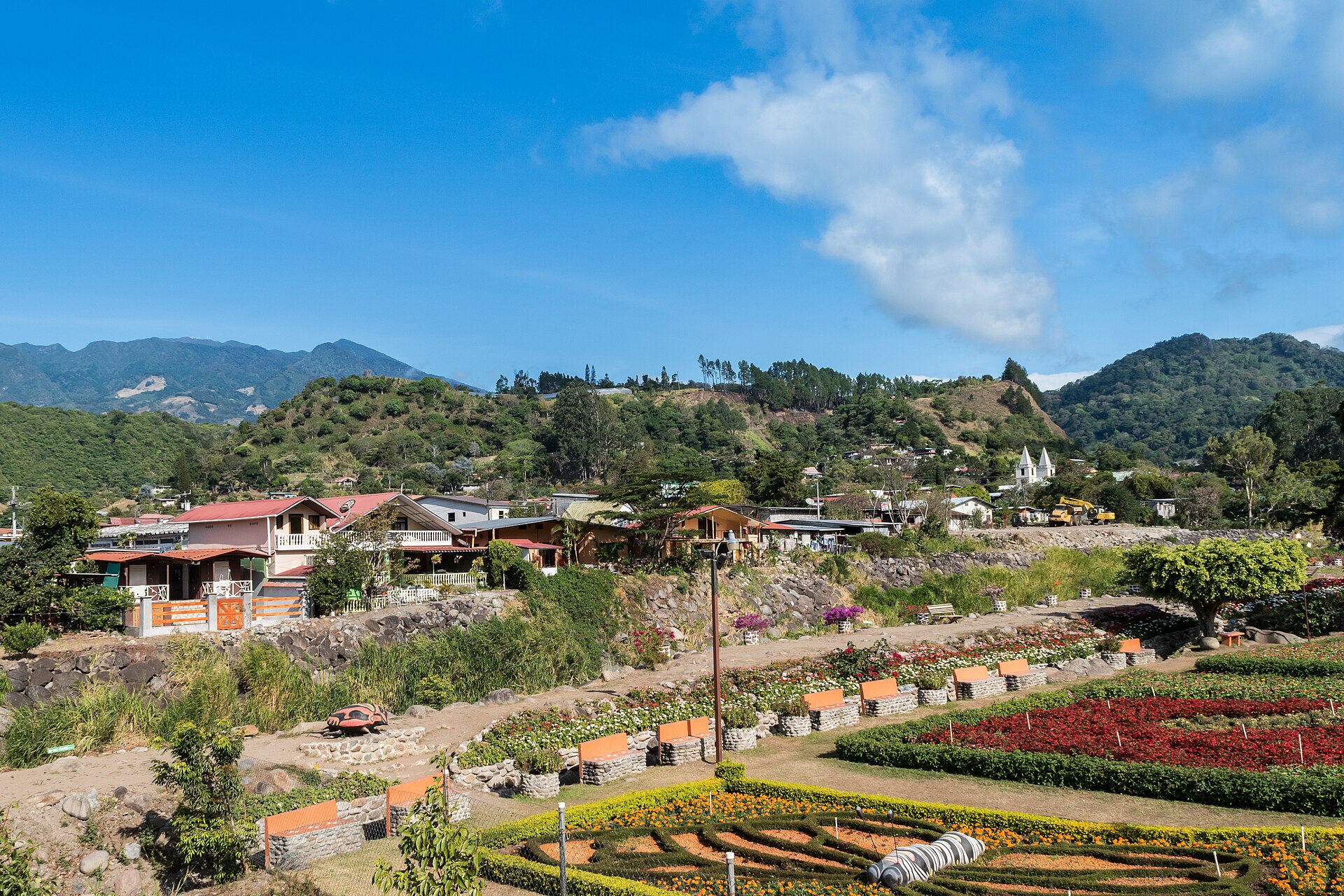
A Singapore resident can buy property in Panama and live there through the Friendly Nations route, because Singapore is one of the 51 countries of Executive Decree 16 of August 31, 2026, and four structural factors point the same way: Singapore has a double taxation treaty with Panama, approved by Law 24 of March 30, 2011; Singapore’s own system exempts foreign-sourced income received by individuals under section 13(7A) of the Income Tax Act; Singapore has no capital gains tax, so Panama’s 10% of the gain or 3% of the price is the whole tax on a sale; and Panama is about 56% cheaper on Numbeo’s index. The open technical question is whether rent from a Panamanian apartment falls within section 13(7A), which the IRAS e-Tax Guide should settle. Data verified as of November 20, 2026.
This guide describes Panamanian and Singaporean rules as of the cut-off date, with sources at the end. It is not tax or legal advice. Where sources differ, or where a statement is our own inference, it says so.
Among the 38 origin countries compared for this site’s country guides as of November 22, 2026, Singapore is the only one where all four tests come out positive at once: a tax treaty, a place on the Friendly Nations list, a territorial system at home and a large cost-of-living gap. Hong Kong has the territoriality but no treaty; Luxembourg has the treaty but its exemption comes with a switch-over clause; Germany, Austria, Switzerland and Belgium are on the list without a treaty; the UAE and Qatar have treaties without the list.
Sources: DGI · Plan B Expat · IRAS · Numbeo. Data verified as of November 20, 2026.
Is Panamanian rental income taxable in Singapore?
| Element | Content |
|---|---|
| The rule | Exempts income arising from sources outside Singapore and received in Singapore by an individual, other than income received through a Singapore partnership |
| In force for income received from | January 1, 2004 |
| What “received” means | Income remitted to, transmitted or brought into Singapore |
| Non-resident individual | The exemption applies outright |
| Resident individual | It applies where the Comptroller of Income Tax is satisfied that the exemption would be beneficial |
Sources: Income Tax Act of Singapore, s.13(7A) · IRAS. Data verified as of November 20, 2026.
Caveat one: the resident-individual condition
One source frames section 13(7A) as applying outright to a non-resident individual and to a resident individual only where the Comptroller is satisfied the exemption would be beneficial; a second describes the same condition under s.13(7A)(b). In practice the exemption for individuals is treated as the general rule in Singapore, and that is the system’s reputation. But the statutory condition exists, and an adviser who presents the exemption as unconditional for residents is overstating it.
Caveat two: does rental income count?
None of the sources consulted addresses rent from overseas property under section 13(7A). The reading that follows from the wording is that it is covered: it is income from a source outside Singapore, and remitting it is receiving it. But that is our inference, not a quoted conclusion. The authoritative reference is the IRAS e-Tax Guide on tax exemption for foreign-sourced income, with a fifth edition dated January 30, 2026: read it, or ask IRAS, before you build a yield model on it.
What Singapore does not tax at all
Singapore has no capital gains tax, no estate duty, no wealth tax and no annual charge on the value of foreign real estate (stated as the settled position of the system, not sourced provision by provision here). Set that against other origin countries: a Dutch resident pays 2.16% of the asset’s value every year under Box 3, an Italian 1.06% in IVIE, a Brazilian 15% a year on undistributed offshore profits, and a Canadian triggers a deemed disposition of the asset on emigrating. A Singapore resident, on the reading above, pays the Panamanian tax and nothing else, and keeps the whole capital gain.
Is there a tax treaty between Singapore and Panama?
Yes. It is one of Panama’s 17 treaties in force, with Barbados, the Czech Republic, South Korea, the UAE, Spain, France, Ireland, Israel, Italy, Luxembourg, Mexico, the Netherlands, Portugal, Qatar, the United Kingdom and Vietnam.
| Item | Detail |
|---|---|
| Panamanian approval law | Law 24 of March 30, 2011 |
| Multilateral Instrument in force | April 1, 2019 |
| MLI effects on withholding | January 1, 2025, the most recent in Panama’s network alongside the Czech Republic |
| Hong Kong, for comparison | Territorial and on the Friendly Nations list, but no treaty: no tie-breaker and no mutual agreement procedure |
| Singapore | Territorial for individuals under s.13(7A) and a treaty: a residence tie-breaker, a mutual agreement procedure and treaty protection on other Panamanian-source payments |
Sources: DGI, listing of double taxation treaties · Pardini & Associates. The treaty text has not been read for this guide; only its existence and dates are verified. Data verified as of November 20, 2026.
The fair question is what a treaty adds when your home system already exempts the income. The treaty is not what keeps the rent untaxed at home; section 13(7A) does that. The treaty is the insurance policy for everything else: a competing residence claim, a dispute, withholding on a non-rental payment. That is the difference between the two Asian territorial markets, and it favors Singapore; the other side is in investing in Panama from Hong Kong. A tax treaty is not an investment treaty, and Singapore does not appear among the countries named in the extracts of the OAS SICE listing of Panama’s bilateral investment treaties, which shows no update date; see Panama’s bilateral investment treaties.
Is Panama cheaper than Singapore?
Sources: Numbeo, cost of living by country 2026. Bars: how much cheaper Panama is; right column: local purchasing power in that country (Panama: 44.2). Data verified as of November 20, 2026.
Yes: Singapore sits at 81.2 and Panama at 35.6 (New York = 100), so Panama is about 56% cheaper, the second-largest gap after Switzerland (58%) among the 38 origin countries compared on this site as of November 22, 2026. The arithmetic is unusual: Singapore’s cost index is very high, but its local purchasing power of 105.5 is modest for a high-cost country, below Switzerland’s 170.6, Luxembourg’s 160.5, Qatar’s 153.1 and the United States’ 146.0. So the 56% saving lands on a resident whose income does not stretch as far at home as the city’s wealth suggests. And the housing line sells itself: USD 900 to 1,700 for a central Panama City apartment, or from USD 2,200 in Costa del Este.
| Item | Amount |
|---|---|
| Couple, comfortable, with rent | 2,500 – 3,500 |
| Couple, premium | 3,500 – 5,000 |
| Single person, excluding rent (Numbeo, August 2026) | 821 |
| Rent, central Panama City | 900 – 1,700 |
| Rent, Costa del Este | From 2,200 |
| Rent, Boquete, 2 bedrooms | 450 – 700 |
Sources: Numbeo. Couple and rent ranges are market references. Data verified as of November 20, 2026.
On climate, a Singapore reader needs no warning. Panama’s climate comfort index is 68.2, humid tropical heat year-round: the one adjustment this market does not have to make. Electricity still needs budgeting: under the ASEP schedule in force from January 1 to June 30, 2026, EDEMET’s band above 750 kWh costs 0.33454 B/. per kWh, more than double the 11 to 301 kWh band at 0.15693, roughly B/.234 a month at 1,000 kWh against B/.49 at 300 kWh. Use the Panama cost of living calculator and see living in Panama: cost of living and practical life.
Residency routes: Singapore is on the Friendly Nations list
Singapore is one of the 51 countries of Executive Decree 16 of August 31, 2026, Official Gazette 30601-B, in force since September 1, 2026, in the Asia-Pacific and others group of eight: Australia, Hong Kong, Israel, Japan, New Zealand, Singapore, South Africa and South Korea.
| Route | Minimum | Direct to permanent? | Rule |
|---|---|---|---|
| Pensionado (retiree) | B/.1,000 a month for life | Yes | Art. 200 of the immigration regime |
| Agricultural investment | USD 60,000 | No: two-year blocks, max 6 | Agricultural investor regime |
| Digital nomad | USD 36,000 a year of foreign income | No | Remote worker regime |
| Forestry with permanent residency | USD 100,000 | Yes | Executive Decree 199 of 2021 |
| Friendly Nations | USD 200,000 or genuine employment | After 2 provisional years | Executive Decree 16 of 2026 |
| Qualified Investor, new construction | USD 300,000 | Yes | Executive Decree 17 of 2026 |
| Economic solvency | USD 300,000 | Yes | Art. 191, Executive Decree 320 of 2008 |
| Qualified Investor, resale, securities or state deposit | USD 500,000 | Yes | Executive Decree 17 of 2026 |
| Qualified Investor, private bank deposit | USD 750,000 | Yes | Executive Decree 17 of 2026 |
Sources: Executive Decree 17 of 2026 (National Migration Service) · Plan B Expat · Executive Decrees 199 of 2021 and 320 of 2008. Data verified as of November 20, 2026.
The Friendly Nations trap: you must also prove genuine employment with a Panamanian company, USD 200,000 in real estate or a USD 200,000 three-year fixed deposit, and owning your own Panamanian company does not count as employment, the commonest reason for refusal. Friendly Nations means 2 provisional years that do not count toward naturalization plus 5 permanent, for USD 200,000; Qualified Investor means permanent residency from the start plus 5, for USD 300,000, with no re-proof and a decision window of 15 business days at MICI plus 30 at Migration, capped at 45. Compare them in Panama residency options or with the which Panama visa is right for me tool.
One point that matters more here than for most readers: naturalizing as a Panamanian requires renouncing your previous nationality by constitutional mandate, and Singapore does not generally permit dual citizenship for adults. For a Singapore citizen, the naturalization route raises a real question about the Singaporean passport, one for a Singapore lawyer, not a property adviser, and not verified here. It does not arise if the goal is to live in Panama: permanent residency requires no renunciation, and the tax position described above does not depend on holding a Panamanian passport. See from permanent resident to Panamanian passport.
Buying in Panama: the risks, each with its rule
| Item | The essentials |
|---|---|
| No short-term rental in the capital | Article 21 of Law 80 of November 8, 2012 prohibits rentals under 45 days in the district of Panama without a Public Tourist Accommodation permit; ATP fines of USD 5,000 to 50,000; held not unconstitutional by the Supreme Court en banc on December 20, 2017 (file 1038-14). Permitted outside the district |
| Real yields | Gross 7.0% to 8.7% in the capital; net 4.8% self-managed and 3.8% with a manager, before Panamanian tax |
| Possession rights are not ownership | A derecho posesorio (possession right) has no registered title, is not mortgageable and cannot support residency by investment. Much of Bocas del Toro is possession rights |
| The beach strip is public | Law 80 of 2009: 22 meters on the Pacific and 10 on the Caribbean from the high-tide line, regulated up to 200 meters |
| A mortgage reduces the residency threshold | Article 5(a) of Decree 17: USD 400,000 with a USD 150,000 mortgage counts as 250,000 and does not reach 300,000 |
| New-build remedies | Article 79 of Law 45 of 2007: binding delivery date, rescission with full refund, enforceable advertising, proportional reduction if specifications change |
| Complaints and cost increases | Acodeco: 280 complaints against real estate companies from January to August 2026, for B/.13,239,348; cost increases on new housing can be challenged within one year of notice |
| Banking and mortgages | 3 to 8 weeks, minimum balances of USD 10,000 to 50,000 for foreigners; 30% to 40% down for non-residents at 7% to 9% |
| Rental income tax in Panama | Individual: 0% up to B/.11,000, then 15% and 25%; company: 25% flat |
| Property tax | General: 0% up to B/.30,000, then 0.60%, 0.80% and 1.00%. Patrimonio Familiar Tributario (family homestead), main residence: 0% up to B/.120,000, then 0.50% and 0.70%, on application |
| Capital gain on sale | 10% of the gain, or 3% of the price as a final tax |
Sources: Law 80 of 2009 · Executive Decree 17 of 2026 · Acodeco · Global Property Guide · DGI. Data verified as of November 20, 2026.
Note how this interacts with Singapore’s system. Singapore has no capital gains tax, and Panama charges 10% of the gain or 3% of the price as a final tax, so for a Singapore resident the Panamanian charge is the entire tax on the gain, with no second layer and no credit to chase. Choosing the 3%-of-price option when the gain is large is therefore a direct saving, which is not true for a reader whose home country would tax the gain and give a credit. Compare both options with the capital gains calculator and model the rent with the rental yield calculator.
The buying steps are in verifying title at the Public Registry, how to vet a developer, Law 80 and the 45-day rule and the Panama property taxes guide. And Law 562 of 2026 rewrote the retiree discounts by nationality: from May 2, 2027 foreigners reach them at 57 (women) and 62 (men), against 55 and 60 for Panamanians, and only with permanent residency; see Panama retiree discounts and Law 562.
Five questions to vet an adviser
| Question | The verifiable answer |
|---|---|
| Is there a treaty between Singapore and Panama? | Yes: approved in Panama by Law 24 of March 30, 2011; MLI in force April 1, 2019, withholding effects January 1, 2025 |
| Is my Panamanian rent exempt in Singapore under s.13(7A)? | Make them answer from the IRAS e-Tax Guide, fifth edition of January 30, 2026, not from reputation. Rent from overseas property is not expressly addressed in the sources used here |
| Is the exemption unconditional for a resident individual? | No: it applies where the Comptroller is satisfied the exemption would be beneficial |
| Who taxes the capital gain when I sell? | Panama only: 10% of the gain or 3% of the price as a final tax. Singapore has no capital gains tax |
| What happens to my Singapore citizenship if I naturalize in Panama? | A question for a Singapore lawyer. Permanent residency requires no renunciation and is the right target for almost everyone |
Sources: DGI · IRAS · Constitution of Panama. Data verified as of November 20, 2026.
Entry requirements for Singapore nationals traveling to Panama are not verified as of this date either. Other origin countries are in investing from your country.
Frequently asked questions
Is there a double taxation treaty between Singapore and Panama?
Yes, one of Panama’s 17 treaties in force. Panama approved it by Law 24 of March 30, 2011, the Multilateral Instrument entered into force on April 1, 2019, and its effects on withholding apply from January 1, 2025, the most recent in Panama’s network alongside the Czech Republic. The treaty text was not read for this guide; its existence and dates come from the DGI listing.
Is Panamanian rental income taxable in Singapore?
Section 13(7A) of the Income Tax Act exempts income from sources outside Singapore received in Singapore by an individual, other than through a Singapore partnership, for income received from January 1, 2004; for a resident individual it applies where the Comptroller is satisfied that it would be beneficial. No source consulted addresses rent from overseas property specifically, so the conclusion that it is exempt is an inference from the wording: confirm it in the IRAS e-Tax Guide on foreign-sourced income, fifth edition of January 30, 2026.
Does Singapore tax the capital gain on selling a Panamanian apartment?
No. Singapore has no capital gains tax. Panama charges 10% of the gain or 3% of the price as a final tax, so for a Singapore resident the Panamanian charge is the whole tax on the gain, with no second layer and no credit to claim.
Is Singapore on Panama’s Friendly Nations list?
Yes, among the 51 countries of Executive Decree 16 of August 31, 2026, Official Gazette 30601-B, in force since September 1, 2026, in the Asia-Pacific and others group with Australia, Hong Kong, Israel, Japan, New Zealand, South Africa and South Korea. You still need USD 200,000 of investment or genuine employment.
How much cheaper is Panama than Singapore?
About 56% on the Numbeo cost of living plus rent index as captured on November 20, 2026: Panama 35.6 against Singapore 81.2, New York = 100. Among the 38 origin countries compared on this site as of November 22, 2026, only Switzerland (58%) shows a larger gap. Singapore’s local purchasing power is 105.5 against 44.2 in Panama.
How does Singapore compare with Hong Kong for buying in Panama?
Both are territorial and both are on the Friendly Nations list. The difference is the treaty: Panama has one with Singapore and none with Hong Kong. The treaty is not what keeps the rent untaxed at home, section 13(7A) does that, but it adds a residence tie-breaker, a mutual agreement procedure and treaty protection on other Panamanian-source payments. Hong Kong’s cost gap is 49% against Singapore’s 56%.
What happens to my Singapore citizenship if I naturalize as a Panamanian?
Panama requires renouncing your previous nationality by constitutional mandate, and Singapore does not generally permit dual citizenship for adults, so it is a real question. Its effect under Singapore law is not verified here and is a matter for a Singapore lawyer. It does not arise if you only want to live in Panama: permanent residency requires no renunciation.
Can I rent out a Panama City apartment by the night?
Not in the district of Panama for stays under 45 days without a Public Tourist Accommodation permit: article 21 of Law 80 of November 8, 2012, with ATP fines of USD 5,000 to 50,000, upheld by the Supreme Court en banc on December 20, 2017 (file 1038-14). Outside the district of Panama it is permitted.
Sources
- Singapore: Income Tax Act, s.13(7A) (one source frames the resident condition as s.13(7A)(b)); IRAS e-Tax Guide on tax exemption for foreign-sourced income, fifth edition of January 30, 2026; absence of capital gains tax, estate duty and wealth tax (settled position, not sourced provision by provision)
- Treaty: DGI, listing of the 17 treaties in force, Law 24 of March 30, 2011; MLI in force April 1, 2019, withholding effects January 1, 2025; SICE, OAS
- Panamanian law: Executive Decree 16 of 2026 (Friendly Nations list); Executive Decree 17 of 2026, art. 5(a); Executive Decrees 320 of 2008 and 199 of 2021; Law 80 of 2012, art. 21; Law 45 of 2007, art. 79; Law 80 of 2009; Law 562 of 2026; ASEP; Acodeco
- Data: Numbeo 2026, captured November 20, 2026; Global Property Guide
This is general information, not legal, tax or financial advice. Whether Panamanian rent falls within section 13(7A), how the resident-individual condition is applied, the article-by-article content of the treaty and the effect of naturalization on Singapore citizenship are not verified as of this date. Consult a Singapore tax adviser and a lawyer licensed in Panama before investing.

Milan Valdés Báez is an independent journalist and researcher based in Panama and the editor of Invest in Panama Real Estate, the real estate investment guide for foreigners. Every figure on the site is checked against official sources (the Official Gazette, the Superintendency of Banks, INEC, the National Migration Service and the Public Registry), with notes on which data have changed and which circulate out of date, and the guides and calculators are kept current. ORCID iD: 0009-0000-0112-3529.