

Panama’s hotels operated in 2025 at a national occupancy of between 57% and 58%, according to the Annual Report of the Tourism Authority of Panama (ATP). That means about 208 to 212 nights sold per room a year, far from the 90% or 95% sometimes quoted for the Casco Antiguo, which are seasonal peaks. Tourist demand is growing strongly (international visitors rose 17.4% in the first half of 2026, and Tocumen airport set a passenger record in 2025), but the hotel industry says short-term rentals are capturing part of that growth. There is no public source for condo-hotel yields, so this guide does not give one.
Data verified as of November 22, 2026.
What is hotel occupancy in Panama?
The ATP only publishes national occupancy; there is no official series by region. The 2025 data show a year that started strong and then cooled: ~62.2% from January to March and ~60.5% from January to April (preliminary figures), 57.9% from January to November and an annual average of 57–58% in the 2025 Annual Report. Another press report gives ~56% for the end of the year. The ATP adopted the STR platform to measure occupancy by competitive set, which should improve the data in the future.
Sources: ATP, 2025 Annual Report · ATP, Jan–Mar 2025 · ATP, Jan–Apr 2025 · La Estrella de Panamá · La Prensa · La Estrella (statement on the Casco). The 95% is a one-off seasonal statement, not a statistic. Data verified as of November 16, 2026.
Why the difference matters (our own calculation). At 57%–58% occupancy, a room is sold for about 208 to 212 nights a year. At the 95% that the head of the ATP mentioned for the Casco Antiguo in high season, it would be about 347 nights. If a condo-hotel brochure projects income using high-season occupancy, it is overestimating the year by more than 60%. For the interior of the country, the same official spoke of occupancy “above 90%” in high season: that is not an average either.
Tourist demand is growing, but not all of it reaches hotels
Arrival indicators are the best in years. According to the ATP, 1,755,998 international visitors entered in the first half of 2026 (+17.4%), and from January to July the increase was 18.1% (preliminary). Visitors arriving through Tocumen between January and August rose from 1,471,556 to 1,784,210 (+21.2%). The United States is the leading market, with 284,563 visitors through Tocumen between January and June, followed by Colombia. The airport handled a record 20,981,855 passengers in 2025 and 15,855,759 between January and August 2026 (+15%), and projects 23 million for the year. Cruise arrivals grew 21.6% between January and July 2026. Through November 2025, tourism generated USD 5,981 million (+7.6%).
Sources: ATP, 2025 Annual Report · ATP, Jan–Aug 2026 · Panamá América (Tocumen) · La Prensa (Apatel). Data verified as of November 16, 2026.
The industry provides the counterweight. According to the Panamanian Hotel Association (Apatel), quoted by La Prensa, hotel demand grew ~3% against a projection of 10%, Panama has one of the lowest occupancy rates in the region, and hotels in the capital could close. Apatel blames “unfair” competition from short-term rental platforms. Note that the ~3% and the +17.4% do not cover the same period, so they cannot be subtracted directly; what they do show is that more tourists do not automatically translate into higher hotel occupancy.
Taxes on lodging: the current 10% and the bills in the National Assembly
Today, hotel lodging pays 10% ITBMS, compared with the general 7% (PwC). In the district of Panama there is already a clear rule: renting a home for less than 45 days without a Public Tourist Lodging license is prohibited. The rest of the framework for tourist rentals in homes, especially their taxation, is under discussion, and that directly affects the competition a hotel or condo-hotel faces:
| Law or bill | What it establishes or proposes | Status |
|---|---|---|
| ITBMS on lodging | 10% in registered hotels and tourist lodgings | In force |
| Bill 713 | 15% for short-stay residential tourist lodging, through a platform or direct; registered hotels would keep 10% | Introduced on September 14, 2026; in first debate as of October 9, 2026, not known to have been signed into law |
| Bill 301 | Regulation of short-stay tourist lodging: “tourist leasing” of 1 to 90 days under the ATP; co-ownership bylaws would have to state whether they allow it | Approved in first debate on January 6, 2026, not known to have been signed into law |
| Tax incentives for tourism under Law 80 of 2012 | Incentive regime for tourism investment | Expired on December 31, 2025, according to the ATP; those under Law 8 of 1994 also lapsed |
| Bill 31-26 (tourism incentives) | Regime that would replace the expired one, with a horizon to December 2036 according to Camtur. One source speaks of an exemption from income tax and property tax for 15 years for lodgings with a minimum investment of USD 500,000 in the Caribbean; the head of the ATP said it does not include tax credits. Content disputed | Approved by the Cabinet Council; referral to the National Assembly authorized by a resolution in the Official Gazette of August 25, 2026, and introduced on September 15, 2026; not approved |
| 45-day minimum stay (art. 21 of Law 80 of 2012) | Prohibits renting for less than 45 days in the district of Panama, except hotels or properties with a Public Tourist Lodging license; ATP fines of USD 5,000 to 50,000. It does not apply outside the district | In force; the Supreme Court ruled it not unconstitutional on December 20, 2017 (case file 1038-14) |
Sources: PwC · Infobae · La Estrella de Panamá (Bill 301) · ATP (Bill 31-26) · Landager (45 days, commercial source) · art. 21 of Law 80 of November 8, 2012 and ruling of the full Supreme Court of December 20, 2017, case file 1038-14 · CEOWORLD (45 days, secondary). Data verified as of November 22, 2026.
The sources do not agree on everything. Another report attributes the 15% to bill 31-26 rather than 713, Airbnb asked for a single 10% rate for all lodging, and a report with no confirmed date speaks of a “consensus text” at 10%. According to a June 2026 report, more than 13,000 short-term rental listings were operating without a legal framework of their own; in the district of Panama, those under 45 days without a tourism license breach art. 21 of Law 80 of 2012. If the 15% were approved, registered hotels would have a 5-point tax advantage over tourist apartments; if it is unified at 10%, that advantage disappears. For residential property, the details are in rental yields in Panama.
Tourism incentives: there is no regime in force today. The tax incentives for tourism under Law 80 of 2012 expired on December 31, 2025, according to the Tourism Authority of Panama, which also declared expired those granted to a specific hotel group under Law 8 of 1994. The new regime, Bill 31-26, has not been approved. If you are offered a hotel investment “with the incentives of the tourism law”, ask for the number of the law and its status. The expiry does not affect art. 21 of that same Law 80, the 45-day rule, which remains in force. We explain it in the tourism incentives of Law 80 of 2012.
Condo-hotels: what to check when there is no yield data
In a condo-hotel, you buy a unit in a building that operates as a hotel, whose operator rents it to guests and shares the income according to a contract. This is a general description: we found no published data on yields, operator fees or occupancy for condo-hotels in Panama. That is why we do not give a figure, and we suggest you treat with caution any “guaranteed” yield that is not backed by audited financial statements.
- Model with the average, not the peak. Use the ATP’s national occupancy (57–58%) as a starting point and adjust it only with the hotel’s own audited track record.
- Read the co-ownership bylaws. If the building is under the condominium regime (propiedad horizontal, Law 284 of 2022), its bylaws define the permitted uses. The ATP has already warned that paying the tax does not legalize an activity those bylaws prohibit.
- Ask for the operator agreement. Revenue split, expenses deducted, term, exit and personal use of the unit.
- Run two ITBMS scenarios. The current 10%, and 15% if Bill 713 moved forward and your unit did not count as registered lodging. Test them in the rental yield calculator.
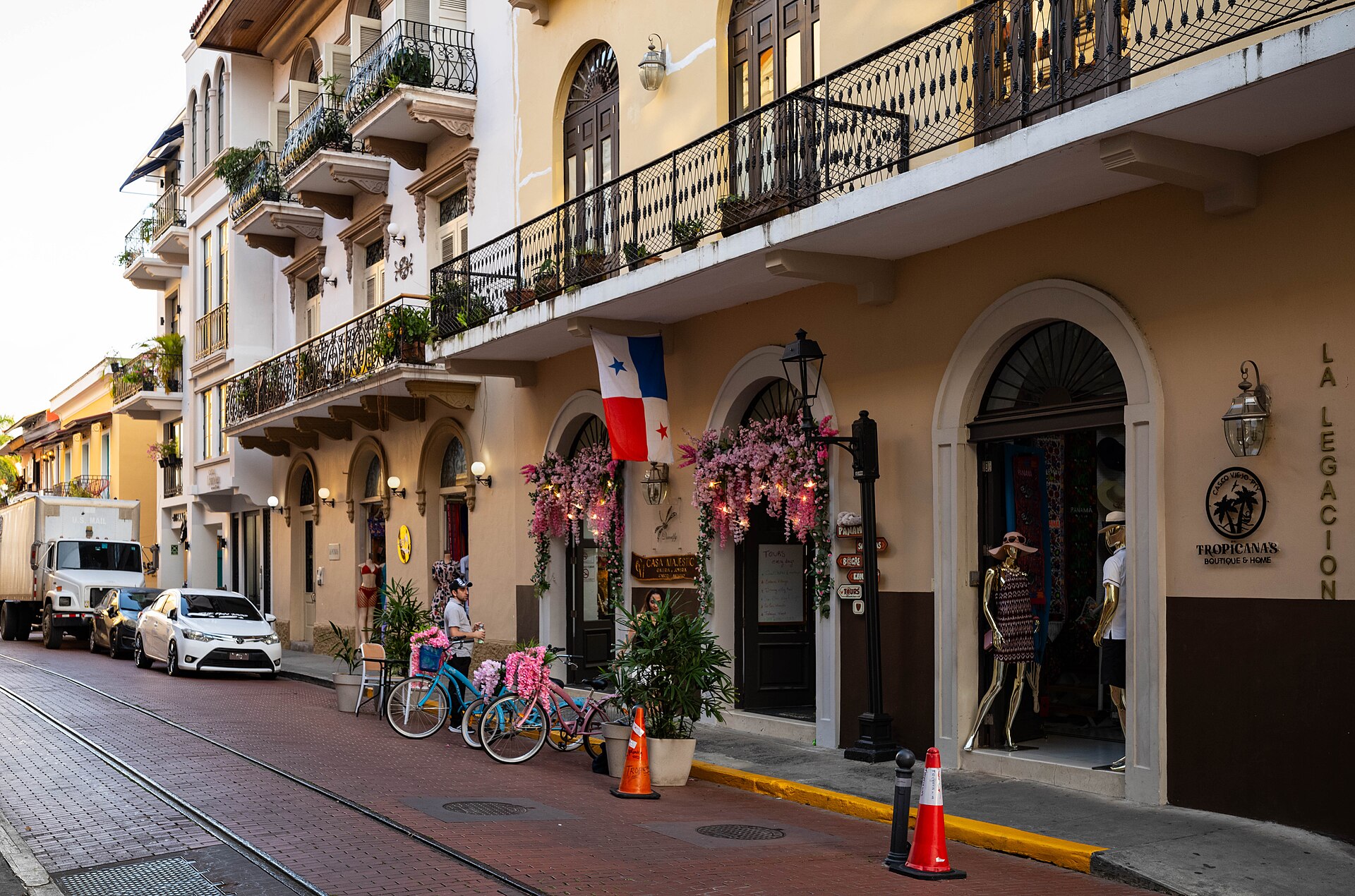
Casco Antiguo. It is the urban destination with the best reported occupancy, but it has its own rules. Law 91 of 1976 declared it a historic monumental ensemble, Law 136 of 2013 updated the tax regime for rehabilitation, and works are regulated by the Casco Antiguo Office and the Heritage Directorate. The 2024 proposal to extend the incentives to the buffer zone is not recorded as approved. See the guide to Panama City.
Risks of investing in hospitality in Panama
Sources: La Prensa (Apatel) · Infobae · Al Jazeera · Panamá América (Sinaproc). Data verified as of November 16, 2026.
What is missing: occupancy by region (the capital, the beaches of Coclé and Panamá Oeste, Boquete, Bocas del Toro), average nightly rates, room supply by area (the ATP publishes lodging supply statistics for 2015–2025 that we did not extract) and any condo-hotel yield data. If you are looking at destinations, see Bocas del Toro and Coclé. If you are comparing with other segments, see apartments, retail space or the general comparison in what type of property to buy in Panama.
Frequently asked questions
What is the average hotel occupancy in Panama?
Between 57% and 58% in 2025, according to the ATP Annual Report. It is a national average; the ATP does not publish series by region.
What does a condo-hotel yield in Panama?
There is no verifiable public source. Ask for the hotel’s audited track record and model with the ATP’s average occupancy, not with seasonal peaks.
What tax does lodging pay in Panama?
10% ITBMS. Bill 713 proposes 15% for tourist rentals in homes while keeping 10% for registered hotels; as of October 9, 2026, it was still in first debate.
Are tourism incentives for hotels still in force?
Not those of Law 80 of 2012: according to the ATP, they expired on December 31, 2025. The regime that would replace them is Bill 31-26, referred to the National Assembly by a resolution published in the Official Gazette on August 25, 2026; it has not been approved, and its content is disputed between sources.
Is it true that the Casco Antiguo has 95% occupancy?
It was a statement by the head of the ATP about the high season, not an annual statistic. The 2025 national average was 57–58%.
Sources
- ATP: 2025 Annual Report
- ATP: statistical report January to August 2026
- ATP: January to March 2025 and January to April 2025
- ATP: lodging supply 2015–2025
- La Prensa: Apatel and hotel demand
- TVN: the ATP adopts the STR platform
- Panamá América: Tocumen passengers and Infobae: source markets
- Infobae: Bill 713 and La Estrella de Panamá: Airbnb’s position
- ATP: tourism incentives Bill 31-26
- PwC: other taxes (ITBMS)
- UNESCO: Casco Antiguo legislation
This is general information, not legal, tax or financial advice, nor a recommendation to buy. There is no public source with condo-hotel yields in Panama; our own calculations are labeled as such and do not guarantee future results. Before investing, review the operator agreement and the co-ownership bylaws with a qualified lawyer. Data verified as of November 16, 2026.

Milan Valdés Báez is an independent journalist and researcher based in Panama and the editor of Invest in Panama Real Estate, the real estate investment guide for foreigners. Every figure on the site is checked against official sources (the Official Gazette, the Superintendency of Banks, INEC, the National Migration Service and the Public Registry), with notes on which data have changed and which circulate out of date, and the guides and calculators are kept current. ORCID iD: 0009-0000-0112-3529.