

A Canadian can buy property in Panama and live there through the Friendly Nations route, because Canada is one of the 51 countries of Executive Decree 16 of August 31, 2026, or through the Pensionado route with a lifetime pension of B/.1,000 a month. The two facts that decide the outcome are Canadian: there is no Canada–Panama tax treaty, only a tax information exchange agreement in force since December 6, 2013, so the 25% Part XIII withholding on pensions paid to a Panamanian resident is not reduced; and leaving Canada triggers a deemed disposition of your property at fair market value under subsection 128.1(4) of the Income Tax Act, which catches a Panamanian apartment you already own. Panama is about 27% cheaper than Canada on Numbeo’s index. Data verified as of November 20, 2026.
This guide describes Panamanian and Canadian rules as of the cut-off date, with sources at the end. It is not tax or legal advice. Where sources conflict, or where a statement is our own inference, it says so. Quebec residents should note that Revenu Québec’s own rules on ceasing residence are not covered here.
Is there a tax treaty between Canada and Panama?
No, and this is the first correction. Panama has 17 double taxation treaties (Barbados, the Czech Republic, South Korea, the UAE, Spain, France, Ireland, Israel, Italy, Luxembourg, Mexico, the Netherlands, Portugal, Qatar, the United Kingdom, Singapore and Vietnam), and Canada is not among them. What exists is the Agreement between Canada and the Republic of Panama for Tax Cooperation and the Exchange of Information relating to Taxes, signed in Panama on March 17, 2013 and in force since December 6, 2013. It appears in the Government of Canada’s treaty record (FR4-2013/25), and Panama’s Directorate General of Revenue (DGI) publishes the Spanish and English texts.
| Item | A tax treaty | The Canada-Panama exchange agreement |
|---|---|---|
| Residence tie-breaker | Yes | No |
| Reduced withholding on pensions, dividends and interest | Yes | No |
| Allocation of taxing rights over rent and capital gains | Yes | No |
| Mutual agreement procedure | Yes | No |
| Exchange of information on request | Yes | Yes, when foreseeably relevant to domestic tax law |
Sources: Department of Finance Canada · DGI. Data verified as of November 20, 2026.
The practical consequence for a retiring Canadian is immediate. Without treaty relief, Canada’s statutory Part XIII non-resident withholding tax of 25% applies to Canadian-source periodic payments to a resident of Panama: CPP, OAS, RRSP and RRIF withdrawals, dividends. A Canadian retiring to Mexico, Spain, Portugal or the United Kingdom has a treaty that reduces some of those rates. A Canadian retiring to Panama does not. The 25% figure is the general rate reported by the cross-border guides consulted, not transcribed from the Act, and the rate for each payment type can differ: confirm it per income stream before modeling anything.
And the claim to stop repeating. One Panamanian advisory site describes a 15% treaty withholding rate and a treaty-based RRIF limit for Canadians in Panama. Both presuppose a treaty that does not exist. If an adviser quotes you 15%, ask which article of which convention.
And no investment treaty either, as far as the listing shows
Some countries without a tax treaty with Panama do have a bilateral investment treaty, which gives access to international arbitration against the state: the United States, Germany, Switzerland and Argentina, for example. Canada does not appear in the extracts of the OAS SICE listing of Panama’s investment treaties. That listing shows no update date, so not appearing does not prove there is none; it is pending verification in the UNCTAD database. The difference between the two networks is explained in Panama’s bilateral investment treaties.
Departure tax: subsection 128.1(4) is the event that costs money
This is where Canadians lose money on this move, and it happens before they arrive in Panama.
| Element | Content |
|---|---|
| The rule | Subsection 128.1(4) of the Income Tax Act: on ceasing to be a resident of Canada you are deemed to have disposed of your property at fair market value, and the gain is taxable in your final Canadian return |
| It is destination-neutral | A domestic rule: it applies the same whether you move to Panama, Portugal or Peru. The lack of a treaty does not cause it, but it removes the relief a treaty might give |
| Main exclusions | Canadian real property and other taxable Canadian property; RRSPs, RRIFs, TFSAs and most registered pension plans (as listed by the guides; check the exact statutory list) |
| What is caught | Non-registered portfolios, private company shares and foreign real estate you already own |
Sources: Income Tax Act, subsection 128.1(4), as reported by the cross-border guides consulted · Canada Revenue Agency. Data verified as of November 20, 2026.
The trap nobody prices in. Canadian real property is excluded from the deemed disposition. Foreign real property is not. So the Canadian who buys the Panamanian apartment first and emigrates second has, on departure day, a deemed disposition of that apartment at fair market value, and years later a real sale in Panama, which Panama taxes at 10% of the gain or 3% of the price as a final tax. Two taxing events on one asset, with no treaty to coordinate them. The Canadian who emigrates first and buys second does not have that problem with that asset. This sequencing conclusion is our own reading of the exclusion list, not a quoted conclusion, although one source does flag the double taxation exposure on an eventual foreign sale. Put it to a Canadian cross-border accountant before you sign anything: the order of operations may be worth more than the price you negotiate. Check the Panamanian side with the capital gains calculator.
Form T1135 and the Panamanian rental apartment
While you are still a Canadian resident and own property in Panama, there is a specific annual filing.
| Element | Content |
|---|---|
| Trigger | Total cost amount of specified foreign property above CAD 100,000 at any time in the year; the test is cost, not market value |
| CAD 100,000 to 250,000 | Simplified Part A reporting may be used |
| CAD 250,000 or more | Detailed Part B required |
| Registered accounts | Property held in an RRSP or TFSA is excluded from the threshold |
| Inherited property | The CRA generally takes the fair market value when received as the cost amount |
| Rented apartment | In scope: it is specified foreign property |
| Purely personal-use holiday home | Generally excluded as personal-use property; not confirmed in the sources consulted, so check CRA guidance |
Sources: Canada Revenue Agency, Form T1135. Data verified as of November 20, 2026.
The personal-use line is a bright line with a cliff: a holiday home you start renting on a platform changes category. The penalties for not filing T1135 are the reason the form has its own literature, and many Canadians who bought abroad never knew it existed.
Holding it through a Panamanian company: probably not
If someone proposes a Panamanian corporation to hold the apartment, the Canadian rules that bite are the foreign accrual property income (FAPI) rules in sections 91 and 95 of the Income Tax Act. Passive income of a controlled foreign affiliate, and rent is passive, is attributed to the Canadian shareholder and taxed currently, distributed or not. You get the compliance cost and the structure cost with no deferral, and Panama taxes a company’s Panamanian-source rent at a flat 25%, against 0% up to B/.11,000 and then 15% and 25% for an individual. For an individual who wants an apartment and a residence, direct ownership is almost always the answer. The FAPI treatment is stated from the general architecture of the rules, not from a verified source; it is the second question for your accountant. The Panamanian options are compared in buying in your own name, through a company or a foundation.
Why the CRA can look but not collect
Panama deposited its ratification of the Convention on Mutual Administrative Assistance in Tax Matters with the OECD Secretary General on March 16, 2017, effective July 1, 2017, and made reservations recorded in the depositary’s own register.
| Item | Content |
|---|---|
| Article 30(1)(b) | No assistance in recovering any tax claim or administrative fine, for all covered taxes |
| Article 30(1)(d) and (e) | No assistance in the service of documents, and no service by post |
| Article 30(1)(a) | Excludes, among others, estate, inheritance and gift taxes and taxes on immovable property |
| Can the CRA get information about your Panamanian affairs? | Yes, through the 2013 agreement and the convention’s exchange provisions |
| Can the CRA ask Panama to collect a Canadian tax debt? | No |
| Does that help you? | It is not a plan. The CRA has its own collection powers over Canadian assets, and the departure tax arises in your Canadian return |
Sources: OECD, Convention on Mutual Administrative Assistance in Tax Matters (ETS No. 127, register of reservations as of November 20, 2026). Data verified as of November 20, 2026.
Panama’s own position as a tax jurisdiction, including its removal from the EU list, is covered in Panama as a tax jurisdiction in 2026.
Is Panama cheaper than Canada?
Yes, by about 27%: Canada sits at 48.9 and Panama at 35.6 on Numbeo’s cost of living plus rent index (New York = 100). The figure that matters more is local purchasing power: 119.4 in Canada against 44.2 in Panama.
Sources: Numbeo, cost of living by country 2026. Differences calculated on the national indices. Data verified as of November 20, 2026.
Panama works for someone arriving with Canadian income and does not work for someone planning to earn there. A CPP and OAS stream, a RRIF drawdown, a Canadian rental or consulting fees billed to North America work; a local Panamanian salary does not. And note the asymmetry in this market: the 27% saving on living costs is set against a 25% withholding on the Canadian income that funds it, with no treaty to reduce it. Run those two numbers together before deciding, because they come close to canceling out. Use the Panama cost of living calculator for your own budget.
| Item | Amount |
|---|---|
| Couple, comfortable, with rent | 2,500 – 3,500 |
| Couple, premium | 3,500 – 5,000 |
| Single person, excluding rent (Numbeo, August 2026) | 821 |
| Rent, central Panama City | 900 – 1,700 |
| Rent, Costa del Este | From 2,200 |
| Rent, Boquete, 2 bedrooms | 450 – 700 |
Sources: Numbeo. Couple and rent ranges are market references. Data verified as of November 20, 2026.
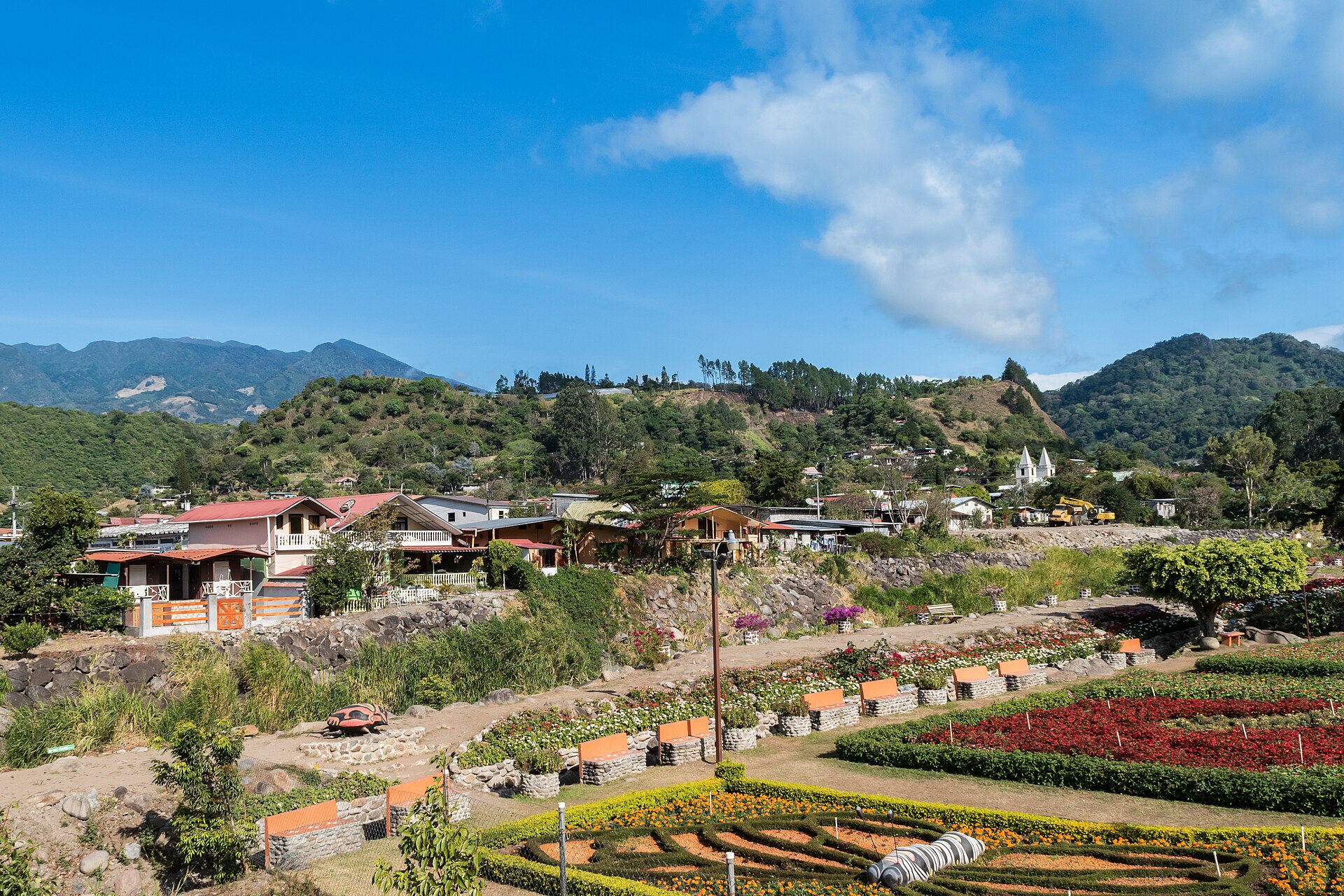
Boquete, in the western highlands, has a milder climate and an established North American retiree community, and at USD 450 to 700 for two bedrooms it is where the numbers work well; it is also outside the district of Panama, so the 45-day rental rule does not apply there. See living and investing in Boquete and Chiriquí. Elsewhere, budget for electricity: under the ASEP schedule in force from January 1 to June 30, 2026, EDEMET’s band above 750 kWh costs 0.33454 B/. per kWh, more than double the 11 to 301 kWh band at 0.15693, roughly B/.234 a month at 1,000 kWh against B/.49 at 300 kWh. A Canadian pays to heat; in Panama you pay to cool, all twelve months, and the climate comfort index is 68.2.
Residency routes: Canada is on the Friendly Nations list
Canada is one of the 51 countries of Executive Decree 16 of August 31, 2026, Official Gazette 30601-B, in force since September 1, 2026, in the Americas group of eleven with Argentina, Brazil, Chile, Costa Rica, Ecuador, Mexico, Paraguay, Peru, the United States and Uruguay.
| Route | Minimum | Direct to permanent? | Rule |
|---|---|---|---|
| Pensionado (retiree) | B/.1,000 a month for life | Yes | Art. 200 of the immigration regime |
| Agricultural investment | USD 60,000 | No: two-year blocks, max 6 | Agricultural investor regime |
| Digital nomad | USD 36,000 a year of foreign income | No | Remote worker regime |
| Forestry with permanent residency | USD 100,000 | Yes | Executive Decree 199 of 2021 |
| Friendly Nations | USD 200,000 or genuine employment | After 2 provisional years | Executive Decree 16 of 2026 |
| Qualified Investor, new construction | USD 300,000 | Yes | Executive Decree 17 of 2026 |
| Economic solvency | USD 300,000 | Yes | Art. 191, Executive Decree 320 of 2008 |
| Qualified Investor, resale, securities or state deposit | USD 500,000 | Yes | Executive Decree 17 of 2026 |
| Qualified Investor, private bank deposit | USD 750,000 | Yes | Executive Decree 17 of 2026 |
Sources: Executive Decree 17 of 2026 (National Migration Service) · Plan B Expat · Executive Decrees 199 of 2021 and 320 of 2008. Data verified as of November 20, 2026.
Pensionado fits most Canadians: a CPP and OAS combination will often clear B/.1,000 a month on its own, and it leads directly to permanent residency. The Friendly Nations trap is the second requirement: you must prove genuine employment with a Panamanian company, USD 200,000 in real estate or a USD 200,000 fixed-term deposit of at least three years, and owning your own Panamanian company does not count as employment. Friendly Nations means 2 provisional years that do not count toward naturalization plus 5 permanent, for USD 200,000; Qualified Investor means permanent residency from day one plus 5 years, for USD 300,000, with a stated window of 15 business days at MICI plus 30 at Migration, capped at 45. Under article 5(a) of Decree 17 a mortgage is deducted from the computable value: USD 400,000 with a USD 150,000 mortgage counts as 250,000. The routes are explained in Panama residency options, and the which Panama visa is right for me tool helps you narrow them down.
On citizenship: naturalizing as a Panamanian requires renouncing your previous nationality by constitutional mandate. Canada permits dual citizenship, but the question is the effect of the renunciation act Panama requires, a matter of Canadian citizenship law that has not been verified here. If the goal is to live in Panama it does not arise: permanent residency requires no renunciation.
Buying in Panama: the risks, each with its rule
| Item | The essentials |
|---|---|
| No short-term rental in the capital | Article 21 of Law 80 of November 8, 2012 prohibits rentals under 45 days in the district of Panama without a Public Tourist Accommodation permit; ATP fines of USD 5,000 to 50,000; upheld by the Supreme Court en banc on December 20, 2017 (file 1038-14). Permitted outside the district |
| Real yields | Gross 7.0% to 8.7% in the capital. Net 4.8% self-managed and 3.8% with a manager, before Panamanian and Canadian tax |
| Possession rights are not ownership | A derecho posesorio (possession right) has no registered title, is not mortgageable, titling is not guaranteed and it cannot support residency by investment |
| The beach strip is public | Law 80 of 2009: 22 meters on the Pacific and 10 on the Caribbean from the high-tide line, regulated up to 200 meters |
| New-build remedies | Article 79 of Law 45 of 2007: binding delivery date, rescission with full refund, advertising enforceable, proportional reduction if specifications change |
| Complaints and cost increases | Acodeco: 280 complaints against real estate companies from January to August 2026, for B/.13,239,348 (including older files closed in 2026); cost increases on new housing can be challenged within one year of notice |
| Banking and mortgages | 3 to 8 weeks, minimum balances of USD 10,000 to 50,000 for foreigners; 30% to 40% down for non-residents at 7% to 9% |
| Rental income tax in Panama | Individual: 0% up to B/.11,000, then 15% and 25%. Company: 25% flat |
| Property tax | General regime: 0% up to B/.30,000, then 0.60%, 0.80% and 1.00%. Patrimonio Familiar Tributario (family homestead), main residence: 0% up to B/.120,000, then 0.50% and 0.70%, on application to the DGI |
| Capital gain on sale | 10% of the gain, or 3% of the price as a final tax |
Sources: Law 80 of 2009 · Acodeco · Global Property Guide · DGI. Data verified as of November 20, 2026.
Every step is covered on this site: verifying title at the Public Registry, how to vet a developer, the Panama property taxes guide and Panama rental yields. Model a unit with the rental yield calculator.
Law 562 of 2026 rewrote the retiree discounts by nationality: from May 2, 2027 foreigners reach them at 57 (women) and 62 (men), against 55 and 60 for Panamanians, and only with permanent residency. So a 60-year-old Canadian man qualifies for the Pensionado visa on income, but the discounts arrive at 62, with permanent residency in hand. Details in Panama retiree discounts and Law 562.
Five questions to vet an adviser
| Question | The verifiable answer |
|---|---|
| Is there a tax treaty between Canada and Panama? | No. There is an exchange agreement signed March 17, 2013, in force December 6, 2013. If they quote a 15% treaty rate, ask which article of which convention |
| What does subsection 128.1(4) do to my portfolio when I leave? | It deems a disposition at fair market value on the day you cease residence. Canadian real property, RRSPs, RRIFs and TFSAs are outside it; foreign real estate is not |
| Should I buy in Panama before or after I emigrate? | Make them answer with the exclusion list in hand. Buying first means the apartment is caught by the deemed disposition and taxed again by Panama on the real sale |
| Do I have to file a T1135 for the apartment? | Yes if it is a rental and your specified foreign property exceeds CAD 100,000 at cost at any time in the year; Part B from CAD 250,000 |
| Can I keep receiving OAS in Panama, and at what rate? | Make them cite the rule. The residency condition for OAS abroad and its withholding decide a retirement budget, and they are often asserted without a source |
Sources: Department of Finance Canada · CRA, Form T1135. Data verified as of November 20, 2026.
- 01Model the withholdingConfirm the Part XIII rate for each Canadian income stream and set it against the 27% cost saving.
- 02Decide the orderEmigrate, then buy, or the reverse: ask a cross-border accountant with the 128.1(4) exclusions in hand.
- 03Choose the routePensionado if you have a lifetime pension; Qualified Investor if you want direct permanent residency through property.
- 04Buy directly, with title checkedPublic Registry, developer record and the 45-day rule if the unit is in the district of Panama.
Sources: Income Tax Act · Executive Decree 17 of 2026. Data verified as of November 20, 2026.
For a market with the same no-treaty problem but very different exit rules, compare the guide for investing in Panama from the United States, or browse investing from your country.
Frequently asked questions
Is there a tax treaty between Canada and Panama?
No. Panama has 17 double taxation treaties in force and Canada is not one of them. What exists is the Agreement between Canada and the Republic of Panama for Tax Cooperation and the Exchange of Information relating to Taxes, signed on March 17, 2013 and in force since December 6, 2013. It provides for exchange of information on request; it does not allocate taxing rights, give a residence tie-breaker or reduce any withholding rate.
Will Canada withhold tax on my pension if I live in Panama?
Yes. Without treaty relief, Canada’s statutory Part XIII non-resident withholding applies to Canadian-source payments to a resident of Panama, including CPP, OAS and RRSP and RRIF withdrawals. The guides consulted put the general rate at 25%. A Canadian retiring to a treaty country often has a reduced rate; one retiring to Panama does not. Confirm the rate for each income stream before budgeting.
What is the Canadian departure tax and does it apply when moving to Panama?
Subsection 128.1(4) of the Income Tax Act deems you to have disposed of your property at fair market value when you cease to be a resident of Canada, and the gain is taxable in your final return. It applies to any destination. Canadian real property and other taxable Canadian property, along with RRSPs, RRIFs, TFSAs and most registered pensions, are outside it; non-registered portfolios, private company shares and foreign real estate are not. A Panamanian apartment you already own on departure day is therefore caught.
Do I have to report a Panamanian property to the CRA?
If it is a rental and the total cost of your specified foreign property exceeds CAD 100,000 at any time in the year, yes, on Form T1135. The test is cost, not market value; Part A may be used between CAD 100,000 and 250,000 and Part B is required from CAD 250,000. Property held in an RRSP or TFSA does not count. A purely personal-use holiday home is generally excluded, but check that carve-out against CRA guidance.
Can the CRA ask Panama to collect a Canadian tax debt?
No. When Panama ratified the Convention on Mutual Administrative Assistance in Tax Matters on March 16, 2017, effective July 1, 2017, it reserved under Article 30(1)(b) the right not to assist in recovering any tax claim or administrative fine, and under Article 30(1)(d) the right not to assist in serving documents. Information exchange does operate. None of this is a plan: the CRA has its own collection powers over Canadian assets.
Is Canada on Panama’s Friendly Nations list?
Yes, among the 51 countries of Executive Decree 16 of August 31, 2026, Official Gazette 30601-B, in force since September 1, 2026, in the Americas group with Argentina, Brazil, Chile, Costa Rica, Ecuador, Mexico, Paraguay, Peru, the United States and Uruguay. You still need USD 200,000 of investment or genuine employment.
How much cheaper is Panama than Canada?
About 27% on the Numbeo cost of living plus rent index as captured on November 20, 2026: Panama 35.6 against Canada 48.9, New York = 100. Local purchasing power, however, is 119.4 in Canada against 44.2 in Panama. In this market the 27% saving should be set directly against the 25% withholding on the Canadian income that funds it.
Sources
- Canadian law and practice: Canada-Panama tax information exchange agreement, March 17, 2013, in force December 6, 2013 (Department of Finance Canada, FR4-2013/25); Income Tax Act, subsection 128.1(4) and sections 91 and 95; Form T1135; Part XIII withholding at a general 25% (cross-border guides)
- Multilateral: Convention on Mutual Administrative Assistance in Tax Matters, Panama’s ratification of March 16, 2017 and reservations under Article 30(1); SICE, OAS (investment treaties)
- Panamanian law: DGI, double taxation treaties; Executive Decree 16 of 2026 (Friendly Nations list); Executive Decree 17 of 2026; Executive Decrees 320 of 2008 and 199 of 2021; Law 80 of 2012, art. 21; Law 45 of 2007, art. 79; Law 80 of 2009; Law 562 of 2026; ASEP tariff schedule; Acodeco
- Data: Numbeo 2026; Global Property Guide
This is general information, not legal, tax or financial advice. Several Canadian points are not verified as of this date: the Part XIII rate per payment type, whether OAS can be paid in Panama and at what withholding, the T1135 personal-use carve-out, the FAPI treatment and the buy-before-or-after sequencing. Consult a Canadian cross-border accountant and a lawyer licensed in Panama before investing.

Milan Valdés Báez is an independent journalist and researcher based in Panama and the editor of Invest in Panama Real Estate, the real estate investment guide for foreigners. Every figure on the site is checked against official sources (the Official Gazette, the Superintendency of Banks, INEC, the National Migration Service and the Public Registry), with notes on which data have changed and which circulate out of date, and the guides and calculators are kept current. ORCID iD: 0009-0000-0112-3529.